1


Stay in Touch
Get the latest updates, special offers, and exclusive Cinchy perks straight to your inbox.


Jl. Plawa No.50, Seminyak, Kec. Kuta, Kabupaten Badung, Bali 80361

CALL US 24/7
(+62-851-7424-6249)
Copied!

We’re Here
Everyday
8:30 AM-9 PM WITA




Payment Partners


© 2026 CINCHY. ALL RIGHTS RESERVED.
Cinchy Blog / Honking Etiquette in Bali - Scooter Rules
Published: 03 Oct 2026

By Syahrial Maulana Sudarto
Travel Enthusiast
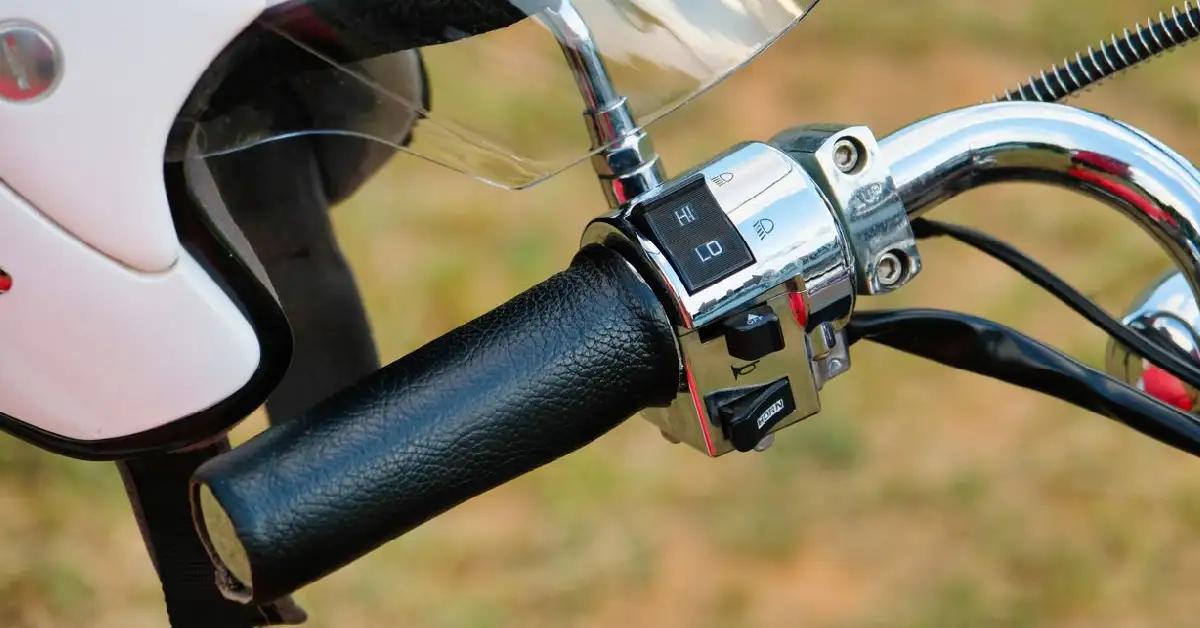
Quick Answer
“Is honking rude in Bali?”
No, honking is not necessarily rude in Bali. A short horn tap is commonly used as a safety and communication signal to alert other road users that you are approaching or passing. However, honking should be brief and purposeful rather than used to express anger, pressure other riders, or create unnecessary noise.
Free Cancellation
24/7 Support
Insurance
Start Date - End Date
Start Time
End Time
Duration
0 Day(s)
Key Takeaways:
If you are riding a scooter in Bali for the first time, local traffic can sound different from what you are used to at home.
You may hear short beeps when a scooter approaches another vehicle, enters a narrow road, or prepares to overtake. This does not automatically mean that someone is angry or trying to start an argument.
In many situations, the horn works as a simple form of road communication. A rider may be telling another road user, “I'm here,” “I'm approaching,” or “please be aware of me.”
This is particularly useful on Bali's narrow roads, blind bends, busy intersections, and side alleys where visibility can be limited.
However, there is no universal horn code in Bali where one beep or two beeps always have a fixed meaning.
The safest approach is to understand the horn as a warning or awareness signal, rather than trying to decode every individual beep.
The meaning of a horn depends on the situation, but a brief horn tap can generally communicate the rider's presence.
For example, you may use a short beep when:
If you're still uncertain about your next steps, don't worry, as we're here to address all your queries and concerns.
Not necessarily. A short horn tap is commonly used as a warning or communication signal. Repeated or aggressive honking, however, can be considered unnecessary and disruptive.
It usually communicates awareness or presence, such as “I'm here” or “I'm approaching.” Its meaning depends on the road situation rather than a fixed number of beeps.
A brief horn signal can alert another road user before overtaking, but it does not give you the right of way. Always check traffic, mirrors, blind spots, and available space first.
A short beep can be useful before entering a blind corner to alert approaching road users. Reduce your speed as well, because the horn cannot prevent a collision by itself.
Generally, avoid unnecessary honking around religious processions and ceremonies. Slow down, stop when necessary, and wait respectfully until you can continue safely.
There is no general rule requiring tourists to honk simply because they are riding a scooter. Use the horn when it serves a clear safety or communication purpose and follow Indonesian traffic regulations.
The important distinction is between communication and aggression.
A quick horn tap can help another road user notice you. Holding the horn down because you are frustrated with slow traffic has a very different purpose.
Think of the scooter horn as one part of your overall traffic awareness—not as a substitute for careful riding.
A brief horn signal can alert a vehicle or scooter that you are approaching before you pass.
But remember: a horn does not automatically give you permission to overtake.
Before passing, check your mirrors and blind spot, assess oncoming traffic, make sure there is enough space, and use your turn signal when appropriate.
A useful sequence is:
Check → Signal → Horn → Confirm → Pass
The horn is only one part of that process.
Blind corners are one of the most practical situations for using a horn.
If a bend prevents you from seeing approaching traffic, a short beep can make another road user aware that you are coming from the opposite direction.
This can be particularly useful on narrow village roads or roads surrounded by walls, buildings, vegetation, or other obstacles.
Keep your speed under control as well. A horn should not be treated as permission to enter a blind corner at high speed.
Bali has many narrow streets where two scooters or vehicles may have limited room to pass.
A short horn tap can help communicate your presence when approaching another road user, especially if the road layout makes it difficult to see around a corner.
Slow down and be prepared to give way when necessary.
Some side streets, villa entrances, parking areas, and small alleys have poor visibility.
If you are entering the main road from one of these areas, a brief warning can make your presence more noticeable.
At the same time, look carefully for pedestrians, scooters, cars, and other road users before moving into the traffic flow.
If you are riding alongside or approaching a vehicle's blind spot, a short horn warning may help attract the driver's attention.
Do not assume that the driver has seen you simply because you are visible in your own mirror.
Good traffic awareness means anticipating what other road users might not notice.
A simple rule is:
Keep it short, light, and purposeful.
A brief tap is usually more appropriate than holding the horn continuously.
Use the horn early enough to give another road user time to react. Avoid waiting until you are already extremely close to someone before sounding the warning.
Most importantly, stay calm.
If another rider makes a mistake, slows down unexpectedly, or takes longer to move through traffic, there is usually no benefit to repeatedly blasting the horn.
Good Bali road etiquette combines the horn with patience, defensive riding, mirrors, indicators, and awareness of your surroundings.
The fact that honking is common does not mean that every type of honking is appropriate.
Avoid using the horn to:
Continuous honking can make an already stressful traffic situation more difficult for everyone.
If traffic is moving slowly, patience is generally more useful than repeatedly pressing the horn.
The same principle applies when someone makes an unexpected move. Give yourself enough space to react rather than immediately responding with an aggressive horn blast.
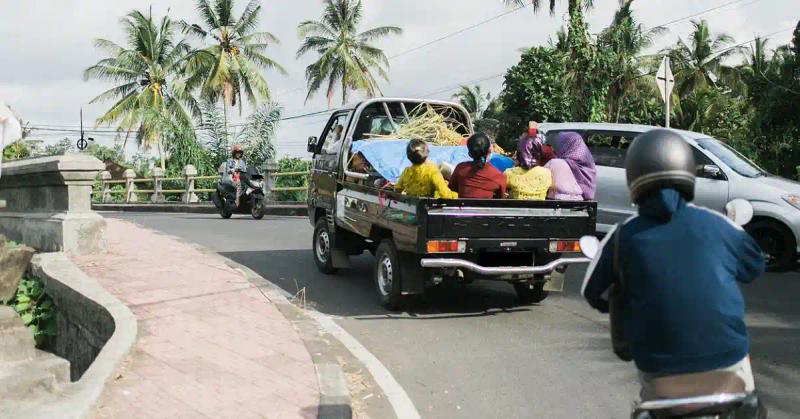
Be particularly respectful when you encounter a Balinese religious procession or ceremony on the road.
Traffic may temporarily slow down or stop because of a temple ceremony, procession, or other cultural activity. In these situations, repeatedly honking to make people move faster is inappropriate.
Instead, reduce your speed and be prepared to stop.
Follow the directions of people managing the road and wait until it is safe and appropriate to continue. Respect for local customs is an important part of responsible travel in Bali.
This is also consistent with Bali's guidance for foreign tourists, which asks visitors to respect Balinese customs, traditions, culture, and ongoing ceremonies.
A horn and a turn signal have different purposes.
Horn: communicates your presence or provides a warning.
Turn signal: communicates your intended direction or movement.
Therefore, one should not be treated as a replacement for the other.
For example, if you are preparing to move around another vehicle, a turn signal can communicate your intention while a brief horn tap can make the other road user aware that you are nearby.
You should still check your mirrors, blind spots, surrounding traffic, and road conditions before making the maneuver.
Honking is only one part of Bali scooter etiquette.
Indonesia follows left-hand traffic. Keep this in mind when turning, overtaking, entering intersections, and positioning your scooter on the road.
Wearing a helmet is a basic road-safety requirement. Make sure it fits securely before starting your trip.
Local traffic habits do not replace formal traffic rules. Pay attention to signs, traffic lights, road markings, and instructions from authorities.
Expect other road users to make unexpected movements. Maintain a safe distance and avoid sudden acceleration, braking, or lane changes.
Do not ride a scooter after consuming alcohol or drugs. Being familiar with Bali's roads does not remove the risks associated with impaired riding.
Read Also:
Foreign visitors should understand that local driving etiquette and Indonesian traffic law are two different things.
Bali's Circular Letter No. 7 of 2025 provides guidance for foreign tourists, including requirements related to valid driving licences, helmets, traffic signs, passenger capacity, and responsible road behavior.
Before renting a scooter, make sure you have the required documents and are legally permitted to ride.
For international visitors, this generally means carrying a valid passport and the appropriate driving licence for riding in Indonesia. Requirements can depend on your circumstances, so check the applicable regulations before your trip.
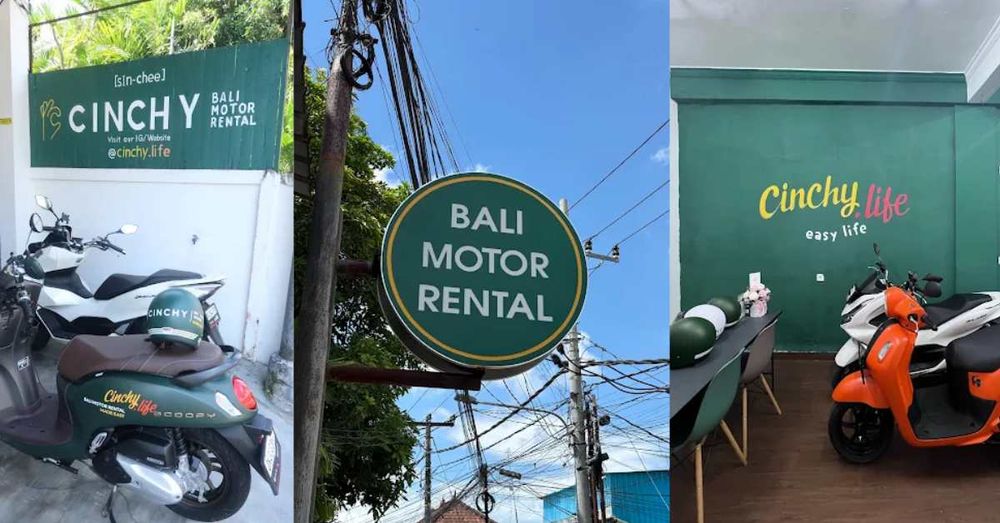
If you are planning to explore Bali by scooter, choosing a well-maintained scooter in Cinchy can make everyday riding more comfortable.
Cinchy's Compact category includes Honda Scoopy, Yamaha Fazzio, and Honda Vario. Rates start from IDR 95K/day, IDR 80K/day for the weekly rate, and IDR 50K/day for the monthly rate.
For riders who prefer a larger and more comfortable scooter, the Comfort category includes Yamaha NMAX and Honda PCX. Rates start from IDR 155K/day, IDR 125K/day for the weekly rate, and IDR 80K/day for the monthly rate.
Cinchy allows you to check scooter availability in real time through its website before booking. This is useful when planning a Bali trip during either peak or low season because you can see which scooters are available for your selected dates.
The rental process is designed to be straightforward. You will need a valid ID such as a passport or KTP, a valid driving licence such as an international licence or SIM C, round-trip flight tickets, and a hotel booking covering the duration of your scooter rental.
Scooters are regularly serviced and maintained, while 24/7 customer support is available if you need assistance during your rental.
Delivery and pickup are also available. I Gusti Ngurah Rai Airport, Seminyak, Kuta, and Legian have free delivery and pickup, while Canggu starts from IDR 20,000, Sanur from IDR 40,000, and Nusa Dua from IDR 65,000.
Each rental also includes practical essentials such as a helmet, hair nets, a phone holder, and a raincoat.
Choose your preferred category, pickup location, and coverage, then use EARLY5 for 5% off when booking early before peak season.
 travel tips
 hidden gems
 scooter guides
 riding tips
 bali guides
 cultural insight