1


Stay in Touch
Get the latest updates, special offers, and exclusive Cinchy perks straight to your inbox.


Jl. Plawa No.50, Seminyak, Kec. Kuta, Kabupaten Badung, Bali 80361

CALL US 24/7
(+62-851-7424-6249)
Copied!

We’ll be Back
at
8:30 AM-9 PM WITA


Payment Partners


© 2026 CINCHY. ALL RIGHTS RESERVED.
Cinchy Blog / What Do 'E' and 'F' Really Mean on a Fuel Meter in a Motorcycle?
Published: 06 Nov 2026

By Syahrial Maulana Sudarto
Travel Enthusiast
Quick Answer
“What do E and F mean on a scooter fuel meter?”
E stands for Empty, indicating that the fuel tank is nearly empty or has reached a low fuel level, while F stands for Full, meaning the tank is full. However, reaching E does not always mean the tank contains no fuel. Some scooters still have reserve fuel, depending on their model and fuel gauge system.
Key Takeaways:
The letters E and F on a scooter fuel gauge indicate the amount of gasoline remaining inside the fuel tank. They help riders monitor fuel levels and know when to refill.
Although the symbols are straightforward, understanding how they work can help you avoid running out of fuel, especially when exploring unfamiliar destinations.
E stands for Empty, indicating that the fuel tank has reached its lowest marked level or is nearly empty.
When the fuel gauge approaches E, it means the remaining gasoline is running low. However, the tank may still contain a small amount of fuel that has not yet been consumed.
Some scooters also activate a low-fuel warning light or flashing indicator when the fuel level reaches a predefined threshold. This is a signal to find a gas station and refill as soon as possible.
F stands for Full, indicating that the fuel tank is full or close to its maximum capacity.
When you refuel your scooter, the fuel gauge should gradually move toward F. On an analog fuel gauge, the needle moves closer to the F marking, while a digital fuel gauge displays more illuminated bars or segments.
However, the indicator may not immediately show the exact fuel level after refueling because some systems take time to update their readings.
Although some people interpret E as Emergency, its standard meaning on a fuel gauge is Empty.
The confusion comes from the fact that a scooter may still have some gasoline remaining when the indicator reaches E. This remaining fuel can provide a limited opportunity to reach a gas station.
However, E should not be treated as a guaranteed emergency reserve. The amount of fuel remaining depends on the scooter's design, tank capacity, and fuel level sensor calibration.
Therefore, the safest approach is to refill your scooter whenever the indicator reaches E rather than assuming you still have enough fuel for another journey.
No. A fuel gauge showing E does not always mean that the fuel tank is completely empty.
Many scooters are designed to retain some usable fuel even when the indicator reaches its lowest reading. However, the remaining amount differs between manufacturers and models.
There is no universal amount of remaining fuel when a scooter's fuel gauge reaches E.
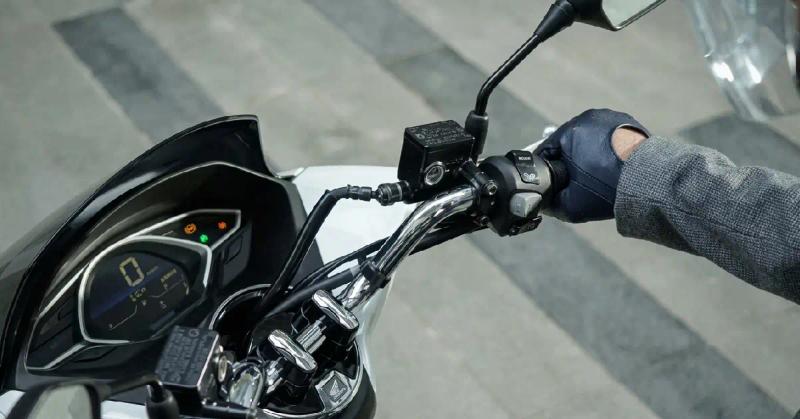
For example, some Honda owner manuals specify particular low-fuel thresholds. The Honda CBR1000SP/ST manual references approximately 3.2 liters of reserve fuel, while the Honda PCX 125 (2026) manual indicates approximately 1.16 liters when the first E segment starts blinking.
These figures demonstrate why riders should check their scooter's owner's manual rather than rely on a general percentage.
The remaining fuel can also vary depending on the sensor's position, tank shape, and how the manufacturer calibrates the fuel gauge.
Reserve fuel and a low-fuel warning are related, but they are not necessarily the same system.
Older carbureted scooters may have a manual fuel valve with ON and RES positions. Switching to RES allows the rider to access the remaining fuel supply.
Modern scooters with electronic fuel injection (EFI) generally use a fuel level sensor and dashboard warning instead. They do not necessarily have a separate manual reserve valve.
Understanding this distinction is important because reaching E on a modern fuel gauge does not automatically mean you need to switch a fuel valve to RES.
Read Also:
How to Find Gas Station Near You in Bali Easily
The Difference Between Pertamax and Pertalite for Scooter
Fuel Scarcity in Bali: Current Updates and What to Expect
The distance a scooter can travel after its fuel gauge reaches E depends on how much gasoline remains and how efficiently the engine uses it. There is no guaranteed riding distance because every scooter has different fuel consumption and reserve capacity.
Several factors influence how far you can travel with low fuel:
For example, riding through Bali's busy streets during peak hours may result in different fuel consumption compared with cruising along less congested roads.
You can estimate your remaining riding range by multiplying the amount of fuel left by your scooter's average fuel efficiency.
Estimated Riding Range = Remaining Fuel (Liters) × Fuel Efficiency (km/L)
For example, if your scooter has approximately 0.5 liters of fuel remaining and its average fuel efficiency is 40 km/L, the estimated range would be:
0.5 liters × 40 km/L = 20 km.
However, this is only a mathematical example, not a guaranteed riding distance. The actual range may be shorter because of traffic, road conditions, fuel gauge inaccuracies, and other factors.
It is better to treat E as a warning to refuel immediately rather than calculate how many kilometers you can still travel.
When your fuel gauge reaches E, the best thing to do is find the nearest gas station and refill your tank.
Instead of continuing your journey and hoping the remaining fuel will last, take a few precautions to avoid getting stranded.
Check your navigation app to locate the nearest gas station along your route. If you are unfamiliar with the area, choose a convenient station rather than continuing toward a distant destination.
In Bali, you may encounter different fuel stations, including Pertamina outlets and smaller local fuel sellers. Whenever possible, choose a reputable station with clearly labeled fuel products.
Frequently running your scooter with extremely low fuel is not recommended.
On scooters with fuel-injected systems, consistently operating with insufficient fuel may cause problems for the fuel pump, which relies on gasoline for cooling and lubrication.
It can also leave you stranded if the remaining gasoline is insufficient to reach a gas station.
Every scooter has different fuel tank specifications and low-fuel warning thresholds.
Check the owner's manual to understand your scooter's fuel tank capacity, reserve fuel information, and warning indicators. This is particularly important when using an unfamiliar scooter.
Read Also:
Does Having a Full Tank Save Gasoline to Ride in Bali?
Full Tank Gas Motorcycle, Is It Really Necessary?
How Long Can 1 Bar of Fuel Last When Riding in Bali?
How Long Does 3 Bars of Gas Last in a Scooter When Riding in Bali?
A scooter fuel gauge measures and displays the estimated amount of gasoline remaining inside the fuel tank.
Although the display may look simple, several components work together to provide the reading.
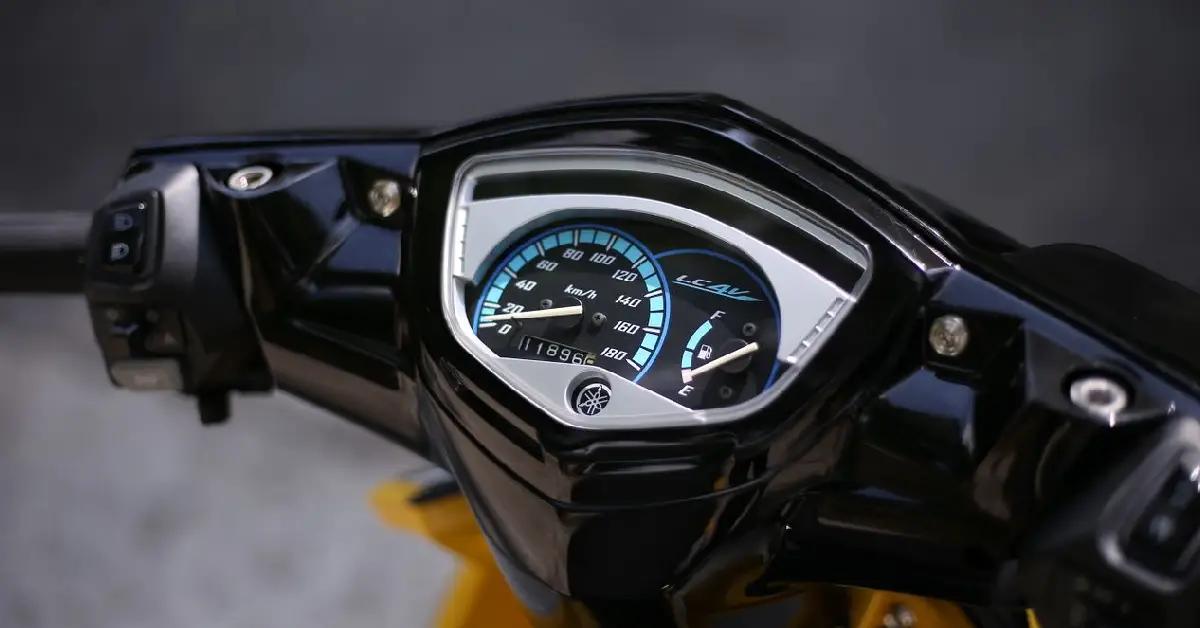
An analog fuel gauge uses a moving needle to indicate the fuel level.
The needle moves between E and F according to signals received from the fuel level sensor. As the fuel level decreases, the needle gradually moves closer to E.
Some analog gauges also include a red marking near E to indicate a low-fuel condition.
A digital fuel gauge displays fuel levels using illuminated bars, segments, or numerical indicators.
When the tank is full, most or all fuel bars are displayed. As gasoline is consumed, the number of illuminated bars decreases.
Some digital systems also include a blinking final bar or a low-fuel warning symbol when the remaining gasoline reaches a certain threshold.
Many conventional fuel gauge systems use a float-based fuel level sensor.
The float moves according to the amount of gasoline inside the tank. Its movement changes the position of a connected arm and variable resistor, which sends an electrical signal to the instrument cluster.
The dashboard then converts that signal into a fuel gauge reading.
However, modern systems can use different sensor technologies, so the exact mechanism depends on the scooter model.
Sometimes, a fuel gauge may display inaccurate readings even when the scooter has been refueled or has enough gasoline.
Several problems can affect how the fuel level indicator works:
A stuck float, damaged fuel sending unit, loose electrical connection, or sensor malfunction can all affect fuel gauge accuracy.
If your indicator continues displaying incorrect information, have the scooter inspected by a qualified technician.
Avoid opening the fuel tank or attempting electrical repairs yourself, especially if you are unfamiliar with its fuel system.
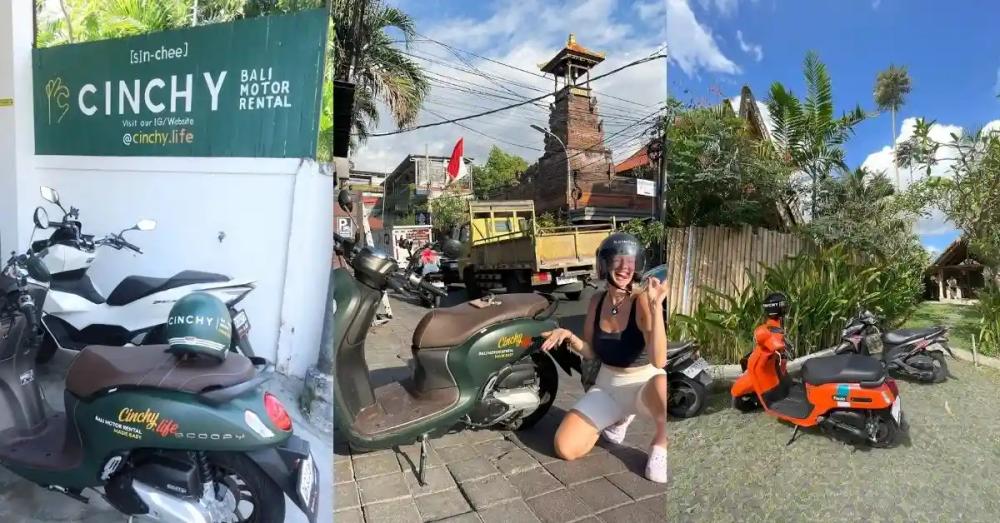
When exploring Bali, having a reliable scooter makes it easier to visit different destinations at your own pace.
Cinchy offers well-maintained scooters with regular servicing to support a more comfortable riding experience.
With a straightforward online booking process and 24/7 customer support, you can arrange your rental before arriving in Bali.
You can also check real-time scooter availability through the Cinchy website, whether you are planning a trip during peak season or the quieter months.
Cinchy offers two scooter categories to accommodate different riding preferences, passenger needs, and travel plans.
Includes Honda Scoopy, Yamaha Fazzio, and Honda Vario. These scooters are suitable for everyday mobility, exploring nearby attractions, and navigating busy streets.
Includes Yamaha NMAX and Honda PCX. These scooters offer a larger body and a more spacious riding experience for longer journeys.
Prices are per day and depend on the selected rental duration.
Delivery and pickup are free at I Gusti Ngurah Rai Airport, Seminyak, Kuta, and Legian.
For other destinations, the fees are IDR 20,000 for Canggu, IDR 40,000 for Sanur, and IDR 65,000 for Nusa Dua.
👉 Rent a scooter in Cinchy now, book early and save 5% with code EARLY5!
If you're still uncertain about your next steps, don't worry, as we're here to address all your queries and concerns.
No. E indicates that the fuel level is low or nearly empty, but some gasoline may remain in the tank. The remaining amount depends on the scooter model and its fuel gauge system.
E generally stands for Empty, while F stands for Full. Although some people associate E with Emergency because fuel may remain, Empty is the standard meaning on a fuel gauge.
There is no universal amount. The remaining fuel depends on the tank capacity, sensor calibration, and manufacturer specifications. Check your scooter's owner's manual for accurate information.
Some scooters may still have usable fuel when the indicator reaches E. However, you should not rely on it to continue riding. Find the nearest gas station and refill as soon as possible.
A blinking fuel bar or warning light generally indicates that the fuel level has reached a low threshold. The exact meaning depends on the scooter model, so consult its owner's manual.
A fuel gauge that remains on F may indicate a stuck float, faulty fuel level sensor, or electrical connection problem. If the reading does not change after riding, have the fuel gauge system inspected.
 travel tips
 hidden gems
 scooter guides
 riding tips
 bali guides
 cultural insight