1


Stay in Touch
Get the latest updates, special offers, and exclusive Cinchy perks straight to your inbox.


Jl. Plawa No.50, Seminyak, Kec. Kuta, Kabupaten Badung, Bali 80361

CALL US 24/7
(+62-851-7424-6249)
Copied!

We’re Here
Everyday
8:30 AM-9 PM WITA




Payment Partners


© 2026 CINCHY. ALL RIGHTS RESERVED.
Cinchy Blog / Get to Know Idling Stop System (ISS) on a Scooter for Bali Riding
Published: 04 Oct 2026

By Syahrial Maulana Sudarto
Travel Enthusiast
Quick Answer
“What is the idling stop system (ISS) on a scooter?”
Idling Stop System (ISS) is a scooter feature that automatically switches the engine off when you stop under certain conditions, such as at a traffic light, and restarts it when you open the throttle. It helps reduce unnecessary idling, which can improve fuel efficiency and reduce emissions during frequent stops and stop-and-go traffic.
Free Cancellation
24/7 Support
Insurance
Start Date - End Date
Start Time
End Time
Duration
0 Day(s)
Key Takeaways:
Idling Stop System, commonly abbreviated as ISS, is an automatic engine stop-start technology found on some scooters.
Its primary purpose is to prevent the engine from continuing to run unnecessarily while the scooter is stationary.
For example, imagine you are riding through Bali and stop at a red light. Instead of keeping the engine running while you wait, a scooter equipped with ISS can temporarily shut the engine off after detecting the appropriate conditions.
When you are ready to move, opening the throttle triggers the automatic engine restart. You can then continue riding normally.
Honda describes its Idling Stop System as a technology designed to automatically stop the engine when the scooter is stationary and restart it when the rider operates the throttle. The technology is intended to improve fuel efficiency and reduce emissions associated with unnecessary idling.
The exact system differs between manufacturers and scooter models. Some manufacturers use different names for similar technology, such as Stop & Start System or Engine Auto Stop-Start.
Although the process happens automatically, understanding the basic sequence can make riding with ISS less surprising, especially if you are using a rental scooter for the first time.
The ISS system does not simply shut the engine off whenever you slow down. The scooter first needs to meet specific operating conditions determined by its manufacturer and model.
If you're still uncertain about your next steps, don't worry, as we're here to address all your queries and concerns.
ISS stands for Idling Stop System. It automatically stops the scooter engine during suitable stationary periods and restarts it when the rider opens the throttle.
If your scooter has ISS enabled, the engine may automatically stop when you are stationary and the system's operating conditions have been met. This is usually an intentional function rather than an engine failure.
ISS can reduce fuel consumption by preventing unnecessary engine idling. However, the amount saved varies depending on the scooter, traffic conditions, stopping duration, and riding habits.
ISS may not activate if the engine is not warm enough, the scooter has not met its required operating conditions, the function is switched off, or the battery and other system conditions are unsuitable. Exact requirements vary by model.
Many scooters with ISS provide a switch that allows the rider to disable the system. Whether and how you should do this depends on the scooter model and riding situation.
ISS can be useful in Bali's stop-and-go traffic, particularly when waiting at traffic lights or in congested urban areas. It provides fewer opportunities to save fuel when you are riding continuously on open roads.
These conditions can include reaching a certain speed, having a sufficiently warm engine, and having the ISS function switched on.
When you approach a traffic light or another stopping point, you close the throttle and bring the scooter to a complete stop.
The system checks whether the conditions required for automatic engine stop have been met.
If everything is within the required parameters, ISS temporarily stops the engine.
The scooter's electrical systems and dashboard can remain active, so this is different from manually switching the scooter off with the ignition.
When the traffic light changes and you are ready to ride, you open the throttle.
The system automatically restarts the engine, allowing you to accelerate without manually pressing the starter in normal operation.
The restart mechanism varies by model. Honda, for example, has developed systems using its ACG starter technology to support quiet and quick engine restarts.
One important thing to remember is that there is no single set of ISS activation conditions that applies to every scooter.
Depending on the model, the system may consider factors such as:
Some Honda scooter systems, for example, require the engine to reach operating temperature and the scooter to have previously reached a specified speed before the automatic stop function becomes available.
Therefore, if the ISS does not activate every time you stop, it does not automatically mean there is a problem with the scooter.
Always refer to the owner's manual for the specific scooter you are riding.
The main reason manufacturers use automatic engine stop-start technology is to reduce unnecessary engine idling.
An engine that continues running while the scooter is stationary still consumes fuel. ISS reduces this unnecessary idling by temporarily stopping the engine.
The potential fuel saving depends on how often and how long the scooter stops. A ride with frequent traffic lights provides more opportunities for ISS to operate than a ride on an open road with continuous movement.
Because the engine is temporarily stopped, there is no engine combustion during that period.
This can help reduce fuel consumption and certain exhaust emissions associated with unnecessary idling.
You may also notice that the scooter becomes noticeably quieter when ISS activates.
This can be particularly noticeable when waiting at a busy intersection, although the surrounding traffic noise in Bali will obviously continue.
Yes, ISS can help reduce fuel consumption, but the amount of fuel saved varies depending on the scooter and riding conditions.
Honda has reported fuel-saving results from controlled testing of its Idling Stop System, including approximately 7% improvement under a specific ECE R40 test comparison. Independent research has also found fuel-consumption improvements from scooter idling-stop technology under particular test conditions.
These figures should not be interpreted as a guaranteed real-world saving for every scooter.
Your actual result depends on factors such as traffic density, the duration of each stop, riding style, scooter condition, and how frequently ISS activates.
In simple terms, ISS has the greatest opportunity to help when you spend a lot of time stopped with the engine otherwise idling.
Read Also:
Bali is a particularly interesting environment for an idling stop system because riding conditions can change considerably between locations.
In busy areas, frequent stops and traffic lights can give ISS many opportunities to operate.
Traffic in popular areas such as Canggu and Seminyak can involve repeated stopping and starting, particularly around busy intersections and commercial areas.
In these situations, ISS can reduce unnecessary idling while you wait.
Urban traffic around Kuta and Denpasar can also involve frequent traffic-light stops and congestion.
If your scooter has ISS and the required conditions are met, the feature can be useful during these periods.
The situation is different when you leave busy urban areas and ride continuously for longer periods.
If you are traveling along open roads with few stops, ISS simply has fewer opportunities to activate.
Its fuel-saving benefit is therefore likely to be less noticeable than during repeated stop-and-go traffic.
There is no universal rule that you must always keep ISS on or always switch it off.
Keeping ISS active can make sense when you are experiencing frequent, relatively long stops, such as waiting at traffic lights or moving through congested traffic.
On the other hand, if traffic is creeping forward continuously and you are stopping only briefly before moving again, you may prefer to disable the function if your scooter allows it.
Some manufacturers specifically provide an ISS switch so riders can choose whether to use the feature in different riding conditions.
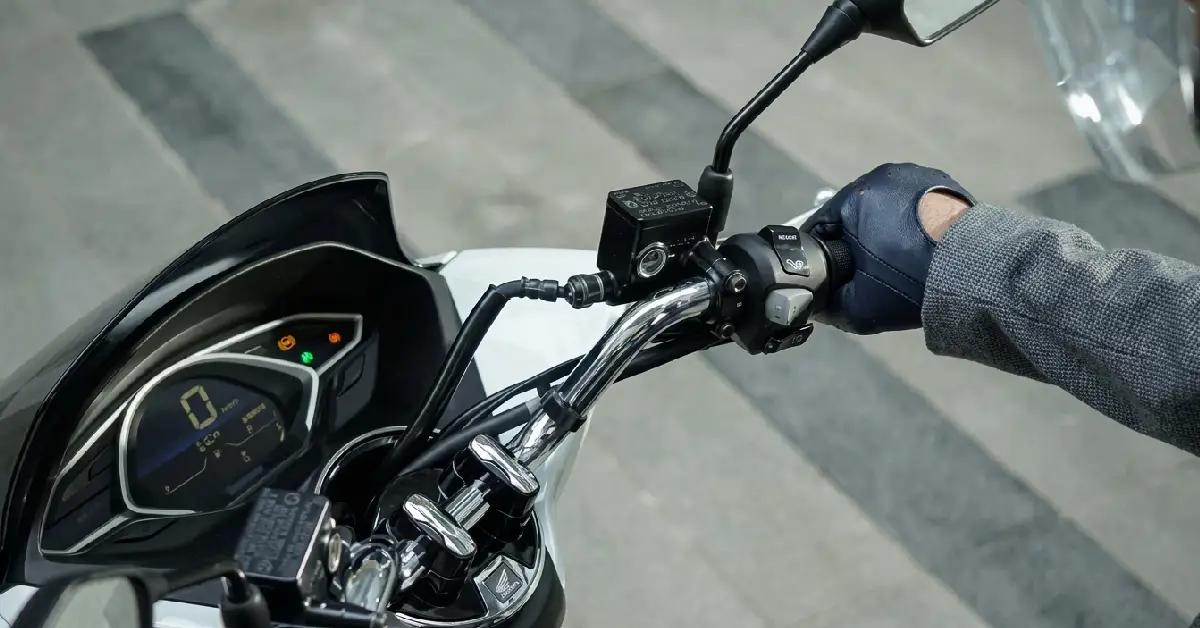
For a rental scooter, familiarize yourself with the ISS switch and indicator before starting your journey. If you are unsure about how your particular scooter's system behaves, ask the rental provider.
ISS may not activate every time you stop, and several factors can explain this.
Common possibilities include:
The important point is not to assume that ISS not activating means the scooter is broken.
If the engine behaves abnormally, warning lights appear, or the scooter does not restart normally, move to a safe location and contact your scooter rental provider for assistance.
No. An ISS engine stop and an engine stall are different situations.
With ISS, the engine stops intentionally because the system has detected that the scooter is stationary and the required conditions have been satisfied.
A stall, meanwhile, is an unintended engine stop that can happen because of an operating or mechanical issue.
If your scooter stops at a traffic light and the ISS indicator shows that the system is active, there may be no reason to panic.
If the scooter stops unexpectedly while riding or fails to restart when you open the throttle, treat that differently and get the scooter checked.
ISS is not available on every scooter.
Honda has equipped various scooter models with Idling Stop System technology, including models in its urban scooter and premium scooter ranges.
However, the presence of ISS can depend on the exact model, variant, market, and production year.
This is especially important when renting a scooter in Bali.
Do not assume that every scooter with a similar model name has exactly the same features. If ISS is important to you, confirm the feature with the rental provider before booking.
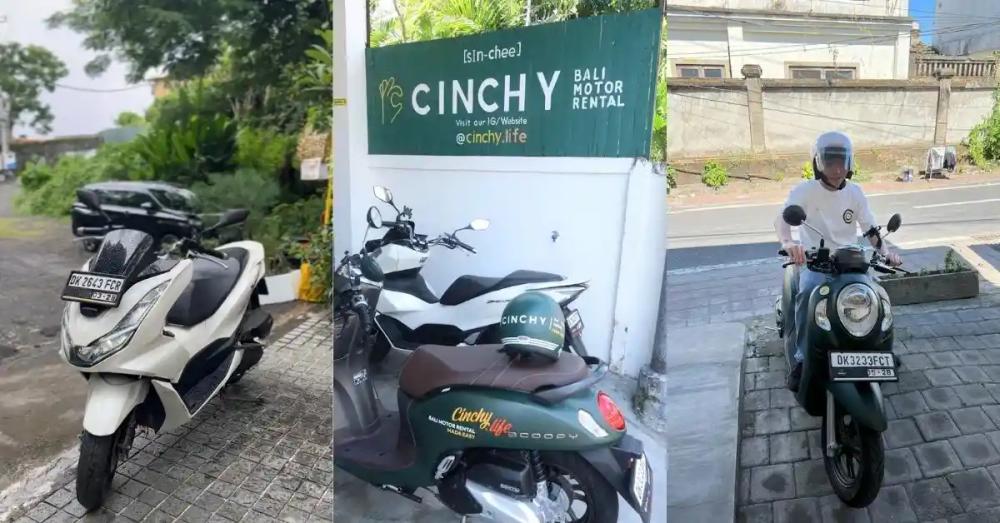
If you want to use a scooter with features such as the ISS during your Bali trip, Cinchy makes it possible to check scooter availability in real time through its website.
This lets you see what is available for your selected rental period rather than relying solely on a general availability statement.
Cinchy offers two scooter categories that have ISS features.
Cinchy also provides scooter delivery and pickup options across several Bali locations.
Delivery and pickup are free at I Gusti Ngurah Rai Airport, Seminyak, Kuta, and Legian. Canggu is IDR 20,000, Sanur is IDR 40,000, and Nusa Dua is IDR 65,000.
Every rental also comes with practical essentials such as a helmet, hair nets, a phone holder, and a raincoat, while customer support is available 24/7.
If you are visiting Bali during peak season, booking your scooter in Cinchy earlier can help you check availability before demand increases.
 travel tips
 hidden gems
 scooter guides
 riding tips
 bali guides
 cultural insight