
1


Stay in Touch
Get the latest updates, special offers, and exclusive Cinchy perks straight to your inbox.


Jl. Plawa No.50, Seminyak, Kec. Kuta, Kabupaten Badung, Bali 80361

CALL US 24/7
(+62-851-7424-6249)
Copied!

We’ll be Back
at
8:30 AM-9 PM WITA




Payment Partners


© 2026 CINCHY. ALL RIGHTS RESERVED.
Cinchy Blog / Bali vs Mykonos: Should You Visit Bali or Mykonos in 2026?
Published: 28 Apr 2026

By Ulfah Alifah
Travel Enthusiast
Free Cancellation
24/7 Support
Insurance
Start Date - End Date
Start Time
End Time
Duration
0 Day(s)
Two islands. Both iconic. Both wildly different. Choosing between Bali and Mykonos in 2026 is not just about which one looks better in photos. These two destinations offer completely different experiences in terms of culture, cost, atmosphere, and the kind of traveler they attract.
Bali is Indonesia's spiritual heart — lush, affordable, and rich with culture. Mykonos is Greece's glamour island — polished, expensive, and built for luxury. Whether you are planning a solo adventure, a romantic escape, or a family trip, this guide will help you pick the right island before you book.
Bali is a tropical island in Indonesia covering approximately 5,780 square kilometers. It is packed with ancient Hindu temples, emerald rice terraces, active volcanoes, and world-famous surf beaches. Bali welcomed nearly 6.9 million international visitors in 2025 and is targeting 6.625 million in 2026 as it shifts focus toward Asia-Pacific markets.
Bali draws everyone from budget backpackers to five-star luxury seekers. Its main tourism zones include Seminyak, Canggu, Ubud, Uluwatu, and Nusa Dua — each with its own personality. In 2026, the island is also leaning into slower, more meaningful travel with an emphasis on eco-tourism and cultural immersion.
Beyond the beaches and temples, Bali is a lifestyle destination. You can practice sunrise yoga overlooking rice paddies, surf reef breaks in the afternoon, and end the day at a clifftop bar watching the sun drop into the Indian Ocean. If you want to explore one of Bali's trendiest neighborhoods, our guide to the best things to do in Canggu is a great place to start.
Mykonos is a small Greek island in the Cyclades archipelago, located roughly 153 kilometers southeast of Athens. It covers around 105 square kilometers — making it one of the smaller islands in the Aegean. What it lacks in size, it more than makes up for in energy, elegance, and reputation.
The island is famous worldwide for its whitewashed buildings with blue-trimmed doors, its iconic windmills, vibrant beach clubs, and electric nightlife. Mykonos has two sides: by day it is a peaceful, photogenic place with charming village lanes and scenic beaches; by night it becomes one of Europe's most electrifying party destinations.
Mykonos Town, also called Chora, sits at the heart of the island. It is highly walkable, with narrow cobblestone lanes leading past boutiques, restaurants, and galleries. The island is also a gateway to Delos — a UNESCO World Heritage Site just 30 minutes away by boat.
Bali is roughly 55 times the size of Mykonos. That scale difference has a massive impact on what you can see and do. Bali has volcanic highlands, dense jungle, dozens of distinct beach zones, ancient temple complexes, and highland farming villages. Mykonos has beautiful beaches, a charming main town, and a handful of inland villages. If variety matters, Bali wins easily.
The best time to visit Bali is the dry season, running from May to September. Skies are clear, humidity drops, and beaches are at their most inviting. Shoulder months like May, June, and September give you the best mix of good weather and thinner crowds. If you are planning around a specific event calendar, our Bali Events in April 2026 guide covers top festivals and seasonal highlights.
The best time to visit Mykonos is between June and September, with July and August as peak season. May and October are excellent shoulder options — still warm and sunny but less crowded and more affordable. Mykonos is largely closed from November through March, with most hotels and restaurants shutting down completely.
Bali has a tropical climate with year-round warmth, typically ranging from 22°C to 31°C. The wet season runs from November to March, bringing heavy rainfall and high humidity. From April through October, dry and sunny conditions dominate — ideal for beach trips and outdoor adventures.
Mykonos enjoys a classic Mediterranean climate with hot, dry summers and mild winters. Peak summer temperatures average 26°C to 28°C in July and August with almost zero rainfall. The island is nicknamed "The Island of the Winds" because of the strong Meltemi winds that blow in summer — wonderful for windsurfing, but occasionally disruptive for beach days. Mykonos enjoys about 300 days of sunshine per year.
Bali is a playground for outdoor sports enthusiasts. Surfing world-class breaks in Uluwatu, hiking Mount Batur for a sunrise view, white-water rafting on the Ayung River, cycling through Ubud's rice terraces, and zip-lining through jungle canopies are just some of the options. The sheer variety here is hard to match anywhere in Southeast Asia.
Mykonos offers a narrower but enjoyable range of outdoor activities. Windsurfing is a standout — particularly at Kalafatis Beach, which is one of Greece's top windsurfing spots. Hiking trails connect beaches and villages, and horse riding and cycling tours are available. For adventure sports in variety and affordability, Bali has the clear edge.
Bali offers dramatic, diverse scenery unlike almost anywhere else on earth. Think terraced rice paddies glowing green in morning light, black volcanic sand beaches, ancient moss-draped stone temples, cascading waterfalls, roaring volcanoes, and fiery Indian Ocean sunsets.
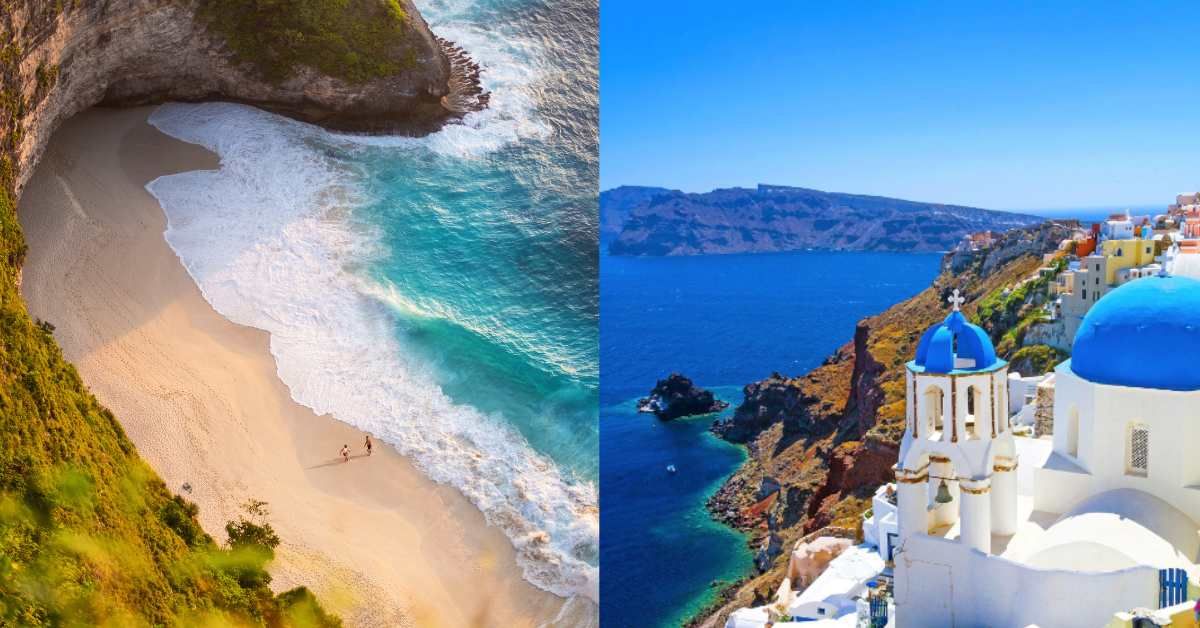
Mykonos delivers a different kind of beauty — one that is architectural and precise. Whitewashed buildings with bright blue doors, flower-draped alleyways, windmills against clear blue skies, and sparkling turquoise water create a scene that is instantly recognizable. If you love wild natural landscapes, Bali wins. If you love elegant coastal aesthetics, Mykonos is hard to rival.
Bali has an extraordinary range of beaches to suit every traveler. Surf-ready shores in Canggu, long golden stretches in Seminyak, hidden coves in Uluwatu, and calm family-friendly waters in Nusa Dua and Sanur all offer entirely different experiences. The black volcanic sand beaches are dramatic and unique.
Mykonos has some of the most beautiful white-sand beaches in Greece. Paradise Beach and Super Paradise Beach are world-famous for their party atmosphere and beach clubs. However, many of the best beaches are now heavily commercialized. At popular spots, you may pay $50 USD or more just to reserve a sun lounger. Bali offers far more variety and far fewer crowds for beach lovers on any budget.
Bali's hotel scene spans every budget. Clean, comfortable guesthouses start from $15–30 USD per night. Mid-range properties with pools run $50–100 per night. Five-star resorts in Seminyak and Nusa Dua can reach $200–800 per night — still extraordinary value compared to global equivalents.
Mykonos hotels are among the most expensive in the Mediterranean. Decent mid-range rooms typically cost $150–300 per night in peak season. Boutique luxury suites easily exceed $500–1,000 per night during July and August. If you are hunting for affordable stays with lots of character, check out our guide to hostels in Uluwatu as a starting point for budget accommodation options in Bali.
Bali's private pool villa market is one of its most celebrated assets. You can rent a stunning villa with a private pool, tropical garden, daily cleaning, and sometimes a personal chef for $100–200 per night in Seminyak or Canggu. This is world-class luxury at a fraction of what you would pay in Europe.
Mykonos villas are breathtaking — sleek Cycladic architecture, sweeping sea views, and immaculate interiors. But they come at a serious premium. Expect $500–1,500 per night or more for a private villa during peak season. For couples or groups who want villa-style luxury without the punishing price tag, Bali is the obvious winner.
Bali's food scene is one of the best things about the island. A meal at a local warung costs under $3. All-day brunch at a Canggu café runs $10–15. A multi-course dinner at a fine dining restaurant costs $50–80. There are strong vegetarian and vegan options throughout the island, and the quality of street food is outstanding.
Mykonos has a high-end dining culture built around fresh seafood, Greek mezze, and Mediterranean cuisine. The quality is consistently excellent and the settings — many overlooking the Aegean — are stunning. But prices are steep. A basic sit-down meal in a tourist area can cost $30–60 per person. For fine dining on any budget, Bali offers dramatically better value.
Bali is a world leader for water sports. Surfing, paddleboarding, jet skiing, flyboarding, parasailing, kayaking, and river rafting are all available at affordable prices across multiple beach zones. Whether you are a beginner or an expert, the options are enormous.
Mykonos also offers solid water sports options, particularly at its busier beaches. Jet skiing, parasailing, and banana boat rides are popular, and windsurfing at Kalafatis is a serious highlight. But in terms of overall variety and price, Bali leads comfortably.
Bali is a world-class diving and snorkeling destination. The waters around Bali and nearby Nusa Penida are teeming with manta rays, reef sharks, sea turtles, and the rare Mola Mola (ocean sunfish). The WWII shipwreck at Tulamben and the vibrant reefs at Amed are globally recognized dive sites with excellent visibility.
Mykonos offers enjoyable snorkeling and recreational diving, with sites featuring ancient shipwrecks, reefs, and underwater rock formations. Visibility in the Aegean is often superb in summer. However, the marine biodiversity and range of dive sites in Bali are on a completely different level. If scuba diving is a priority for your trip, Bali wins by a wide margin.
Bali's inland areas are spectacular. Ubud — the island's cultural capital — is surrounded by rice terraces, ancient royal temples, traditional craft villages, and a famous Sacred Monkey Forest. You can hike Mount Batur at sunrise, visit the UNESCO-listed Subak irrigation system, attend a traditional Kecak fire dance, or explore lesser-known highland waterfalls.
Mykonos has limited inland exploration by comparison. The island's interior is relatively flat and quiet, with the small village of Ano Mera and its traditional Panagia Tourliani Monastery being the main inland highlight. The famous windmills near Chora are iconic and worth seeing, but Bali's depth of inland adventure is simply unmatched.
Bali is generally safe for tourists. Violent crime is rare, and the Balinese people are known for their warmth and hospitality. The main risks are traffic accidents on busy roads, petty theft in crowded tourist zones, and occasional tourist scams. Getting around by scooter requires care — our guide on how to rent a scooter in Bali covers road safety tips and legal requirements in detail.
Mykonos presents minimal security risks for international visitors. According to current U.S. and Canadian travel advisories, Greece remains one of the safest destinations in the world. The primary concerns in Mykonos are petty theft in Mykonos Town's narrow lanes, drink spiking in nightlife areas, and road safety on narrow mountain roads. Both islands are solid choices for safety-conscious travelers.
Bali's nightlife is vibrant and diverse. Seminyak, Kuta, and Canggu host beach clubs, rooftop bars, live music venues, and sunset cocktail spots. The scene is lively and fun without being as intense — or as expensive — as the top party destinations in Europe. You can have an incredible night out in Bali for $20–40 USD.
Mykonos is one of the most famous party islands in the world. International DJs, celebrities, and party-goers from across the globe pack its beach clubs at Paradise and Super Paradise beaches. Nights start late and often end at sunrise. If world-class clubbing is the main goal, Mykonos holds the crown — but budget $100–200 USD or more for a serious night out.
Bali has a relaxed, wellness-focused lifestyle. Yoga studios, meditation retreats, organic cafés, surf schools, and healing centers are everywhere. The island moves at a gentle, unhurried pace. The deeply rooted Hindu Balinese culture adds a unique spiritual dimension that is genuinely felt in everyday life.
Mykonos has a fast-paced, glamorous lifestyle built around fashion, luxury, and socializing. It attracts high earners, celebrities, and trend-forward travelers who come for the scene as much as the scenery. It is exciting and energizing, but if you want to slow down and recharge, peak-season Mykonos is not the place to do it.
Bali's Hindu culture is arguably its greatest asset. The island is home to thousands of temples, daily ritual offerings (canang sari), elaborate festivals, and traditional Kecak and Legong dance performances. Culture is not just in museums — it is woven into every corner of daily life. The ancient Subak irrigation system is a UNESCO World Heritage Site.
Mykonos has deep roots in Greek history and Cycladic tradition. The Archaeological Museum of Mykonos and the nearby island of Delos — a UNESCO World Heritage Site — offer significant cultural and historical depth. Both islands have strong cultural offerings, but Bali's living, participatory culture is more immersive and more accessible to visitors.
Balinese food is bold, fragrant, and affordable. Nasi goreng, mie goreng, babi guling, satay lilit, and a wide variety of plant-based dishes make eating in Bali a genuine highlight. Fresh tropical fruits, smoothie bowls, and health-conscious cafés have also made the island a top destination for food-aware travelers. Whether you are eating at a roadside stall or a fine dining restaurant, the quality is consistently high.
Greek food in Mykonos is outstanding. Fresh grilled fish, calamari, spanakopita, moussaka, and classic Greek salad served with local olive oil and regional wines are all exceptional. The setting alone — often waterfront or with Aegean views — makes every meal feel special. The downside is cost. Food in Mykonos is considerably more expensive than in Bali across every tier.
Bali is a paradise for shoppers who love handcrafted, locally made goods. Ubud's art markets are full of wood carvings, silver jewelry, hand-dyed batik fabric, woven baskets, and traditional paintings. Seminyak and Canggu have excellent boutique fashion, surf brands, and lifestyle stores. Prices are low and bargaining is part of the culture.
Mykonos shopping is concentrated in Mykonos Town, with boutiques selling designer fashion, gold jewelry, fine ceramics, and luxury goods. The quality and sophistication are high, but prices reflect European luxury standards. For unique, culturally meaningful souvenirs at honest prices, Bali is the stronger choice.
Bali is one of Southeast Asia's most family-friendly destinations. Water parks like Waterbom Bali, animal sanctuaries, cultural cooking classes for children, gentle beaches in Nusa Dua and Sanur, and the wide availability of affordable family accommodation all make it an excellent choice for traveling with kids.
Mykonos is primarily geared toward adult travelers. The vibrant party culture, limited child-focused activities, and high costs make it a less practical choice for families with young children. There are quieter, family-appropriate beaches on the island, and some hotels cater to families — but for a full family holiday on any budget, Bali is the better fit.
Bali is one of the world's most beloved honeymoon destinations — and for good reason. Private pool villas, sunset dinners on the beach, couples' spa days, and romantic temple ceremonies can all be enjoyed at a fraction of the price compared to European alternatives. Many couples also compare this choice to Bali vs Maldives when weighing luxury against value.
Mykonos is for honeymooners who want ultra-glamorous, Mediterranean luxury. Candlelit dinners in Chora, private catamaran sunset cruises, and five-star suites with Aegean sea views create an unforgettable experience. The cost will be much higher, but the luxury factor is undeniable. Your budget will ultimately decide the winner here.
Bali creates romance organically and at every price point. Watching the sun set from a clifftop bar in Uluwatu, dining by candlelight in Ubud's jungle, or walking hand-in-hand through ancient rice terraces — Bali's romantic moments arrive naturally and constantly.
Mykonos offers a different kind of romance — built on elegance, light, and Mediterranean magic. The cobblestone streets of Chora glowing gold in the evening, a quiet harbor-side dinner with local wine, or a private sunset cruise are hard to forget. Both islands are deeply romantic, just in different currencies — one emotional, one financial.
If aesthetics matter to you, both islands are extraordinary — just in very different visual languages. Bali speaks in lush tropical beauty: emerald greens, golden carved stone, black sand beaches, colorful offerings on temple steps, and dramatic volcanic skies.
Mykonos speaks in Cycladic minimalism: crisp white and brilliant blue, clean architectural lines, sun-bleached stone, and shimmering turquoise water. Both are stunning, and which you prefer is entirely personal. Bali is organic, vibrant, and sensory. Mykonos is polished, architectural, and luminous.
Bali is one of the most affordable popular destinations in the world. Budget travelers can comfortably manage on $30–50 USD per day. Mid-range travelers typically spend $80–150 per day. Even luxury travel in Bali feels like exceptional value compared to equivalent experiences in Europe.
Mykonos is one of the most expensive islands in the Mediterranean. During peak season, spending less than $150–200 USD per day is very difficult, even for budget-conscious travelers. A comfortable mid-range experience runs $300–500 per day. For practical tips on managing travel money on any island, our Cash vs Card in Bali guide is a useful financial reference.
Bali offers exceptional value at every level. Private villas with pools, world-class food, cultural richness, spectacular nature, and excellent weather — all at prices that consistently surprise Western travelers.
Mykonos offers luxury and prestige at a high price. The quality is real, but the value equation is harder to justify — especially when comparable Mediterranean experiences are available at lower costs elsewhere. For travelers who want to maximize every dollar of their travel budget, Bali wins without question.
Bali offers a richer, more authentic, and far more affordable shopping experience. Handwoven textiles, carved wood, silver jewelry, traditional art, and local fashion are all available at honest prices in Ubud, Seminyak, and Kuta markets. Bargaining is welcome and expected.
Mykonos delivers high-end shopping for luxury buyers — designer boutiques, fine jewelry, and upscale fashion brands. If you are chasing luxury labels, Mykonos delivers. But for memorable, handcrafted souvenirs tied to the local culture, Bali is the clear winner.
Bali is one of the world's top digital nomad destinations, and for very good reason. A thriving remote worker community fills the co-working spaces of Canggu and Seminyak. Fast internet, affordable living at around $1,200 per month, and a vibrant social scene make it extremely attractive. Indonesia's E33G Remote Worker Visa allows a one-year stay and requires a minimum income of $5,000 per month or proof of $60,000 annual income. Getting around to co-working spaces and networking events is easy when you rent a scooter — our scooter rental guide for Bali covers everything you need to know before you ride.
Mykonos can work for digital nomads who are drawn to Greece's digital nomad visa, which requires a minimum monthly income of €3,500 and comes with a notable 50% income tax reduction for up to seven years. The island offers fast internet and personal safety — both nomad priorities. However, the cost of living for a nomad in Mykonos sits around $5,213 per month, which is steep compared to Bali. Mykonos also closes down almost completely from November to March, making it a seasonal destination rather than a year-round base. For most digital nomads, Bali is the far more practical and affordable choice.
Bali has one of the world's largest and most established expat communities. Long-stay visas, relatively low costs, and an excellent quality of life attract retirees, remote workers, entrepreneurs, and lifestyle seekers from dozens of countries. Monthly living costs in Indonesia are roughly 49.9% lower than in Greece when excluding rent.
Mykonos, being a small seasonal island, does not have a large permanent expat community. Most foreigners who reside in Mykonos are tied to the hospitality industry during the tourism season or are high-net-worth individuals who maintain holiday residences. Greece as a whole has a growing expat scene — particularly in Athens and Crete — but Mykonos is too expensive and too seasonal to support a broad expat lifestyle year-round. If you want to compare how Bali stacks up against other tropical island alternatives for long-stay living, our Bali vs Fiji guide explores those tradeoffs in detail.
Indonesia offers several visa options for visitors and long-stay travelers. Most nationalities receive a free 30-day visa-on-arrival that can be extended once for another 30 days. The E33G Digital Nomad Visa allows a one-year stay with a fee in the range of $600 USD. A standard tourist visa extension can be arranged through a visa agent relatively easily.
Greece, as part of the European Union and the Schengen Zone, allows visitors from most Western countries to stay visa-free for up to 90 days within a 180-day period. Greece's digital nomad visa costs just €75 and takes two to four weeks to process, but requires proof of €3,500 per month in income. Getting a long-stay visa for Greece requires more paperwork and financial proof than Bali, but Greece's EU status gives it advantages for long-term residency pathways. For most short-stay tourists, both destinations are straightforward to enter.
Bali wins the value-for-money category in almost every single respect. Food costs roughly 52.6% less, transportation costs 38.9% less, and healthcare costs 44.4% less in Indonesia than in Greece. A week in Bali at a comfortable mid-range level — good accommodation, excellent food, activities, and transport — costs a fraction of what the same week would cost in Mykonos.
Mykonos justifies its costs through exclusivity, prestige, and setting — but the gap in value is real and significant. A like-for-like comparison on accommodation, food, nightlife, and beach access will consistently show Bali delivering more for less. The single area where Mykonos may keep pace is high-end luxury goods, where import costs and brand availability narrow the difference. For budget-aware travelers, the conclusion is clear.
Packing right makes a real difference in how comfortable and prepared you feel on either island. Here is what to bring for each destination:
For Bali:
For Mykonos:
Booking tours in Bali is easier and more flexible than almost anywhere in the world. Many activities — from volcano hikes and surf lessons to temple tours and cooking classes — can be arranged through local operators on short notice. That said, booking ahead in peak season (July and August) ensures better prices and availability.
For Mykonos, boat trips to Delos, sunset cruises, and catamaran tours should be booked at least a few days in advance during peak summer months, as they fill up quickly. Most Mykonos tours can be arranged through hotel concierges or online platforms before you arrive.
If Bali is your destination, getting around independently gives you the freedom to discover hidden spots and explore at your own pace. The best way to do this is by scooter. Book your Bali scooter rental through Cinchy to get a reliable, well-maintained bike delivered directly to your accommodation — so your adventures can start the moment you land.
Choosing between Bali and Mykonos in 2026 ultimately comes down to what kind of experience you are looking for — and how much you want to spend.
Choose Bali if you want:
Choose Mykonos if you want:
Both islands reward travelers who come with open eyes and genuine curiosity. But in 2026, for most travelers weighing cost, variety, culture, and total experience — Bali holds a compelling and hard-to-beat advantage. Explore Bali your way with Cinchy and start planning your perfect island adventure today.
Bali does attract millions of visitors each year, targeting 6.625 million international tourists in 2026 alone. Certain areas — particularly Kuta, Legian, and parts of Seminyak — are heavily commercialized. However, calling all of Bali "too touristy" misses the point entirely. Ubud's cultural heartland, the black-sand beaches of Amed, the surf village atmosphere of Uluwatu, and the highland areas around Munduk and Bedugul still offer authentic, relatively uncrowded experiences. Bali is large enough — at nearly 5,780 square kilometers — that travelers who venture beyond the main tourist corridors are still rewarded with something genuinely special.
Neither island is objectively better — they serve different travel purposes. Mykonos is better for luxury European nightlife, high-end beach clubs, and Cycladic architecture lovers. Bali is better for cultural immersion, natural diversity, value for money, family trips, long-stay travel, and outdoor adventure. Most travelers with limited budgets will find Bali offers more for their money, while those seeking Mediterranean glamour and are willing to spend accordingly will love Mykonos.
No. Mykonos and Bali are on entirely different continents. Mykonos is a small Greek island in the Cyclades archipelago in the Aegean Sea, located in southeastern Europe. Bali is an Indonesian island in Southeast Asia, situated between Java and Lombok. The two islands are separated by approximately 9,000 kilometers. The confusion is understandable — both are world-famous island destinations — but they are geographically, culturally, and climatically completely distinct.
Bali is dramatically cheaper than Mykonos across almost every category. Daily travel budgets in Bali start at $30–50 USD for budget travelers and $80–150 for mid-range comfort. In Mykonos, budget travel is nearly impossible in peak season — a comfortable mid-range day can easily cost $300–500 USD. Food costs in Indonesia are approximately 52.6% lower than in Greece, and transport costs run 38.9% less. For cost-conscious travelers, Bali wins without question.
Absolutely — Bali remains one of the most rewarding travel destinations in the world in 2026. Despite growing tourism numbers, the island continues to evolve, with new eco-conscious travel initiatives, stronger infrastructure, and a flourishing food, art, and wellness scene. The key is to travel thoughtfully: spend time in Ubud, Amed, or the Bukit Peninsula rather than just the busy southern resort strip. Respect local customs at temples and ceremonies, support local warungs and artisans, and get off the main roads to discover the Bali that still feels like the island everyone fell in love with. Start your Bali journey with Cinchy and explore it on your own terms.
 travel tips
 hidden gems
 scooter guides
 riding tips
 bali guides
 cultural insight