
1


Stay in Touch
Get the latest updates, special offers, and exclusive Cinchy perks straight to your inbox.


Jl. Plawa No.50, Seminyak, Kec. Kuta, Kabupaten Badung, Bali 80361

CALL US 24/7
(+62-851-7424-6249)
Copied!

We’re Here
Everyday
8:30 AM-9 PM WITA




Payment Partners


© 2026 CINCHY. ALL RIGHTS RESERVED.
Cinchy Blog / Maldives vs. Bali: Where Should I Travel? 2026 Guide
Published: 02 Apr 2026

By Ulfah Alifah
Travel Enthusiast
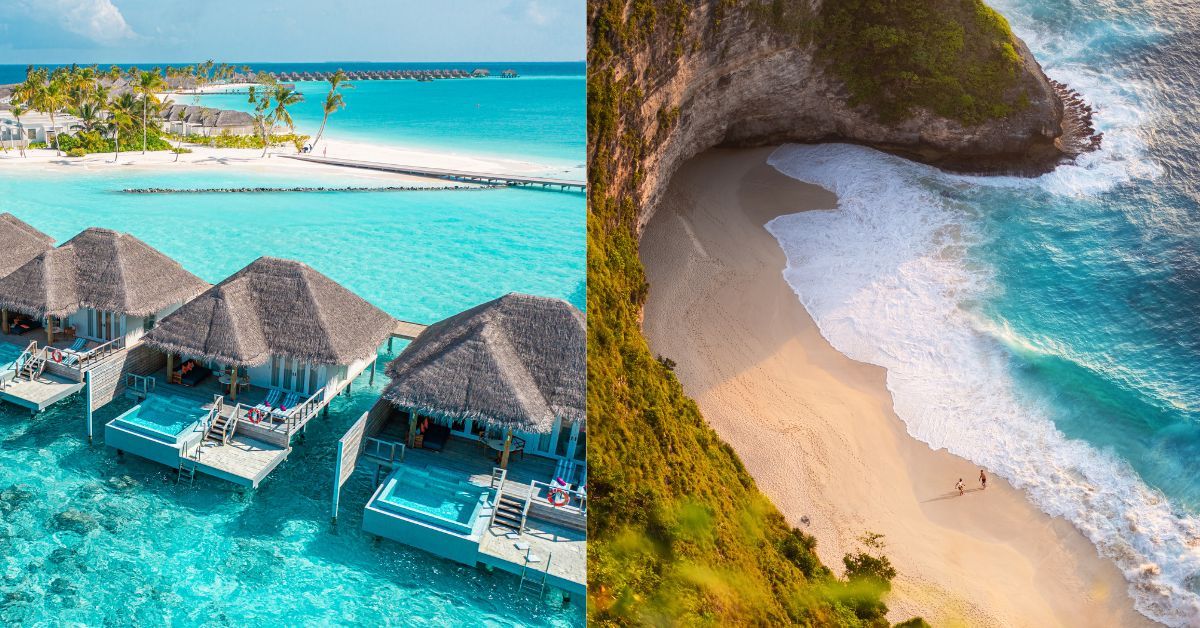
Choosing between Bali and the Maldives is one of the most exciting travel dilemmas you can have. Both are stunning tropical destinations — but they offer completely different experiences, price points, and vibes. This guide covers everything side by side so you can make the right call for 2026.
Bali is a small Indonesian island in Southeast Asia, just east of Java. It is often called the "Island of the Gods," and the name fits. Bali blends Hindu culture, terraced rice fields, ancient temples, surf beaches, and a booming café scene into one unforgettable place.
The island draws millions of visitors every year — backpackers, digital nomads, honeymooners, surfers, and families. You can find budget hostels and five-star villas practically on the same street. Bali is also very easy to get around. A rented scooter can take you from a beach club in Canggu to a misty temple in Ubud in under an hour.
Each area of Bali has its own personality. Kuta is energetic and packed with nightlife. Seminyak is trendy and upscale. Canggu is beloved by the digital nomad crowd. Ubud is the cultural and spiritual core of the island. If you are still figuring out which area suits you best, check out our guide to Kuta vs Canggu — or dive into the Canggu vs Ubud comparison for two very different Bali vibes.
The Maldives is a chain of over 1,000 coral islands scattered across the Indian Ocean, southwest of Sri Lanka. It is world-famous for overwater bungalows, impossibly clear turquoise water, and some of the best diving on the planet. Simply put — it looks like a screensaver brought to life.
The Maldives is primarily a luxury destination. Most resorts are built on private islands, which means you will spend your time in a beautifully controlled environment. There is very little "local culture" to explore in the traditional tourist sense. The experience is built around relaxation, ocean life, and privacy.
Budget travel is possible through local guesthouses on inhabited islands, but the Maldives will always be more expensive than Bali. You are paying for seclusion, pristine water, and an otherworldly setting that is hard to match anywhere else on Earth.
Bali is far more affordable. You can stay in a comfortable guesthouse for $20 to $50 per night. Mid-range hotels run $50 to $150. Luxury villas start at about $200 per night. A meal at a local warung costs just $2 to $5. Renting a scooter costs around $5 to $9 per day — making island exploration cheap and easy.
The Maldives operates in a completely different price range. A budget week at a local guesthouse runs around $1,200 to $2,500. A mid-range resort week costs $3,000 to $4,500. Luxury overwater villas can easily reach $5,000 to $10,000+ per week. A single scuba dive can cost $50 to $200.
| Expense | Bali | Maldives |
| Budget accommodation (per night) | $20–$50 | $80–$150 (guesthouse) |
| Mid-range hotel (per night) | $50–$150 | $300–$600 |
| Luxury villa/resort (per night) | $200+ | $700–$2,000+ |
| Meal at a local eatery | $2–$5 | $10–$25 |
| Daily transport | ~$5–$9 (scooter) | $50–$150+ (speedboat/seaplane) |
Bali wins on affordability for every type of traveler.
Bali's best time to visit is during the dry season, May to October. June through August are the most popular months, with great beach weather and calm seas. However, peak season also means higher prices and bigger crowds. The sweet spot is April–May or September–October — good weather, fewer tourists, and lower rates.
For the Maldives, the best time is November to April, which is the dry season in the Indian Ocean. December through March is peak season, so expect top prices. May to October is the wet season, but rates drop significantly and diving can still be excellent.
Want to plan around Bali's weather specifically? Our detailed Weather in Bali in April 2026 guide explains exactly what to expect month by month.
Both destinations are tropical and warm year-round. Bali stays between 26°C and 32°C (79°F–90°F). The dry season (May–October) brings clear skies and low humidity. The wet season (November–March) brings afternoon showers, but mornings are typically sunny.
The Maldives has similar temperatures, ranging from 25°C to 31°C (77°F–88°F) throughout the year. The northeast monsoon (December–April) delivers the driest, calmest weather. The southwest monsoon (May–October) brings more rain and rougher seas.
In both places, rain rarely lasts all day. The key difference is that bad weather in the Maldives can shut down boat transfers and disrupt resort access — something that rarely causes the same kind of disruption in Bali.
Bali is in Indonesia, nestled between Java to the west and Lombok to the east, at roughly 8°S latitude. You can fly to Bali's Ngurah Rai International Airport directly from most major hubs in Asia, Australia, and the Middle East.
The Maldives sits in the Indian Ocean, about 700 km southwest of Sri Lanka. Malé is the main arrival point. From Malé, you will typically need a speedboat or seaplane to reach your resort — and that transfer alone can run $100 to $600 per person each way.
From most Southeast Asian cities, Bali is significantly easier and cheaper to reach. From Western countries, both require long-haul flights, but Bali generally offers more direct routing options and lower fares.
Bali offers enormous beach variety. Wide surf beaches in Kuta, dramatic cliff-backed coves in Uluwatu, black sand beaches near Amed, and quieter stretches in Sanur and Nusa Dua. Not every beach is postcard-perfect — some have seaweed or rocky shores — but the range is remarkable. For great sand in a trendy setting, check out our list of the best beaches in Canggu.
The Maldives has arguably the world's most beautiful beaches. Think powdery white sand, turquoise water, and near-zero crowds. The water is so clear you can see the coral reef from the shoreline. There is no surf culture or dramatic coastal geology — just pure, calm, jaw-dropping beauty.
Verdict: Maldives wins for pure beach aesthetics. Bali wins for beach variety and character.
Bali is a serious water sports destination. You can surf iconic breaks like Uluwatu, Padang Padang, and Keramas. Snorkeling and diving around Amed and Nusa Penida are world-class — manta rays and mola mola (ocean sunfish) are regulars. White-water rafting, cliff jumping, parasailing, and jet skiing are all easy to arrange.
The Maldives is a diver's and snorkeler's paradise. Its coral reefs are among the healthiest on the planet. Whale shark encounters, manta ray diving, and drift diving through ocean channels are the highlights. Water visibility can reach 30 meters. Surfing exists in some atolls but is far less developed than Bali.
Verdict: Bali wins for surfing. Maldives wins for diving and snorkeling.
Both destinations are generally very safe. Violent crime is rare in both places. In Bali, the main risks are petty theft, scooter accidents, and tourist scams — all very avoidable with basic awareness.
In the Maldives, resort islands are tightly controlled, making them extremely safe. However, medical facilities are limited outside Malé. A serious health emergency on a remote resort island can require an expensive and slow evacuation. Bali has several international hospitals in Seminyak, Kuta, and Denpasar.
Both destinations are considered safe for solo travelers, including women traveling alone.
Bali overflows with activities. You can visit ancient temples like Tanah Lot and Uluwatu, trek through the Tegalalang rice terraces, hike Mount Batur for a sunrise view, take a cooking class, or attend a traditional Kecak dance. Check out our Bali Events in April 2026 guide for festivals and events happening right now.
The Maldives has far fewer things to do on land. The islands are small and flat. Most activities are ocean-based. Beyond diving, snorkeling, and water sports, there is limited on-land exploration. Day trips to Malé give you a taste of local culture — fish markets, mosques, and historic streets — but that is about as far as it goes.
Verdict: Bali wins for activity variety. Maldives wins for a focused, ocean-centered experience.
Bali has one of the most exciting nightlife scenes in all of Southeast Asia. Seminyak and Kuta are loaded with clubs, bars, and live music. Canggu is famous for its beach clubs and sunset cocktail bars. Our dedicated Bali nightlife guide covers the top spots across the island, including what to do and what to avoid.
The Maldives is the opposite. As a Muslim nation, alcohol is only permitted on resort islands. There are no nightclubs. Evenings typically involve a sundowner on your villa deck, dinner over the water, and an early bedtime. This is perfect for couples, but not for partygoers.
Verdict: Bali wins for nightlife — by a wide margin.
Bali's Hindu culture is one of its biggest draws. Every corner of the island has a temple. The Balinese calendar is full of colorful ceremonies and festivals. Two of the most important are Galungan and Kuningan, which transform the entire island with bamboo decorations and elaborate offerings. Visiting during a ceremony is genuinely unforgettable.
It is worth brushing up on local customs before you go. Our guide to local laws and cultural norms in Bali helps you show the right respect and avoid rookie tourist mistakes.
The Maldives has a quieter cultural scene. The Dhivehi culture is shaped by Arabic, Indian, and African influences, and Malé has mosques, museums, and a bustling fish market. But on most resort islands, you are largely separated from local life.
Verdict: Bali wins for cultural depth and immersion.
Balinese food is a highlight of any trip. Nasi goreng (fried rice), satay, babi guling (roast pig), and lawar (spiced meat salad) are must-tries. The café scene has exploded over the past decade — world-class coffee, vegan bowls, and international cuisine are available in almost every neighborhood. Food is cheap and delicious.
Maldivian cuisine centers on fish (especially tuna) and coconut. Local dishes like mas huni (tuna and coconut salad) and garudhiya (fish broth) are worth trying. On resort islands, international menus come at international prices. Local guesthouses serve cheaper and more authentic meals.
Verdict: Bali wins for food variety, quality, and value.
The Maldives offers one of the most iconic visual settings on Earth. Turquoise lagoons, white sandbars, and glass-floored bungalows perched over still water — it looks like something out of a screensaver. Every photo you take is effortlessly beautiful.
Bali has its own rich aesthetic. Rice terrace views, mist-covered volcanoes, flower-filled temples, and vibrant street art make for incredible visuals. The beauty is warm, layered, and alive. Bali's different neighborhoods each have a distinct look and feel — explore Canggu vs Ubud to see two completely different sides of the island.
Verdict: Maldives wins for water-based aesthetics. Bali wins for visual variety and cultural beauty.
Bali nature highlights:
Maldives nature highlights:
Bali adventure highlights:
Maldives adventure highlights:
Bali is a very family-friendly destination. Kids love the Waterbom Bali waterpark in Kuta, which has safe toddler zones and wild slides for older kids. Bali Safari & Marine Park is another full-day win — kids can see lions, rhinos, and zebras up close. Nusa Penida is great for older kids who want to snorkel with manta rays. Other popular family choices include the Uluwatu Kecak fire dance, dolphin watching in Lovina, and cycling tours through rice fields.
The Maldives is excellent for families who can afford it. Most luxury resorts have dedicated kids' clubs with treasure hunts, marine biology lessons, cooking with chefs, and sand castle competitions. Glass-bottom boat rides are a huge hit with younger children — they can see sharks, turtles, and colorful fish without getting wet. Snorkeling in the house reef is also gentle enough for kids aged six and up.
Verdict: Bali wins on variety and value for family trips. The Maldives wins for all-inclusive family luxury, assuming budget is not a concern.
Bali delivers significantly more value per dollar. For a week's holiday, a couple can enjoy a beautiful private villa, great food, transport by scooter, day trips, spa treatments, and beach clubs — all for well under $1,500.
In the Maldives, the same budget will cover maybe two to three nights at a basic guesthouse. The overwater villas, seaplane transfers, resort meal plans, and water excursions mean that a week for two often costs $4,000 to $10,000 or more.
If you want to stretch your money and see, eat, and do as much as possible, Bali wins this category with ease.
Bali is an exceptional shopping destination. Markets in Seminyak, Ubud, and Kuta sell handmade jewelry, batik clothing, leather bags, wood carvings, woven baskets, and Balinese artwork — all at bargain prices if you haggle well. High-end boutiques in Seminyak and Canggu carry local designer brands that are globally respected.
The Maldives has very limited shopping. Most resort boutiques sell branded swimwear, jewelry, and sarongs at inflated prices. Malé has a few local markets and souvenir shops, but selection is thin and prices are higher than what you'd expect for the quality.
Verdict: Bali wins for shopping — it is not even close.
Bali is one of the world's top digital nomad destinations. Co-working spaces like Dojo Bali and Outpost offer fast internet, community events, and networking opportunities. Canggu is the main nomad hub, packed with cafés offering reliable Wi-Fi, good coffee, and healthy food. Indonesia launched a Digital Nomad Visa (E33G Remote Worker Visa) that allows stays of up to one year. Monthly living costs for a digital nomad in Bali generally run $1,200 to $2,500 — cheaper than most European cities.
The Maldives has no dedicated digital nomad visa. Internet infrastructure is solid on resort islands but limited on local ones. There is very little co-working infrastructure. The high cost of living, isolation of resort islands, and lack of a nomad community make it impractical as a long-term base.
Verdict: Bali wins for digital nomads — it is purpose-built for remote work.
Bali has one of Asia's largest and most established expat communities. Long-term rentals are available across Canggu, Seminyak, Ubud, and Sanur. International schools, hospitals, gyms, and Western groceries are all accessible. The KITAS (temporary stay permit) is the main visa option for longer stays.
The Maldives is not typically an expat destination. Most foreigners living there work in the resort industry on employment contracts. Housing, transport, and food are all more expensive. There is limited community infrastructure for freelancers or independent expats.
Verdict: Bali wins for expat living — by a significant margin.
For a honeymoon or anniversary trip, both destinations offer world-class romance — just in different styles.
Top romantic resorts in the Maldives:
Top romantic resorts and villas in Bali:
Verdict: Maldives wins for pure water-based honeymoon luxury. Bali wins for romantic experiences that also include adventure, culture, and atmosphere. If you are planning a romantic trip to Bali, use Cinchy's scooter booking service to explore the island in style — on your own schedule.
Both destinations cater well to families, but in very different ways.
Bali family activity highlights:
Maldives family activity highlights:
For a family trip built around exploring Bali, our guide to things to do in Canggu is a great starting point. And to make getting around easy with the whole family, book a scooter through Cinchy for reliable, door-to-door delivery.
Still unsure? Here are some practical tips to help you decide:
| Category | Bali | Maldives |
| Cost & Value | ⭐⭐⭐⭐⭐ | ⭐⭐ |
| Beaches | ⭐⭐⭐⭐ | ⭐⭐⭐⭐⭐ |
| Water Sports | ⭐⭐⭐⭐⭐ | ⭐⭐⭐⭐ |
| Diving & Snorkeling | ⭐⭐⭐⭐ | ⭐⭐⭐⭐⭐ |
| Culture | ⭐⭐⭐⭐⭐ | ⭐⭐ |
| Nightlife | ⭐⭐⭐⭐⭐ | ⭐ |
| Food | ⭐⭐⭐⭐⭐ | ⭐⭐⭐ |
| Family-Friendliness | ⭐⭐⭐⭐⭐ | ⭐⭐⭐⭐ |
| Romance | ⭐⭐⭐⭐ | ⭐⭐⭐⭐⭐ |
| Digital Nomads | ⭐⭐⭐⭐⭐ | ⭐ |
| Shopping | ⭐⭐⭐⭐⭐ | ⭐⭐ |
| Adventure Activities | ⭐⭐⭐⭐⭐ | ⭐⭐⭐ |
| Nature | ⭐⭐⭐⭐⭐ | ⭐⭐⭐⭐ |
| Safety | ⭐⭐⭐⭐ | ⭐⭐⭐⭐⭐ |
| Ease of Access | ⭐⭐⭐⭐⭐ | ⭐⭐⭐ |
Choose the Maldives For:
Choose Bali For:
Ready to explore Bali in 2026? Start planning your trip on Cinchy — and make sure to book your scooter in advance for the most flexible and affordable way to get around the island.
It depends entirely on what you want. Bali is better for cultural experiences, adventure, food, nightlife, shopping, and budget travel. The Maldives is better for a luxury beach retreat, world-class diving, and private romantic escapes. Neither is objectively "better" — they serve different types of travelers and different travel goals.
The Maldives is significantly more expensive than Bali. A couple can have a full week in Bali — villa, food, transport, and activities — for $1,000 to $1,500. The same week in the Maldives, staying at a mid-range resort, typically costs $3,000 to $6,000 or more. Budget guesthouses exist in both, but even budget Maldives travel costs more than mid-range Bali.
In Bali, the main local languages are Balinese and Bahasa Indonesia. However, English is very widely spoken across tourist areas. Most hotel staff, restaurant workers, guides, and drivers communicate comfortably in English. Our Bali language guide covers useful phrases and local communication tips.
In the Maldives, the official language is Dhivehi. English is the main language used in resorts and hospitality, so tourists rarely face a language barrier at hotels or restaurants.
Bora Bora in French Polynesia is similar to the Maldives — stunning turquoise lagoons, overwater bungalows, and ultra-luxury pricing. It is one of the most expensive tropical destinations in the world, making even the Maldives look affordable by comparison. Bali offers far more variety, culture, and value. For most travelers — especially those on a reasonable budget — Bali is the better all-around choice over Bora Bora.
Bali is the most affordable of the three. Budget travelers can get by on $30 to $50 per day. Mauritius sits between the Maldives and Bali in terms of cost — mid-range accommodation is accessible, but food and activities are pricier than Bali. The Maldives is the most expensive, especially due to seaplane transfers and all-inclusive resort pricing.
No — they are very different destinations. The Maldives is a flat chain of coral islands in the Indian Ocean, focused almost entirely on the ocean and luxury relaxation. Bali is a single volcanic island in Indonesia, rich in Hindu culture, lush landscapes, surf beaches, and nightlife. The only real similarities are warm tropical weather, incredible ocean access, and international tourism infrastructure.
Indonesia encompasses over 17,000 islands — of which Bali is the most famous. Indonesia offers far more variety: from the cultural depth of Bali to the orangutans of Borneo, the volcanoes of Java, and the pristine beaches of Lombok and the Gili Islands. If you want a rich and multifaceted trip at an affordable price, Indonesia wins. If you want pure oceanic luxury with minimal land exploration, the Maldives is the better choice.
Bali is generally better for families with kids of all ages due to wider activity variety and lower cost. Waterbom Bali, the Bali Safari & Marine Park, snorkeling at Nusa Penida, and cultural performances give children a rich and exciting experience. The Maldives is excellent for families with a luxury budget — resort kids' clubs, glass-bottom boats, and snorkeling in calm house reefs are huge hits with younger children.
Bali is cheaper to fly to in most cases. Ngurah Rai International Airport (DPS) connects to a large number of direct and one-stop routes from Asia, Australia, the Middle East, and Europe, keeping airfares competitive. The Maldives (Malé) is also well-connected, but fares tend to run slightly higher, and the additional cost of a speedboat or seaplane transfer to your resort adds significantly to total travel costs.
The Maldives is located entirely in the Indian Ocean, about 700 km southwest of Sri Lanka. Bali's southern coastline also faces the Indian Ocean — beaches like Kuta, Seminyak, Uluwatu, and Padang Padang all sit on the Indian Ocean coast. Bali's northern and eastern coasts face the Bali Sea and Lombok Strait respectively.
The Maldives is widely considered the world's most romantic honeymoon destination. The combination of private overwater villas, crystal-clear turquoise water, stunning sunsets, world-class spa treatments, and complete seclusion creates an atmosphere that is almost impossible to replicate elsewhere. With no roads, no cars, and no nightclubs, the entire focus is on you and your partner. Sunset dinner on a private sandbank, watching bioluminescent plankton at night, and waking up to the ocean beneath your villa floor — these are experiences that stay with couples forever.
Bali offers one of the most romantically diverse honeymoon experiences in the world — and at a fraction of the Maldives cost. You can wake up in a private jungle villa in Ubud, spend the afternoon at a clifftop sunset bar in Uluwatu, eat a candlelit dinner with rice terrace views in Tegalalang, and take a private spa retreat the next morning. Bali also allows you to connect emotionally with local culture through temple visits, traditional ceremonies, and meaningful experiences beyond just beach relaxation.
| Factor | Bali | Maldives |
| Location | Indonesian island, Southeast Asia | Coral archipelago, Indian Ocean |
| Terrain | Volcanic, mountainous, jungle-covered | Flat coral islands, sea-level |
| Culture | Rich Hindu Balinese heritage | Islamic Dhivehi culture |
| Nightlife | Vibrant clubs and beach bars | Limited; resort-only alcohol |
| Cost | Budget to luxury | Mid to ultra-luxury |
| Activities | Extremely diverse | Primarily ocean-based |
| Accessibility | International airport, easy to reach | Requires seaplane/speedboat transfers |
The Maldives has the edge for pure beach perfection — powdery white sand, crystal-clear calm water, and near-zero crowds on private resort beaches. Bali's beaches offer far more variety: dramatic surf breaks, black sand volcanic shores, cliffside beaches, and social beach clubs. If beach aesthetics are your top priority, the Maldives wins. If you want beach variety and lively atmosphere, Bali wins.
The Maldives wins for sheer marine biodiversity and water clarity. You can see whale sharks, hammerhead sharks, manta rays, hawksbill turtles, and hundreds of reef fish species in exceptional visibility of up to 30 meters. Bali is also excellent — Nusa Penida is globally famous for manta ray encounters and mola mola sightings, and Amed has beautiful reef diving. But overall, the Maldives has the edge for marine life experiences.
Both offer exceptional accommodation, but in very different categories. The Maldives has some of the most iconic resort accommodation in the world — overwater villas with private plunge pools, glass floors, and direct ocean access are the signature experience. Bali offers excellent value across every budget tier: private pool villas for $100 to $200 per night, boutique jungle retreats, luxury clifftop resorts, and budget-friendly guesthouses. For luxury-per-dollar, Bali wins. For pure unique experience, the Maldives wins.
Check out our guide to the best things to do in Canggu for a curated three-day Canggu itinerary. And to see cultural Bali beyond the tourist trail, our guide to Sanur is a great read.
Both require long-haul flights from the US, typically 18 to 24+ hours including layovers. Bali is generally slightly easier and often more affordable from the US West Coast, with good connections through Tokyo, Seoul, Singapore, or Hong Kong. The Maldives connects well via Dubai, Doha, or Singapore. However, once you land in the Maldives, you still need a seaplane or speedboat to your resort — adding time and significant cost to the journey.
Both destinations are making progress on sustainability, but face serious environmental challenges. Bali has a well-documented plastic waste problem on some beaches and in rivers, though government and NGO clean-up efforts are ongoing. Many Bali resorts and restaurants have gone plastic-free and source ingredients locally.
The Maldives faces existential threats from rising sea levels and coral bleaching due to climate change. Many resorts have invested heavily in coral restoration projects, solar power, and sustainable operations. Staying at a certified eco-resort in the Maldives is one of the most meaningful ways to support the islands' future.
Bali is substantially cheaper than the Maldives across every category — flights, accommodation, food, transport, and activities. A week in Bali for two people on a comfortable budget costs roughly $1,000 to $2,000 all in. A week in the Maldives on a budget-to-mid-range level costs $2,500 to $6,000 or more. The Maldives is simply in a different price bracket.
Both destinations are considered safe for tourists. In Bali, the most common issues are petty theft, scooter accidents, and tourist scams — all preventable with common sense and preparation. Before your trip, read our guide to local laws and cultural norms in Bali to avoid any unintentional cultural missteps or legal issues.
The Maldives is highly controlled and safe within resort islands. The main risk is the remoteness of medical facilities. For serious medical emergencies, evacuation to Malé or abroad may be required, which is expensive without proper travel insurance. Both destinations are safe for solo travelers and couples alike.
Heading to Bali in 2026? Explore everything Cinchy has to offer — from scooter rentals to insider travel tips. Make your Bali adventure easier, cheaper, and more memorable. Book your scooter now and get ready to explore the Island of the Gods on your own terms.
 travel tips
 hidden gems
 scooter guides
 riding tips
 bali guides
 cultural insight