1


Stay in Touch
Get the latest updates, special offers, and exclusive Cinchy perks straight to your inbox.


Jl. Plawa No.50, Seminyak, Kec. Kuta, Kabupaten Badung, Bali 80361

CALL US 24/7
(+62-851-7424-6249)
Copied!

We’ll be Back
at
8:30 AM-9 PM WITA




Payment Partners


© 2026 CINCHY. ALL RIGHTS RESERVED.
Cinchy Blog / Bali vs Malaysia: Should You Visit Bali or Malaysia in 2026?
Published: 28 Apr 2026

By Ulfah Alifah
Travel Enthusiast
Free Cancellation
24/7 Support
Insurance
Start Date - End Date
Start Time
End Time
Duration
0 Day(s)
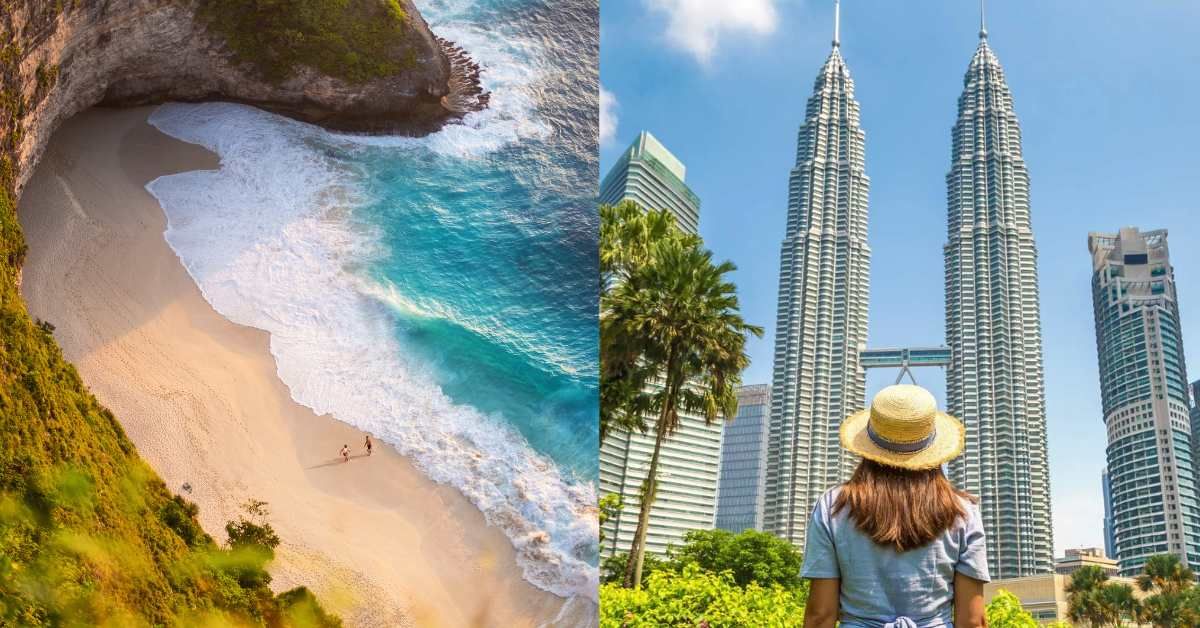
Two of Southeast Asia's biggest travel names. One tough choice. Bali, Indonesia's spiritual island paradise, draws millions every year with rice terraces, surf breaks, and legendary beach clubs. Malaysia, a diverse country stretching across the Malay Peninsula and Borneo, offers modern cities, pristine rainforests, and quiet island escapes.
So which one should you book for 2026? This guide breaks down every major category — beaches, budget, nightlife, food, visas, and more — so you can pick the right destination for your trip.
Bali is a small volcanic island in Indonesia, sitting between Java to the west and Lombok to the east. It covers about 5,780 square kilometres — compact, but endlessly rich.
What makes Bali stand out from almost every other destination on Earth is its living Balinese Hindu culture. You'll see daily flower offerings placed on every doorstep, temple ceremonies happening on street corners, and ancient Kecak fire dances performed against dramatic clifftop sunsets. It's spiritual, visually stunning, and incredibly welcoming.
Beyond the culture, Bali delivers world-class surf, lush rice terraces, volcano hikes, and one of Southeast Asia's best nightlife and café scenes. Each area has its own personality:
Bali works for every traveller. Budget backpackers can get by on $20–30 a day. Honeymooners find stunning private pool villas. Families enjoy the mix of culture, beaches, and easy day trips. Digital nomads love the high-speed internet and massive co-working community — especially in Canggu.
Malaysia is a country, not just an island — and that distinction matters. It spans two landmasses: Peninsular Malaysia (bordering Thailand and Singapore) and Malaysian Borneo (home to Sabah and Sarawak). Together, they cover roughly 329,847 square kilometres, making Malaysia about 57 times larger than Bali.
Malaysia is one of Southeast Asia's most diverse destinations. You get the glass towers and food paradise of Kuala Lumpur, the colonial heritage of Penang's George Town, the white-sand beaches of Langkawi, and the ancient rainforests of Borneo — all in one country. The culture is a rich blend of Malay, Chinese, Indian, and indigenous influences.
Malaysia is especially popular with:
Malaysia is dramatically larger than Bali. Bali covers approximately 5,780 sq km — a compact island you can drive across in a few hours. Malaysia covers around 329,847 sq km, spanning two separate landmasses and 13 states. Travelling through Malaysia requires flights between regions and more careful planning. Bali's small size is actually one of its biggest advantages — you can experience a huge amount in just one week.
Bali's sweet spot is its dry season, which runs from April to October. May, June, and September are widely considered the best months — warm temperatures, low humidity, clear skies, and slightly fewer crowds than the peak July–August period. Shoulder season in April and October often offers 20–30% lower prices than peak rates.
Malaysia's best time to visit varies by region. The west coast — including Langkawi and Penang — is best from November to April, when the southwest monsoon clears. The east coast (Perhentian Islands, Tioman) is best from March to October. Kuala Lumpur is a year-round destination. Note that Bali and Malaysia's peak seasons are largely opposite, which can help you plan a combined trip.
Bali has a tropical climate with two clear seasons. The dry season (April–October) brings sunny days averaging 28–32°C with very low rainfall — perfect for beaches and outdoor activities. The wet season (November–March) brings afternoon downpours and higher humidity, though mornings usually stay clear and usable.
Malaysia is hot and humid year-round, with temperatures typically ranging from 23–33°C. Rainfall patterns vary significantly by region, so planning ahead is essential. Both countries are equatorial — expect tropical heat no matter when you visit.
Bali is an outdoor sports paradise. Surfing tops the list, with breaks ranging from beginner-friendly Kuta and Seminyak to world-class Uluwatu and Padang Padang. You can also hike Mount Batur at sunrise, white-water raft the Ayung River in Ubud, cycle through rice terraces, and find a yoga retreat in almost every corner of the island.
Malaysia offers excellent outdoor sports, especially for jungle and highland lovers. Trekking through Borneo's ancient rainforests, scaling Mount Kinabalu (Southeast Asia's highest peak at 4,095 m), zip-lining in Langkawi, and kayaking through Kilim Geoforest Park are all standout experiences. If wilderness adventure is your goal, Malaysia's natural diversity gives it a unique edge.
Bali's scenery is iconic: emerald rice terraces cascading down hillsides, volcanic peaks breaking through morning clouds, ancient stone temples perched on clifftops, and black sand beaches stretching along the coastline. It's a destination that looks stunning from every angle.
Malaysia's scenery spans a wider range. The Petronas Twin Towers and Kuala Lumpur's skyline, the limestone karst formations of Langkawi, the ancient rainforests of Borneo, and the turquoise waters of the Perhentian Islands all offer very different kinds of visual drama. If you love diverse landscapes across one trip, Malaysia rewards every kilometre of exploration.
Bali's beaches are globally famous — but each one has its own character. Kuta is social and great for beginner surfers. Seminyak is more upscale, with chic beach clubs lining the shore. Uluwatu and Padang Padang offer dramatic cliff scenery loved by photographers. Nusa Dua has calm, clear water perfect for families.
Malaysia's best beaches are found on its islands — Langkawi, the Perhentian Islands, and Tioman are standouts. They tend to be quieter and less commercialised than Bali's busiest stretches. For a focused breakdown of how Bali compares specifically to Malaysia's top island, read our full Bali vs Langkawi guide — it covers beaches, costs, nightlife, and more side by side.
Both destinations have excellent hotel options at every budget level. Bali has thousands of properties — from $10-a-night guesthouses to world-class resorts in Jimbaran and Nusa Dua. Budget travellers find excellent value in areas like Kuta, Legian, and Sanur. If you're staying near Bali's famous surf and southern cliffs, our guide to hostels in Uluwatu covers the best affordable picks near the cliffs.
Malaysia offers strong hotel variety too. Kuala Lumpur runs from budget pods to five-star towers. Langkawi and Borneo have spectacular jungle resort properties — the Datai Langkawi and Four Seasons Langkawi are among Asia's finest. For mid-range value, though, Bali generally wins.
Bali is the villa capital of Southeast Asia. Private pool villas are available in almost every area — from $60/night in quieter neighbourhoods to $500+/night in Seminyak and Ubud. The quality-to-price ratio is outstanding. For some of the best-value private villa options close to Bali's beach and restaurant scene, check out our villas in Kerobokan guide.
Malaysia has villas too, especially in Langkawi and the Cameron Highlands, but they don't match Bali's volume, variety, or value. For the private villa experience, Bali wins clearly.
Bali's dining scene is world-class and incredibly diverse. You'll find authentic Balinese and Indonesian cuisine — nasi goreng, babi guling (roast suckling pig), sate lilit, and fresh seafood — alongside excellent cafés, fine dining restaurants, and international food from every corner of the globe. The café culture in Canggu alone deserves its own trip. For a taste of what to expect, explore our guide on the best things to do in Canggu, which includes its top dining spots.
Malaysia's dining scene is arguably the most diverse in Southeast Asia. Malay, Chinese, Indian, Peranakan, and international cuisines coexist beautifully in every major city. Penang's street food is considered world-class by food critics globally. Kuala Lumpur has a serious fine dining scene alongside some of Asia's best hawker centres. If sheer food variety is your goal, Malaysia sets an incredibly high bar.
Bali offers one of Southeast Asia's widest menus of water sports. Surfing dominates, but you'll also find white-water rafting, parasailing, wakeboarding, jet skiing, and glass-bottom boat tours. The variety across different parts of the island is hard to beat.
Malaysia's water sports are concentrated around its island destinations — Langkawi, the Perhentian Islands, and Tioman all offer solid packages including jet skiing, parasailing, banana boats, and snorkelling tours. The experience is good, but the depth of options doesn't quite match Bali's.
Bali is one of Asia's top dive destinations. Nusa Penida is world-famous for manta ray encounters and the rare Mola Mola (ocean sunfish). Amed and Tulamben offer incredible wall dives and the iconic USAT Liberty shipwreck. Snorkelling around Nusa Lembongan and Crystal Bay is equally spectacular. For the best spots to get in the water, check out our full list of recommended snorkelling spots in Bali.
Malaysia's Sipadan Island in Borneo is considered one of the top five dive sites in the entire world, with incredible shark, turtle, and reef biodiversity. The Perhentian Islands are also excellent for beginner divers and snorkellers. If Sipadan is on your bucket list, Malaysia has a genuine edge in that specific niche.
Bali's inland adventures are some of its best-kept secrets. Hiking Mount Batur for a sunrise view over the caldera, cycling through Ubud's rice terraces, rafting the Ayung River, and visiting the sacred Monkey Forest are all hugely popular activities. The interior of Bali is every bit as stunning as the coast.
Malaysia's inland adventures take you deeper and wilder. Borneo's rainforests are among the oldest and most biodiverse ecosystems on Earth. Trekking in Taman Negara, searching for orangutans in Sepilok, and climbing Mount Kinabalu are bucket-list experiences. If you want a true jungle expedition, Malaysia is the clear winner for inland adventures.
Both Bali and Malaysia are safe destinations for tourists. Violent crime is rare in both locations. In Bali, the main concerns are petty theft, tourist scams, and scooter accidents — particularly in busy areas like Kuta and Seminyak. Using a reputable scooter rental service and staying aware of your surroundings keeps most risks manageable.
Malaysia is generally very safe. Kuala Lumpur has improved significantly in safety over the past decade, with petty theft in crowded areas being the primary concern. Malaysia's smaller island resorts — like Langkawi — are peaceful and low-risk. Both destinations are suitable for solo travellers, couples, and families.
Bali's nightlife is legendary. Seminyak has upscale beach clubs and cocktail bars. Canggu has rooftop bars and a laid-back social scene. Kuta has high-energy party venues. The range covers everything from quiet sunset cocktails to full-on all-night dancing. For a complete breakdown of where to go after dark, our Bali nightlife guide covers all the best venues across the island.
Malaysia's nightlife is more concentrated and less developed as a scene. Kuala Lumpur has a solid club and bar district, especially around Changkat Bukit Bintang. However, alcohol is expensive in Malaysia due to taxation, and the overall nightlife energy doesn't compare to Bali's. On the islands, nightlife is minimal at best.
Bali's lifestyle is one of its biggest draws. The blend of spiritual culture, beach living, surf, café hopping, yoga, and creative community creates a way of life that many travellers come for a week and stay for a year. Canggu has built a global reputation as one of the world's best lifestyle destinations for young travellers and creatives. If you're wondering whether it lives up to the hype, our guide on whether Canggu is a good place to stay in Bali gives you the full picture.
Malaysia's lifestyle varies dramatically by location. Kuala Lumpur is modern, cosmopolitan, and fast-paced. Penang is relaxed, artistic, and culturally rich. Langkawi is quiet and nature-focused. Malaysia's lifestyle offer is broader but less immediately defined than Bali's deeply recognisable identity.
Bali's culture is one-of-a-kind. Balinese Hinduism shapes every aspect of daily life — the temples, the ceremonies, the music, the dance, the offerings, and the food. Experiencing the Kecak fire dance at Uluwatu, watching a Legong performance in Ubud, or joining a purification ritual at Tirta Empul feels genuinely transformative.
Malaysia's culture is a mosaic. The Malay Islamic tradition, Chinese festivals, Indian celebrations, and indigenous Dayak culture in Borneo all coexist and intersect. This multicultural richness is most visible in Penang's George Town, a UNESCO World Heritage city. Both destinations are deeply cultural — just in very different ways.
Bali's food scene covers every base. Local Balinese cuisine is earthy, spiced, and satisfying — try babi guling (slow-roast suckling pig), ayam betutu (spiced chicken), and nasi campur (mixed rice with various sides). The international restaurant scene in Seminyak and Canggu is excellent. Specialty coffee culture is everywhere.
Malaysia's food culture is arguably unmatched in Southeast Asia. Nasi lemak, char kway teow, roti canai, laksa, and dim sum are just the beginning. Penang's hawker food is considered by many critics to be among the best street food on the planet. If eating your way through a destination is your travel style, Malaysia delivers one of the greatest food experiences in the world.
Bali is a shopping paradise for handmade and artisan goods. Seminyak's boutique fashion strips, Ubud's art markets, and Kuta's surf shops offer endless options. Hand-carved wooden sculptures, silver jewellery, batik cloth, woven baskets, leather sandals, and custom-made clothing are all available at prices that make gift buying effortless.
Malaysia combines local crafts with modern retail. Kuala Lumpur's shopping malls — like Pavilion and Suria KLCC — offer a full luxury brand experience. Penang has great antique and batik shopping. Langkawi's duty-free status makes it attractive for alcohol, chocolate, and cosmetics. Each destination serves a different kind of shopper.
Both destinations are family-friendly, but in different ways. Bali works well for families with older kids who enjoy cultural activities, surf lessons, cooking classes, and nature tours. Nusa Dua is particularly calm and resort-focused, making it ideal for families with younger children who need easy beach access and relaxed surroundings.
Malaysia is also highly family-friendly and, in some ways, logistically easier. Kuala Lumpur has world-class family attractions, Langkawi is calm and safe with clean swimming beaches, and English is widely spoken across the country. For families with very young children, Malaysia's calmer islands and modern infrastructure can be a less stressful experience than Bali's busier tourist zones.
Bali is one of the world's most iconic honeymoon destinations — and it earns that title every year. The combination of private pool villas, sunset temple views, romantic cliff-edge restaurants, spa retreats, and lush jungle settings creates an atmosphere that is deeply romantic at every price point. Ubud and Seminyak are the most popular areas for honeymooners. For more inspiration on planning a luxury romantic getaway from Bali, our Bali vs Maldives comparison also covers the romance angle in full detail.
Malaysia has genuinely romantic spots — Langkawi's jungle eco-resorts, the colonial heritage of Penang, the misty tea estates of Cameron Highlands — but the concentrated romantic energy that Bali delivers across the whole island is hard to replicate across such a large and diverse country.
Bali oozes romance at every corner. Watching the Kecak fire dance at Uluwatu at sunset, sharing a candlelit dinner on a clifftop in Jimbaran, taking a couples' spa day in Ubud, or watching the sun drop into the Indian Ocean from your villa infinity pool — every element of Bali seems designed for couples.
Malaysia has lovely romantic moments, particularly in Penang's colonial old town, the quiet beaches of Tioman, or the highland retreats of the Cameron Highlands. But the concentrated, island-wide romantic atmosphere that Bali delivers is simply in a different league for couples looking for a dedicated romantic escape.
Bali is one of the most photographed destinations on Earth — and the reality actually lives up to the Instagram feed. The rice terraces of Tegallalang, the sea temple of Tanah Lot at dusk, the traditional Balinese architecture draped in frangipani flowers, and the smoky incense from morning offerings create a visual atmosphere that is layered, intentional, and unforgettable.
Malaysia is visually striking in a very different way. The Petronas Twin Towers against the KL skyline is one of Asia's most iconic images. The blue-green waters of Langkawi viewed from the Sky Bridge. The colourful heritage shophouses of Penang's George Town. Both destinations are beautiful — but Bali's aesthetic is more cohesive and consistently distinctive wherever you are on the island.
Bali is one of Southeast Asia's best-value destinations. Budget travellers can get by on $20–35/day eating at local warungs, staying in guesthouses, and renting a scooter. Mid-range travellers spending $60–120/day can enjoy private villas, great restaurants, and activities comfortably. Even luxury in Bali — private pool villas, fine dining, spa days — costs a fraction of what the same experience would run in Western countries.
Malaysia is also affordable but slightly pricier in some categories. Alcohol is significantly more expensive in Malaysia due to high taxation (except in duty-free Langkawi). Street food and public transport in KL and Penang are very affordable. Multi-destination trips within Malaysia also add flight and ferry costs that can push the overall budget higher.
For pure value for money, Bali edges ahead. The quality of accommodation, food, activities, and experiences relative to what you pay is exceptional and hard to find anywhere else in the world at this level. A private pool villa with breakfast in Seminyak can cost $80–120/night. A fresh seafood dinner for two in Jimbaran comes in at $15–25. A full-day surf lesson runs around $25–40.
Malaysia offers strong value in specific areas — street food in Penang, public transport in KL, duty-free goods in Langkawi — but the all-in value package that Bali delivers for tropical island living is very difficult to match.
Both destinations offer excellent shopping, but for different things. Bali wins for handmade, artisan, and fashion-forward purchases. You'll find incredible batik, custom silver jewellery, surf and beach fashion, wooden carvings, and woven goods at prices that make buying gifts a genuine pleasure.
Malaysia wins for modern retail, branded goods, and duty-free items. If you want international fashion brands, electronics, or luxury goods at competitive prices, Kuala Lumpur's malls deliver. For alcohol, cigarettes, and chocolates, Langkawi's duty-free shops beat everywhere else in the region. The right answer depends entirely on what kind of shopping you love.
Bali is one of the world's leading digital nomad destinations. Canggu has built a thriving ecosystem of co-working spaces, fast fibre internet, affordable long-stay villas, and a massive creative community. Indonesia's Digital Nomad Visa allows remote workers to live in Bali for up to 60 days without paying local income tax. The social scene, low cost of living, and lifestyle make it a top choice for remote workers worldwide.
Malaysia is growing rapidly as a nomad destination. Kuala Lumpur has excellent digital infrastructure, affordable serviced apartments, and a solid international community. Malaysia's DE Rantau Digital Nomad Pass visa makes long-term stays more accessible. However, Bali's established nomad culture, lower costs, and outdoor lifestyle still give it a slight edge for most remote workers in 2026.
Bali has a massive, well-established expat community. Tens of thousands of foreigners live on the island long-term, drawn by the low cost of living, the weather, the culture, and the social scene. Areas like Canggu, Seminyak, Ubud, and Sanur each have distinct expat communities. For a feel of what expat-friendly daily life looks like in Bali, our guide on the best things to do in Sanur shows why many long-term residents choose this quieter, local side of the island.
Malaysia appeals to expats through its MM2H (Malaysia My Second Home) programme, which offers long-term residency visas with straightforward requirements. The country is English-friendly, has world-class healthcare, strong infrastructure, and a welcoming multicultural society. Penang is the top choice for retiree expats, while KL attracts working professionals. Both destinations serve different expat stages of life. Bali suits active, social, lifestyle-driven expats. Malaysia suits professionals, families, and retirees who want stability, infrastructure, and a structured residency path.
For Bali, most travellers from over 97 countries can obtain a Visa on Arrival (VOA) or apply in advance for an e-VOA. It costs IDR 500,000 (approximately USD 30–35) and is valid for 30 days, extendable once for an additional 30 days — giving you a maximum stay of 60 days. You will also need to pay Bali's Tourist Levy of IDR 150,000 per person and complete the Indonesia Arrival Card online within three days of arrival. Indonesia's B211A visa and the Digital Nomad Visa are available for longer stays or remote workers.
Malaysia is even more visa-friendly for short trips. Citizens of over 60 countries — including the US, UK, most EU nations, and Australia — receive 90 days visa-free entry simply by showing a valid passport on arrival. Those not on the visa-free list can apply for a USD 20 eVisa online, valid for 30 days. Malaysia does not charge a tourist tax at the level of Bali's levy, making entry relatively frictionless. For long-term stays, Malaysia's DE Rantau Digital Nomad Pass and the MM2H residency programme offer clear, structured pathways.
When you weigh the full experience against total spend, Bali edges ahead for most traveller types. The quality of private villas, food, experiences, beaches, and cultural richness relative to price is genuinely exceptional — and difficult to find anywhere else in the world at the same level. A mid-range couple can have a world-class tropical holiday in Bali for $80–150/day combined, including private accommodation, great meals, and daily activities.
Malaysia delivers outstanding value in urban and street food settings — especially in Penang and KL — and duty-free Langkawi is great for shoppers. However, the higher cost of alcohol, inter-region transport, and the lack of Bali's dense concentration of affordable quality experiences mean that for most leisure travellers, Bali returns more per dollar spent overall.
Packing for both destinations is similar, but a few key differences apply. Here's what to bring for either destination:
For both Bali and Malaysia:
Bali-specific additions:
Malaysia-specific additions:
For scooter riders heading to Bali, make sure you're fully prepared before you arrive. Our Bali scooter rental guide covers everything from licensing and safety to the best bikes for different riding styles — it's essential reading before you hit the road.
Booking tours and activities in Bali has never been easier. Most popular experiences — volcano hikes, white-water rafting, cooking classes, surf lessons, temple tours, and day trips to Nusa Penida — can be booked through local operators on the ground, often for 30–50% less than pre-booking online. That said, for peak season travel (July–August) or specific activities with limited slots, pre-booking is wise.
For getting around Bali independently, a scooter is by far the most practical, affordable, and fun option. It gives you the freedom to explore rice terraces, beach clubs, hidden temples, and local warungs on your own schedule. If you're planning to rent one, book your Bali scooter through Cinchy — it's the most convenient way to secure a reliable ride before you arrive, with flexible pickup options and transparent pricing.
For Malaysia, tours are best booked through KL-based operators for city and highland experiences, or through island-specific dive schools and eco-tour companies for Borneo and island destinations. Langkawi's island-hopping and cable car experiences can be pre-booked online, and it's recommended during school holiday periods when demand spikes.
For both destinations, it always pays to read recent reviews, confirm cancellation policies, and check whether activities are included in a broader travel package. If you want to compare more Southeast Asian destinations before committing to a booking, explore all of Cinchy's travel guides and tools to plan smarter.
Both Bali and Malaysia are incredible destinations — but they serve different travel needs and personalities.
Choose Bali if:
Choose Malaysia if:
And if you can't decide? The good news is — you don't have to. Both countries are geographically close, and flights between Bali (Nguyen Rai International Airport) and Kuala Lumpur take just 2.5 to 3 hours. A smart two-week itinerary can give you the best of both worlds.
Yes — Kuala Lumpur (KL) is the national capital and largest city of Malaysia. It is the country's cultural, financial, and tourism centre, and home to Malaysia's parliament and the iconic Petronas Twin Towers. It is worth noting that Putrajaya — a planned city built in the 1990s — serves as Malaysia's federal administrative capital and houses the executive and judicial branches of government, while KL remains the legislative and commercial capital.
Absolutely. Combining Bali and Malaysia in a single trip is very doable and increasingly popular. A two-week trip works well: spend 7–8 nights in Bali exploring the south (Canggu, Seminyak, Uluwatu) and central highlands (Ubud), then fly to Kuala Lumpur or Langkawi for the remaining days. Direct flights between Ngurah Rai International Airport in Bali and Kuala Lumpur International Airport operate frequently and typically take between 2.5 and 3 hours. Budget airlines like AirAsia often make this connection very affordable. For a taste of what Bali has to offer before you fly on, see our Bali vs Singapore guide for another popular two-destination Southeast Asia combination.
Yes — Bali is one of the world's top honeymoon destinations and earns that reputation genuinely. The island delivers a unique blend of private pool villas, romantic clifftop restaurants, traditional spa retreats, sunset temple ceremonies, and lush jungle backdrops that few destinations can match at any budget. Areas like Ubud, Seminyak, and Jimbaran are particularly popular for couples. Private villa rentals in these areas offer exceptional intimacy and luxury at a fraction of what comparable experiences cost in Europe or the Maldives. For an honest side-by-side look at how Bali compares to the Maldives for romance and luxury, check out our Bali vs Maldives guide.
Yes — Bali has a thriving and globally respected fine dining scene. Seminyak and Petitenget are home to several award-winning restaurants offering everything from Balinese tasting menus and contemporary Indonesian cuisine to French, Japanese, and fusion concepts. Restaurants like Locavore (Ubud), Métis (Seminyak), and Mozaic (Ubud) have featured in Asia's 50 Best Restaurants lists and draw serious food travellers from around the world. Beyond fine dining, Bali's mid-range restaurant scene is equally impressive — world-class food at casual prices is available in almost every neighbourhood.
Ready to explore Bali in 2026? Browse Cinchy's full travel tools and guides to plan your perfect trip — from villa picks to island day trips. And when you land, make sure you've already sorted your wheels. Book your Bali scooter with Cinchy and hit the road on your own terms.
 travel tips
 hidden gems
 scooter guides
 riding tips
 bali guides
 cultural insight