
1


Stay in Touch
Get the latest updates, special offers, and exclusive Cinchy perks straight to your inbox.


Jl. Plawa No.50, Seminyak, Kec. Kuta, Kabupaten Badung, Bali 80361

CALL US 24/7
(+62-851-7424-6249)
Copied!

We’ll be Back
at
8:30 AM-9 PM WITA




Payment Partners


© 2026 CINCHY. ALL RIGHTS RESERVED.
Cinchy Blog / Bali vs Langkawi: Which Island is Worth the Visit in 2026?
Published: 15 Apr 2026

By Ulfah Alifah
Travel Enthusiast
Free Cancellation
24/7 Support
Insurance
Start Date - End Date
Start Time
End Time
Duration
0 Day(s)
Choosing between Bali and Langkawi is one of the most common travel questions in Southeast Asia. Both islands are tropical, affordable, and beautiful — but they offer very different experiences.
Bali is Indonesia's most iconic destination and topped the DestinAsian Readers' Choice Awards for Best Island in Asia in 2026. Langkawi is Malaysia's most famous island getaway — quieter, cleaner, and still relatively undiscovered by international crowds.
This guide breaks down every major category to help you decide which island is right for your 2026 trip. Whether you're traveling solo, with family, as a couple, or as a digital nomad — we have the answers you need.
🌴 Ready to explore Bali? Start planning your trip at Cinchy — Bali's trusted travel and scooter rental platform — and explore the Island of the Gods on your own terms.
Bali is a small volcanic island in Indonesia, sitting between Java and Lombok. But "small" doesn't mean simple. It is one of the most visited tropical islands on the planet, and it earns that reputation every year.
What makes Bali truly special is its Balinese Hindu culture — a living spiritual tradition of daily temple offerings, colorful ceremonies, and ancient art forms found nowhere else in the world. Combine that with world-class beaches, surf breaks, lush rice terraces, dramatic volcanic landscapes, and one of Asia's best nightlife scenes, and you start to understand the appeal.
Bali works for every kind of traveler. Budget backpackers can get by on around $20–30 a day. Honeymooners can find ultra-luxurious private villas in Ubud or Seminyak. Families love the culture, the food, and the easy accessibility. Digital nomads keep coming back because of the fast Wi-Fi, the huge co-working scene, and the creative energy of Canggu and Ubud.
The key areas in Bali each have their own personality:
Langkawi is an archipelago of 99 islands off the northwest coast of Malaysia, close to the Thai border. The main island, Pulau Langkawi, is the one most travelers visit. It's a UNESCO Global Geopark and a duty-free zone, which makes it attractive to shoppers and families on a budget.
Langkawi is calmer, more pristine, and less commercialized than Bali. The jungle is thick, the beaches are less crowded, and the overall pace of life is much slower. It doesn't have the same level of nightlife or cultural depth as Bali, but it makes up for it with natural beauty, wildlife, and a laid-back island atmosphere.
Key areas in Langkawi include:
Langkawi is especially popular with Malaysian domestic tourists, Middle Eastern families, and European retirees looking for a quiet escape with affordable living costs.
Bali's beaches are famous worldwide — but they are not all the same. The west coast beaches like Kuta, Seminyak, and Legian are lively, social, and great for surfing. Uluwatu and Padang Padang are dramatic cliff beaches loved by surfers and photographers. Nusa Dua on the south coast has calm, clean blue water ideal for swimming and families.
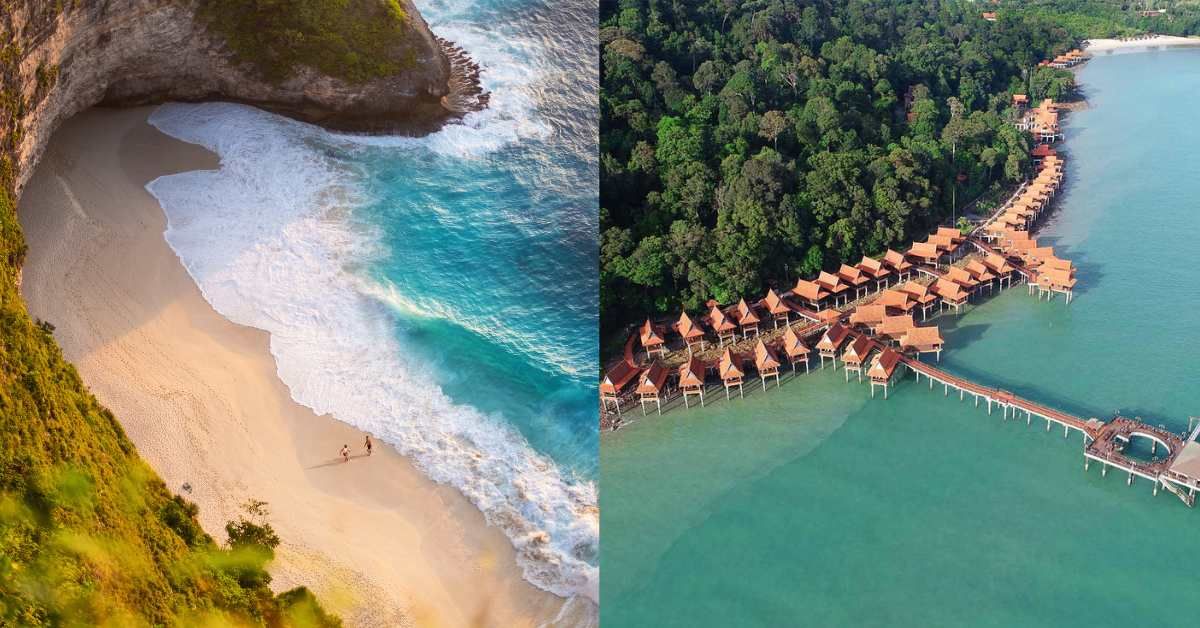
Langkawi's beaches, especially Pantai Cenang and Tanjung Rhu, are widely regarded as cleaner and less crowded. The water is generally calmer and more turquoise, especially on the west coast. However, Langkawi lacks the dramatic coastal variety that Bali offers.
Winner: Bali for variety; Langkawi for cleanliness and calm water.
Bali offers one of Southeast Asia's widest selections of water sports. Surfing is the headline activity, with breaks for all levels from beginner-friendly Kuta to world-class Uluwatu. You can also find diving, snorkeling, parasailing, white-water rafting, and kayaking across the island.
Langkawi also offers solid water sports — jet skiing, parasailing, banana boats, and snorkeling trips to the surrounding islands are all available at Pantai Cenang. Diving here is less developed than Bali, but island-hopping and mangrove kayaking add a unique nature-focused experience.
Winner: Bali, especially for surfing and diving.
Both Bali and Langkawi are considered safe destinations for tourists. Violent crime is rare in both locations. The main concerns in Bali are petty theft, scooter accidents, and tourist scams — especially in busy areas like Kuta and Seminyak.
Langkawi is generally perceived as slightly safer and less chaotic. Traffic is less intense, and the smaller tourist crowd means fewer scam opportunities. That said, road safety matters on both islands if you plan to rent a scooter.
Winner: Both are safe, but Langkawi edges ahead for a stress-free, low-scam experience.
Bali has an almost overwhelming number of things to do. You could spend two weeks here and still not see everything. Top activities include:
If you're comparing Bali with other Indonesian destinations, check out our Bali vs Jakarta guide for a full breakdown of island life vs. city living.
Langkawi's top activities are more nature-focused:
Winner: Bali, for sheer variety. Langkawi wins for nature lovers who want peace and green scenery.
Bali's nightlife is legendary. Seminyak's beach clubs, Canggu's rooftop bars, and Kuta's party strip make it one of Asia's most vibrant nightlife destinations. Venues like Potato Head, Finns Beach Club, and Atlas Beach Fest attract thousands of visitors nightly.
Langkawi, on the other hand, has very limited nightlife. While alcohol is available (it's duty-free), the island closes early and the party scene is minimal. A few bars and beach restaurants at Pantai Cenang are about as lively as it gets.
Winner: Bali — and it's not even close.
🛵 Exploring Bali's nightlife? Don't rely on expensive taxis. Book your scooter with Cinchy and ride at your own pace, from sunset to sunrise.
Bali is one of the most culturally rich destinations in all of Southeast Asia. The island's Balinese Hindu tradition shapes every part of daily life. You'll see flower offerings (canang sari) placed on the ground every morning, temple ceremonies happening every week, and traditional Kecak dance performances in the evenings. The arts scene in Ubud — from silver jewelry to hand-carved wood to batik painting — is extraordinary.
Langkawi has cultural elements tied to Malay Muslim tradition, including the Makam Mahsuri (tomb of Mahsuri), a legendary princess whose curse story is central to local folklore. The Langkawi Craft Complex also showcases traditional Malaysian arts. However, the cultural depth doesn't compare to Bali's living traditions.
Winner: Bali, by a significant margin.
Bali's food scene is world-class and incredibly diverse. You can enjoy authentic Indonesian and Balinese cuisine — nasi goreng, babi guling (roast suckling pig), sate lilit, lawar, and fresh seafood — alongside international restaurants covering every cuisine imaginable. The café culture in Canggu and Ubud is exceptional, with high-quality specialty coffee, healthy food bowls, and vegan options in abundance.
Langkawi's food scene is dominated by Malay and Chinese seafood cuisine. Pantai Cenang is lined with affordable seafood restaurants where fresh fish, grilled squid, and prawn dishes are the highlight. Because it's duty-free, alcohol is also cheaper than most of Malaysia. Street food is tasty and budget-friendly, though the variety is not as wide as Bali's.
Winner: Bali for variety; Langkawi for affordable seafood.
When it comes to raw, Instagram-worthy beauty, Bali is the clear aesthetic winner. The rice terraces of Tegallalang, the black sand beaches of Lovina, the dramatic sea temple of Tanah Lot at sunset, the flower-filled offerings outside every doorway — Bali is visually stunning in a way that is deeply tied to its culture.
Langkawi is beautiful in a quieter, more natural way. Its turquoise water, empty white beaches, and thick rainforest canopy make for gorgeous photos — but the man-made environment is less photogenic than Bali's.
Winner: Bali for culturally layered aesthetics; Langkawi for unspoiled natural beauty.
Both islands are affordable compared to Western destinations, but they differ in value in specific areas.
| Category | Bali | Langkawi |
| Budget daily cost | ~$25–40 USD | ~$30–50 USD |
| Mid-range hotel/night | ~$40–80 USD | ~$50–90 USD |
| Meal at local restaurant | ~$2–5 USD | ~$3–7 USD |
| Beer/alcohol | ~$3–5 USD | ~$2–4 USD (duty-free) |
| Scooter rental/day | ~$5–8 USD | ~$15–20 USD |
| Activity costs | Low–Medium | Low–Medium |
Bali wins for accommodation value and local food costs. Langkawi wins on alcohol prices due to its duty-free status. Overall, Bali is still the better value destination, especially if you stay in budget guesthouses and eat at local warungs.
Winner: Bali for overall budget travel value.
Bali is a shopper's paradise. From the boutique fashion streets of Seminyak to the art markets of Ubud, you can find handmade silver jewelry, traditional batik clothing, carved wooden sculptures, woven baskets, leather goods, and custom surfwear — all at very reasonable prices. Shopping here is an experience in itself.
Langkawi's shopping scene revolves around its duty-free status. Alcohol, chocolate, cigarettes, cosmetics, and electronics are all cheaper here than on the Malaysian mainland. Kuah Town is the main shopping hub. If you're after crafts and fashion, however, Bali is far superior.
Winner: Bali for crafts and fashion; Langkawi for duty-free goods and branded products.
Bali is one of the top digital nomad destinations in the world — full stop. Canggu especially has built a thriving nomad ecosystem with dozens of co-working spaces, fast fiber internet, affordable long-stay villas, and a vibrant community of remote workers, entrepreneurs, and creatives. The cost of living is reasonable, the visa options are improving (including Indonesia's Digital Nomad Visa), and the social scene makes it easy to build a network quickly.
Langkawi is gaining traction as a nomad destination — Malaysia's MM2H (Malaysia My Second Home) program makes it accessible for long-term stays, and the quality of life is high. But it lacks the established nomad infrastructure that Bali has built over the last decade.
For more on why Bali keeps winning the digital nomad debate in Indonesia, check out our Bali vs Jakarta comparison — which explores why more remote workers are choosing the island over the capital city.
Winner: Bali, clearly.
Bali has a massive, well-established expat community. Tens of thousands of foreigners live on the island long-term, drawn by the low cost of living, cultural richness, and warm climate. Areas like Canggu, Seminyak, Ubud, and Sanur each have distinct expat communities. The range of international schools, hospitals, and services has grown significantly in recent years.
Langkawi also appeals to expats — especially retirees — through Malaysia's MM2H program. The island is clean, modern, English-friendly, and has good healthcare. However, it feels more like a retirement community than an active expat hub.
Winner: Bali for active expat community life; Langkawi for retirees and those seeking quiet long-term living.
Bali has two distinct seasons. The dry season runs from April to October — this is the best time to visit, with low humidity, clear skies, and calm seas. The wet season runs from November to March, with heavy afternoon rain. The shoulder months of April and October offer a good balance of good weather and fewer crowds.
Langkawi's best time to visit is from November to April, when the island's west coast is dry and calm. The monsoon season (May to October) hits Langkawi hard, especially June–August, making beach activities difficult. This is important to note — Langkawi and Bali actually have opposite peak seasons.
This means if you're traveling in the middle of Bali's wet season (December–February), Langkawi might be the better pick for beach weather.
For Bali, most travelers recommend 7–10 days minimum to cover the key regions — at least a few days in Ubud for culture and rice terraces, a few days in Seminyak or Canggu for beach clubs and nightlife, and a day trip to Uluwatu. You could easily spend 2–4 weeks and not run out of things to do.
For Langkawi, 4–6 days is generally enough to see the main highlights — the main beaches, the Sky Cable Car, a mangrove boat tour, and some island hopping. It's a smaller island with fewer activities, so a longer stay suits only those seeking genuine relaxation or who plan to work remotely.
Bali has an enormous range of accommodation at every price point:
Langkawi also has a good range — from simple guesthouses to world-class jungle resorts like The Datai and Four Seasons Langkawi. However, the mid-range accommodation scene is slightly less developed than Bali's, and luxury properties here tend to command a higher premium.
Winner: Bali for variety and value; Langkawi for eco-luxury and resort stays.
Getting around Bali is easiest by scooter. The island has limited public transport, and taxis (both metered and app-based) can be slow or overpriced. Renting a scooter gives you full freedom to explore on your own schedule — and it's the way most locals and long-term visitors get around.
If you're planning to ride in Bali, make sure your license is valid. Read our guide on renting a scooter in Bali before you go — it covers everything from insurance to local road rules.
Getting around Langkawi is also best by scooter or rental car. There is no public bus network, and taxis are expensive relative to Bali. The island is flatter and the roads are quieter, which makes it slightly easier for beginner riders.
🛵 Need a reliable scooter in Bali? Book with Cinchy — Bali's easiest online scooter rental service. Delivered to your door. No hassle.
Overall, Bali is cheaper than Langkawi for most types of travelers. Local food in Bali (warungs) costs $1.50–3 per meal. Scooter rentals are very affordable. Long-stay villa deals are abundant.
Langkawi benefits from duty-free pricing on alcohol and imported goods, which can make it feel cheaper in that specific category. But accommodation and transport costs are generally higher than Bali.
If you're comparing Bali with another beach island destination in the region, our Bali vs Boracay guide also dives deep into budget breakdowns and travel costs.
| Feature | 🌺 Bali | 🏝️ Langkawi |
| Best for | Culture, nightlife, nomads | Nature, families, retirees |
| Beaches | Variety | Cleaner water |
| Nightlife | ⭐⭐⭐⭐⭐ | ⭐⭐ |
| Culture | ⭐⭐⭐⭐⭐ | ⭐⭐⭐ |
| Affordability | ⭐⭐⭐⭐⭐ | ⭐⭐⭐⭐ |
| Shopping | Crafts & fashion | Duty-free goods |
| Food variety | ⭐⭐⭐⭐⭐ | ⭐⭐⭐ |
| Digital nomad scene | ⭐⭐⭐⭐⭐ | ⭐⭐⭐ |
| Family-friendly | ⭐⭐⭐⭐ | ⭐⭐⭐⭐⭐ |
| Best season | Apr–Oct | Nov–Apr |
| Ideal trip length | 7–10+ days | 4–6 days |
| Getting around | Scooter | Scooter / Car |
Both islands are fantastic in their own way — but they serve different types of travelers.
Choose Bali if you want:
Choose Langkawi if you want:
In 2026, Bali remains the stronger all-around destination. It won the region's top island award this year and continues to attract millions of travelers for good reason. But if your priority is peace, nature, and a true slow-travel escape, Langkawi deserves serious consideration.
🌺 Start your Bali adventure the right way. Visit Cinchy to plan your trip, rent a scooter, and explore Bali like a local.
Bali is generally cheaper than Langkawi, especially for accommodation, food, and transportation. Budget travelers in Bali can get by on $20–30/day eating at local warungs and staying in guesthouses. Langkawi's duty-free status makes alcohol cheaper, but overall daily costs tend to run slightly higher.
It depends on what "nice" means to you. Bali is nicer for culture, variety, and energy — it's one of the most layered and visually stunning destinations in Asia. Langkawi is nicer for cleanliness, calm, and natural beauty — especially its beaches and rainforest scenery. Bali won the DestinAsian Best Island in Asia award in 2026, so on balance, the world's travelers pick Bali.
This depends heavily on your departure city. From Southeast Asian hubs (Singapore, Kuala Lumpur, Bangkok), flights to both can be similarly priced. From Australia, Europe, or North America, Bali often has more direct and budget airline options, making it easier and sometimes cheaper to reach. Check current fares from your departure city as prices vary seasonally.
Both are family-friendly, but they suit different family styles. Langkawi edges ahead for younger children because it's safer on the roads, the water is calmer for swimming, and the pace is gentler. Bali is great for older kids and teenagers who enjoy cultural activities, surf lessons, white-water rafting, and active exploration.
Avoid Langkawi between May and October, when the southwest monsoon hits the island's west coast. June, July, and August are particularly rainy, with rough seas that make beach activities and island-hopping difficult. If you're visiting during this window, Bali's dry season (April–October) is a much better choice.
If Langkawi doesn't quite match what you're looking for, here are great alternatives in the region:
Whichever island you choose, make the most of your time there. If Bali wins your heart — and it likely will — Cinchy is here to help you explore it fully. Book your scooter, plan your route, and ride free.
 travel tips
 hidden gems
 scooter guides
 riding tips
 bali guides
 cultural insight