1


Stay in Touch
Get the latest updates, special offers, and exclusive Cinchy perks straight to your inbox.


Jl. Plawa No.50, Seminyak, Kec. Kuta, Kabupaten Badung, Bali 80361

CALL US 24/7
(+62-851-7424-6249)
Copied!

We’re Here
Everyday
8:30 AM-9 PM WITA




Payment Partners


© 2026 CINCHY. ALL RIGHTS RESERVED.
Cinchy Blog / What's the Motorcycle Speed Limit in Bali?
Published: 27 Sep 2026

By Syahrial Maulana Sudarto
Travel Enthusiast
Quick Answer
“What is the motorcycle speed limit in Bali?”
There is no single motorcycle speed limit for every road in Bali. Under Indonesian traffic regulations, limits generally reach 50 km/h in urban areas, 80 km/h on intercity roads, and 30 km/h in residential areas. Lower local limits may apply, so always follow the posted speed limit and adjust your speed to traffic and road conditions.
Key Takeaways:
The motorcycle speed limit in Bali depends on where you are riding rather than being set at one island-wide number.
Indonesia's traffic regulations establish different speed limits according to road classification and surrounding areas.
Under the national framework, the maximum speed is generally 30 km/h in residential areas, 50 km/h in urban areas, and 80 km/h on intercity roads.
Freeways can have a maximum limit of 100 km/h under the national framework, although this does not mean a scooter can automatically travel at 100 km/h. Specific road rules, vehicle restrictions, lane arrangements, and posted signs still apply.
For scooter riders, the safest approach is simple: check the traffic signs on the road and never treat the national maximum as a recommended riding speed.
Bali follows Indonesia's national road traffic regulations, but the applicable speed limit can vary depending on the road and location.
Law No. 22 of 2009 allows speed limits to be established according to road and area characteristics.
Local governments can also impose lower limits for specific locations, which must be communicated through traffic signs.
This means you should not assume that every road in Canggu, Seminyak, Ubud, or another tourist area has the same speed limit.
The road design also matters. Minister of Transportation Regulation PM 111 of 2015 provides more detailed rules for determining speed limits, including situations where different limits can apply to scooters and other vehicles.
A road may fall under a general national speed category while having a lower local restriction.
For example, authorities may reduce a speed limit because of:
For this reason, a posted speed-limit sign should always take priority over assumptions based on the general road classification.
Read Also:
Risks of Speeding on a Motorbike in Bali You Should Know
A Comprehensive Guide About Traffic Fines in Bali
How to Avoid a Tourist Scooter Accident in Bali
How to Adapt to Bali's Local Riding Style
Does Bali Drive on the Left or Right? What Travelers Need to Know
Understanding the legal framework helps explain why there is no single answer to the question, "What is the motorcycle speed limit in Bali?"
Indonesia's Law No. 22 of 2009 on Road Traffic and Road Transportation provides the foundation for traffic regulations, including speed restrictions.
Article 21 establishes that maximum speed limits are determined according to different types of roads and areas. The law also allows lower limits to be established for particular locations.
Article 115 requires drivers to comply with the applicable maximum speed limit. It also requires drivers to reduce speed in certain circumstances, including when approaching intersections, during rain or when there is standing water, and when pedestrians are crossing or about to cross.
In other words, the legal speed limit is not the only consideration. Road and traffic conditions also determine how fast you should safely ride.
Government Regulation No. 79 of 2013 provides the national speed-limit framework.
| Road or area | General maximum speed |
| Residential area | 30 km/h |
| Urban area | 50 km/h |
| Intercity road | 80 km/h |
| Freeway | Up to 100 km/h |
These figures should be understood as part of Indonesia's road-speed framework rather than a universal "scooter speed limit in Bali."
PM 111 of 2015 provides more detailed procedures for determining speed limits.
It considers factors such as road function, road design, traffic conditions, accident frequency, surrounding activities, weather, and the presence of vulnerable road users.
This is important for scooter riders because a particular road can have a lower limit than the general maximum associated with its road classification.
The Bali Mandara Toll Road is an unusual example because it provides a dedicated lane for two-wheeled vehicles.
Motorcycles are generally restricted from Indonesian toll roads, but Bali Mandara is an exception because it has a separate lane specifically designed for two-wheeled vehicles.
The motorcycle lane has a road-specific speed range of approximately 25–40 km/h.
This is a useful example of why you should never assume that the general freeway maximum of 100 km/h applies to every vehicle using a particular road.
If you ride a scooter on Bali Mandara, follow the signs and rules for the dedicated two-wheeled lane rather than the speed rules that may apply to other vehicles.
There is no single speed limit that applies to every road within a particular tourist destination.
Canggu has a combination of busy commercial streets, residential lanes, and narrower local roads. Traffic, pedestrians, and road conditions can vary considerably throughout the day.
Seminyak has dense tourist activity, hotels, restaurants, shops, and pedestrians. Riders should pay close attention to traffic signs and reduce speed around busy intersections and pedestrian areas.
Ubud and its surrounding areas include urban streets, village roads, and winding routes. A road's location and characteristics can affect the applicable speed limit.
Sanur and Uluwatu also contain a mixture of main roads and smaller local streets. Do not assume that one speed limit applies throughout either area.
The practical rule for all of these destinations is the same: follow the posted limit and adapt your speed to the actual road conditions.
A speed limit is a legal maximum, not a target.
For example, riding at 50 km/h may be within the general maximum for an urban area, but that does not automatically make 50 km/h appropriate for every urban road.
You may need to ride significantly slower when encountering:
Defensive riding is particularly important for visitors who are unfamiliar with Bali's traffic patterns.
Bali's roads can change quickly from relatively open stretches to crowded urban streets.
Tourist areas can become particularly busy around restaurants, beaches, accommodation areas, markets, and popular attractions. Village roads can also be narrower than visitors expect.
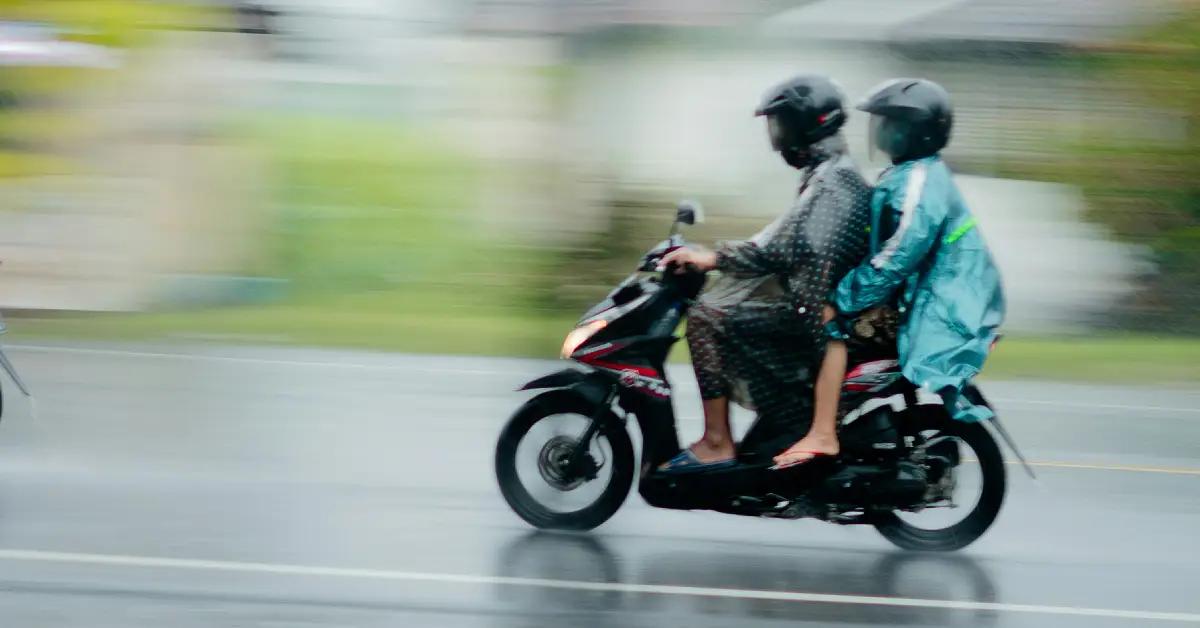
Weather is another consideration. Rain can reduce visibility and traction, while standing water can make a familiar road more difficult to navigate.
Rather than trying to ride at the maximum legal speed, focus on maintaining a speed that gives you enough time to react to changing traffic conditions.
Speeding is a traffic violation under Indonesian law.
Article 287(5) of Law No. 22 of 2009 provides a maximum penalty of IDR 500,000 in fines or up to two months of imprisonment for violating the applicable maximum speed limit.
The exact circumstances of enforcement can vary, but the important point for visitors is straightforward: exceeding a posted speed limit is not simply a matter of riding faster than other road users.
Following the speed limit is part of riding legally in Bali.
Speed limits are only one part of Bali's motorcycle traffic rules.
If you plan to rent a scooter, make sure you also understand the requirements for your driving licence, helmet use, traffic signs, and general road safety.
You should also avoid using your phone while riding and never ride under the influence of alcohol or other substances.
For international visitors, having the appropriate driving licence is particularly important because a rental agreement does not replace your legal responsibility to be properly licensed.
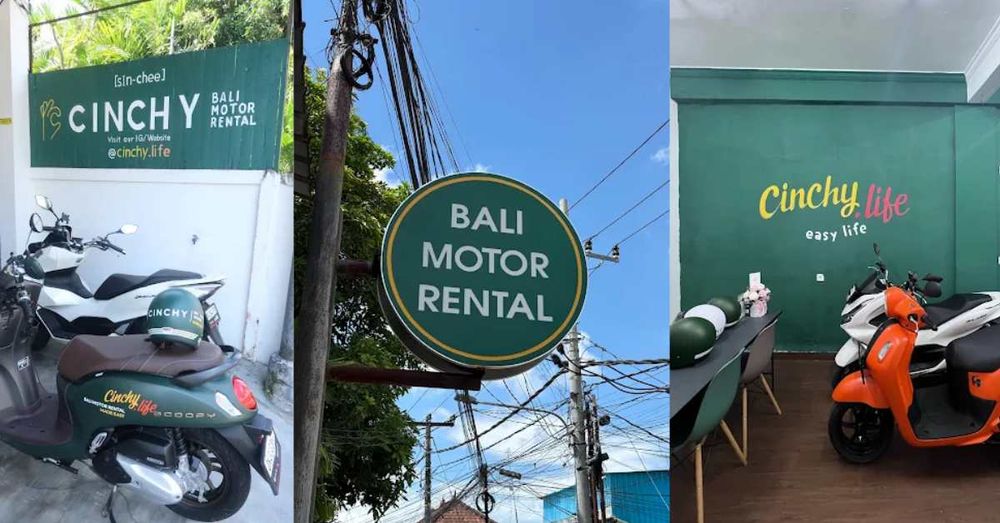
If you are planning to explore Bali by scooter, Cinchy provides a rental process designed to keep the booking straightforward while giving you the flexibility to choose your scooter and rental period.
One useful feature is real-time availability on the Cinchy website.
You can check whether a scooter is available for your selected dates before booking, whether you are travelling during Bali's peak season or a quieter period.
Cinchy also focuses on maintaining its scooters through regular servicing, helping ensure that the vehicles are ready for everyday use around Bali.
Cinchy's fleet is divided into two categories, making it easier to choose based on your riding preference.
Free delivery to Bali Airport, Seminyak, Kuta, and Legian can make the rental process more convenient, especially if you want your scooter ready soon after arriving.
Cinchy provides several insurance options that allow renters to choose the level of coverage that suits their needs.
Check your dates, choose your preferred Compact or Comfort scooter, and reserve your scooter in advance—especially if you are travelling during peak season.
👉 Rent a scooter in Cinchy now, book early and save 5% with code EARLY5!
If you're still uncertain about your next steps, don't worry, as we're here to address all your queries and concerns.
There is no single island-wide limit. Indonesia's general framework sets maximum speeds of 30 km/h in residential areas, 50 km/h in urban areas, and 80 km/h on intercity roads, while local posted limits can be lower.
Not universally. A 60 km/h limit can apply in certain road configurations under Indonesian regulations, but it should not be treated as Bali's general scooter speed limit.
Yes. Scooters must comply with the applicable speed limit for the road, area, and posted traffic signs.
Yes. Bali Mandara has a dedicated lane for two-wheeled vehicles. Riders must follow the rules and speed limits for that lane.
Under Article 287(5) of Law No. 22 of 2009, violating the maximum speed limit can carry a maximum fine of IDR 500,000 or up to two months of imprisonment.
 travel tips
 hidden gems
 scooter guides
 riding tips
 bali guides
 cultural insight