
1


Stay in Touch
Get the latest updates, special offers, and exclusive Cinchy perks straight to your inbox.


Jl. Plawa No.50, Seminyak, Kec. Kuta, Kabupaten Badung, Bali 80361

CALL US 24/7
(+62-851-7424-6249)
Copied!

We’re Here
Everyday
8:30 AM-9 PM WITA




Payment Partners


© 2026 CINCHY. ALL RIGHTS RESERVED.
Cinchy Blog / Water in Fuel Tank While Riding in Bali - Causes & Tips
Published: 03 Oct 2026

By Syahrial Maulana Sudarto
Travel Enthusiast
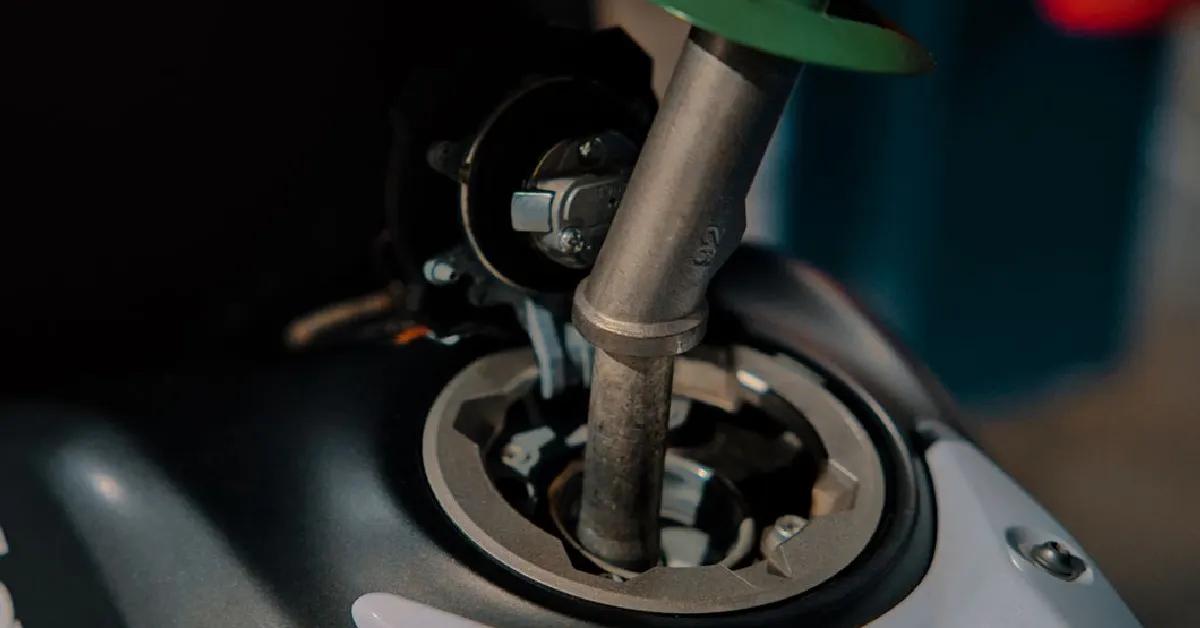
Quick Answer
“What should you do if you suspect water in your scooter's fuel tank in Bali?”
Water in a scooter's fuel tank can cause sputtering, hesitation, rough running, misfiring, loss of power, hard starting, or stalling because water does not burn like gasoline. In Bali, contamination may come from rainwater around the fuel filler, contaminated fuel, or fuel-system problems. If your scooter runs badly, stop riding and have it checked.
Free Cancellation
24/7 Support
Insurance
Start Date - End Date
Start Time
End Time
Duration
0 Day(s)
Key Takeaways:
Gasoline and water do not behave the same way inside a fuel system.
Water does not burn like gasoline, so significant water contamination can interfere with normal combustion and fuel delivery.
Free water is also denser than gasoline and can settle toward the bottom of a fuel tank. This matters because fuel drawn from the lower part of the tank may contain water instead of usable fuel.
With ethanol-blended gasoline, the situation can be more complicated.
Ethanol can absorb moisture, and excessive water contamination can contribute to phase separation. The result may be poor engine performance or difficulty starting.
For a scooter rider, the problem may first appear as a small hesitation before becoming more noticeable during acceleration or while riding uphill.
The symptoms of water in a fuel tank can overlap with other fuel, ignition, and engine problems. However, several signs can indicate that fuel contamination should be investigated.
A scooter may feel as though the engine is briefly cutting out when you twist the throttle. Acceleration can become inconsistent, particularly when the engine is under load.
The engine may feel unstable while the scooter is stationary. The idle speed can fluctuate or the engine may feel as though it is struggling to stay running.
If you're still uncertain about your next steps, don't worry, as we're here to address all your queries and concerns.
Common symptoms include sputtering, hesitation, rough idling, misfiring, poor acceleration, hard starting, loss of power, and stalling.
It can happen if water reaches the fuel filler area and there is a problem with the fuel cap, seal, or drainage system. Simply riding in the rain does not mean water will automatically enter the fuel tank.
If the scooter is running badly, repeatedly stalling, or losing significant power, it is better to stop riding and have it inspected rather than continuing the journey.
No. Water contamination in the fuel tank is different from water entering the engine through the air intake or affecting electrical components after riding through deep water.
The appropriate solution depends on the amount of contamination. Significant contamination may require contaminated fuel to be drained and the fuel system inspected or cleaned by a mechanic.
Water contamination can interfere with normal combustion, making the scooter feel weaker than usual. You may notice that it takes longer to accelerate or struggles on an incline.
A misfire occurs when combustion does not happen normally. You may feel the engine hesitate, shake, or produce an uneven response.
A scooter affected by contaminated fuel may take longer than usual to start or may require several attempts.
In more serious cases, the engine may stop unexpectedly, especially when accelerating or operating at low speed.
However, these symptoms do not automatically prove that there is water in the fuel tank.
A clogged fuel filter, fuel injector problem, spark plug issue, battery problem, or another mechanical fault can produce similar symptoms.
There are several possible causes of water contamination.
Bali can experience sudden heavy rain, particularly during the wet season. Normally, the fuel filler area and drainage system are designed to prevent water from entering the tank.
However, a damaged seal, incorrectly closed fuel cap, or blocked drain can increase the risk of water entering the fuel system.
Opening the fuel filler while rain is falling heavily can expose the area around the cap to water. This does not mean rain will automatically enter the fuel tank, but keeping the filler area dry and closing the cap properly is a sensible precaution.
Water can also enter fuel before it reaches your scooter. Poorly stored or contaminated fuel can introduce water into the tank during refueling.
If your scooter was running normally and suddenly begins sputtering or losing power shortly after refueling, contaminated fuel is one possibility worth checking.
A damaged fuel cap, seal, or blocked drainage passage can make it harder for water around the filler area to drain away normally.
Regular inspection is particularly useful for rental scooters because riders may not know the vehicle's previous maintenance history.
Read Also:
This distinction is especially important when riding in Bali.
Water in the fuel tank means water has contaminated the gasoline or petrol inside the fuel system. Typical symptoms include sputtering, hesitation, misfiring, poor acceleration, hard starting, and stalling.
Water entering the engine's air intake is a different problem. This can happen if a scooter is ridden through sufficiently deep flood water. The engine may stall because water has reached components that need air for normal combustion.
There can also be other problems after riding through deep water, including wet electrical components, a wet air filter, or other water-related damage.
Therefore, if your scooter stalls after riding through a flooded road, do not automatically assume that you have water in the fuel tank.
If the scooter is running poorly, taking immediate action is safer than continuing to ride and hoping the problem disappears.
If the scooter is repeatedly sputtering, losing significant power, misfiring, or stalling, find a safe place to stop.
Do not continue riding simply because the engine can still move the scooter.
Repeatedly attempting to start a scooter does not solve the underlying contamination. If the engine has stopped after exposure to significant water, especially flood water, further diagnosis may be necessary.
For a rental scooter, contacting the provider is usually more practical than attempting to drain the fuel tank yourself.
Tell them when the symptoms started, whether they appeared after refueling, and whether you had recently ridden through heavy rain or flood water.
A mechanic can check for contaminated fuel and investigate related components such as the fuel tank, fuel filter, fuel pump, injector, and spark plug.
The correct solution depends on the amount of contamination and the actual cause of the problem.
It depends on the severity of the contamination and the symptoms.
If the scooter is only experiencing a minor issue, a mechanic may determine that it is safe after inspection and appropriate treatment.
However, a scooter that is repeatedly stalling, losing substantial power, or struggling to start should not simply be ridden as normal.
For tourists in Bali, the safest approach is to contact the scooter rental provider and ask for assistance rather than attempting a roadside fuel-system repair.
The appropriate method depends on how much water is present and where the contamination has reached.
A mechanic may inspect a fuel sample for visible water separation and determine whether the contaminated fuel needs to be drained. In more significant cases, the fuel tank and related components may need to be cleaned before fresh fuel is added.
Fuel additives are sometimes marketed as water removers or fuel treatments. However, they should not be treated as a universal solution for significant water contamination.
If there is substantial contamination, professional inspection and removal of the contaminated fuel are more appropriate than relying on an additive alone.
A few simple habits can reduce the risk of fuel-related problems.
When refueling during heavy rain, avoid leaving the fuel filler open longer than necessary. Close the fuel cap securely once refueling is complete.
Whenever possible, refuel from established fuel stations rather than unknown sources. If several unusual engine problems appear immediately after refueling, report the issue and have the fuel checked.
If you’re in Bali and looking for official fuel stations, please check this out: How to Find Gas Station Near You in Bali Easily.
Notice how the scooter behaves after filling the tank. Sudden sputtering, hesitation, or loss of power shortly after refueling should not be ignored.
Avoid riding through water that is too deep to judge safely. Flood water can create risks that are completely different from water in the fuel tank.
Before starting your trip, look for obvious signs of damage and make sure the scooter operates normally. If something feels unusual, report it before continuing your journey.
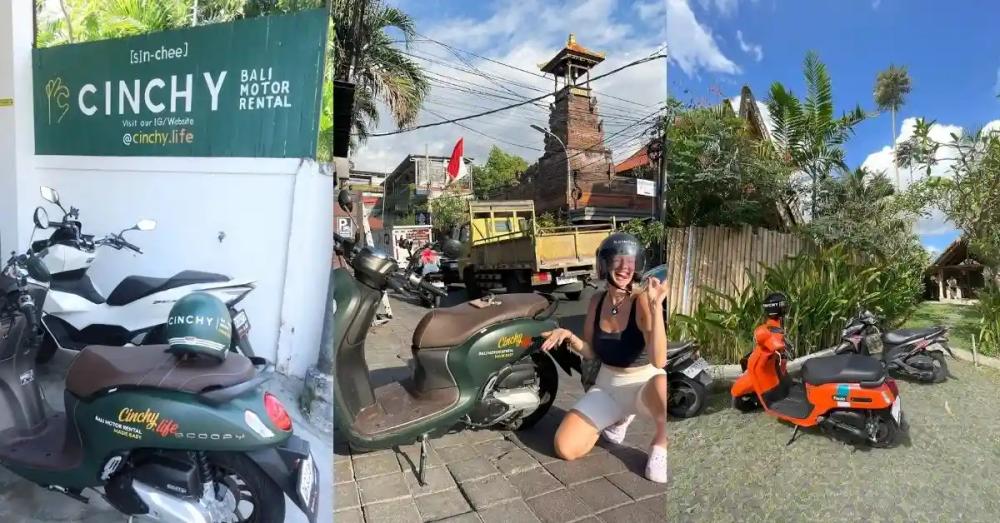
Choosing a well-maintained scooter can make your trip more comfortable and gives you a clearer point of contact if something goes wrong.
At Cinchy, scooters are regularly serviced and maintained before being rented out. The fleet includes two categories: Compact, featuring models such as Honda Scoopy, Yamaha Fazzio, and Honda Vario, and Comfort, featuring Yamaha NMAX and Honda PCX.
Compact scooters start from IDR 95K/day, while Comfort scooters start from IDR 155K/day.
Weekly and monthly options are also available, starting from IDR 80K/day and IDR 50K/day for Compact, and IDR 125K/day and IDR 80K/day for Comfort, respectively.
Cinchy provides 24/7 customer support, so renters can contact the team whenever they need assistance. The company also provides delivery and pickup options across several Bali locations, including free service at I Gusti Ngurah Rai Airport, Seminyak, Kuta, and Legian. Delivery to Canggu starts from IDR 20,000, Sanur from IDR 40,000, and Nusa Dua from IDR 65,000.
Cinchy's booking system also lets you check scooter availability in real time. This can be useful during both peak and low seasons because you can see which scooters are available for your selected dates before booking.
For insurance, renters can choose between Basic, Full, and VIP coverage. Coverage conditions, deductibles, exclusions, and theft protection vary by option, so review the applicable terms before selecting your coverage.
Remember that damage resulting from negligence, such as certain tire damage, battery discharge from leaving the scooter in standby mode, or use on unsuitable off-road or non-public surfaces, may be excluded.
If you are planning to visit Bali during peak season, booking early can also help secure your preferred scooter.
 travel tips
 hidden gems
 scooter guides
 riding tips
 bali guides
 cultural insight