1


Stay in Touch
Get the latest updates, special offers, and exclusive Cinchy perks straight to your inbox.


Jl. Plawa No.50, Seminyak, Kec. Kuta, Kabupaten Badung, Bali 80361

CALL US 24/7
(+62-851-7424-6249)
Copied!

We’re Here
Everyday
8:30 AM-9 PM WITA




Payment Partners


© 2026 CINCHY. ALL RIGHTS RESERVED.
Cinchy Blog / Best Way to Brake a Motorcycle [Bali Riding Tips]
Published: 06 Sep 2026

By Syahrial Maulana Sudarto
Travel Enthusiast

Quick Answer
“What is the best way to brake a motorcycle?”
The best way to brake a scooter is to use both the front and rear brakes smoothly and progressively. Start with gentle pressure, then increase it as needed while keeping the scooter stable. Avoid grabbing the front brake or relying only on the rear brake, and adjust your technique for wet, slippery, downhill, and uneven Bali roads.
Free Cancellation
24/7 Support
Insurance
Start Date - End Date
Start Time
End Time
Duration
0 Day(s)
Key Takeaways:
The safest motorcycle braking technique is to use both brakes together and apply them progressively. The goal is not to decide that one brake is always more important than the other, but to control both brakes according to your speed, road conditions, and available traction.
When you brake, the scooter's weight naturally transfers toward the front wheel. This gives the front tyre more load and allows the front brake to contribute more braking force. At the same time, the rear wheel becomes lighter, so excessive rear-brake pressure can cause it to skid.
For everyday riding, start with controlled pressure on both brakes. If you need to stop more quickly, progressively increase the pressure while keeping the scooter as stable and upright as possible.
The key is smooth braking, not sudden braking.
The front brake is an important part of motorcycle braking because braking shifts weight toward the front of the scooter.
As more weight moves onto the front tyre, it can generally provide more braking force. However, this does not mean you should suddenly pull the front brake as hard as possible.
A sudden grab can overwhelm available traction and make the scooter unstable, particularly on wet or slippery surfaces.
Instead, apply the front brake progressively. Begin with controlled pressure and increase it as the scooter slows.
If you're still uncertain about your next steps, don't worry, as we're here to address all your queries and concerns.
Use both the front and rear brakes smoothly and progressively. The front brake can provide more braking force as weight transfers forward, while the rear brake adds stopping power and stability.
For most situations, use both brakes rather than relying exclusively on one. The amount of pressure needed on each brake changes according to speed, traction, road conditions, and the type of scooter.
Close the throttle, keep the scooter as upright as possible, and apply both brakes firmly and progressively. Avoid sudden steering movements while braking heavily.
Reduce your speed early, increase your following distance, and use smooth braking inputs because wet surfaces generally provide less tyre grip.
Reduce your speed before entering the descent, then maintain a controlled speed using both brakes. Avoid excessive continuous braking that can cause the braking system to overheat.
ABS can help prevent wheel lock during hard braking, but it cannot overcome excessive speed or a lack of tyre grip.
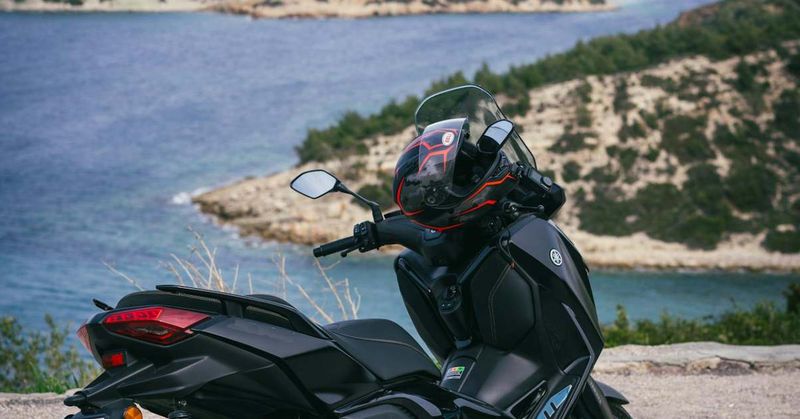
How to Ride a Scooter on Uphill Roads in Bali
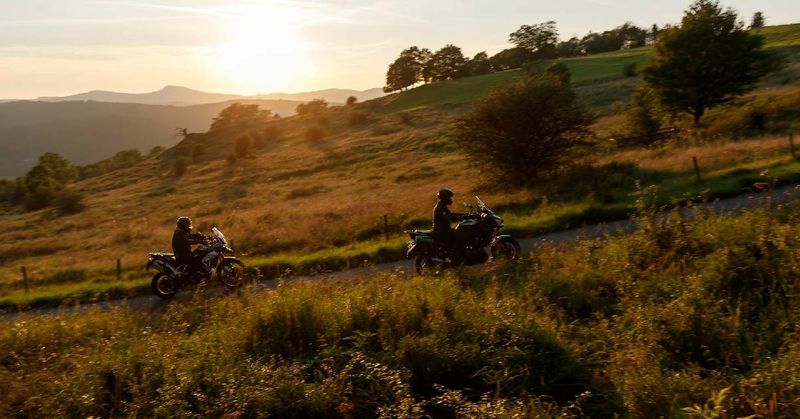
Here's 7 Best Scooters for Uphill Roads in Bali
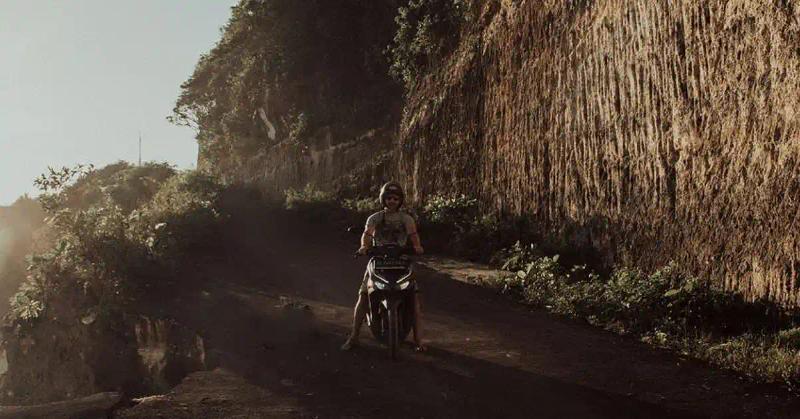
Can I Ride to North Bali with Cinchy's Scooter? [Guide 2026]
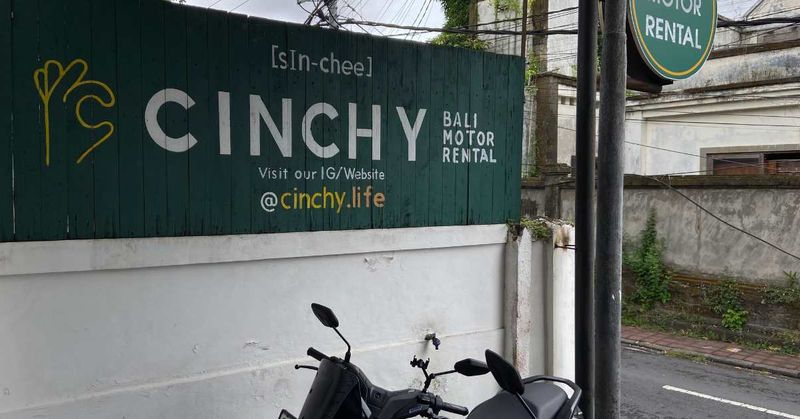
Where Can I Find Cinchy Bali Scooter Rental?

Cinchy Bali: Scooter Hire for Beginners – Automatic Only!
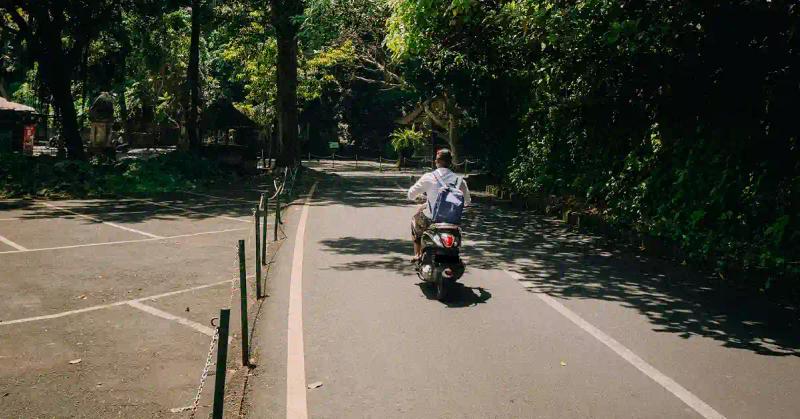
What If I Need Help During Renting a Scooter in Cinchy?
The rear brake provides additional stopping power and can help keep the scooter stable while you slow down.
It is particularly useful for controlling speed at lower speeds, in traffic, and during certain slow-speed maneuvers.
However, remember that hard braking transfers weight away from the rear wheel. Because the rear tyre has less traction during heavy braking, pressing the rear brake too aggressively can cause the rear wheel to lock or skid.
Yes. For most normal and emergency braking situations, using both brakes smoothly and progressively gives you better control than relying exclusively on either the front or rear brake.
The amount of pressure needed on each brake is not a fixed percentage. It can change depending on your speed, road surface, tyre grip, scooter design, slope, load, and whether your scooter has ABS or CBS.
The important principle is simple:
Use both brakes and adjust the pressure progressively.
Use the following Set Up → Squeeze → Release technique when braking.
Close the throttle smoothly as soon as you decide to slow down.
This immediately stops acceleration and allows the scooter to begin reducing speed before you apply stronger braking pressure.
Keep your eyes focused on the road ahead rather than staring at the vehicle, pothole, or obstacle directly in front of you.
Looking ahead gives you more time to identify traffic, pedestrians, corners, road damage, and slippery surfaces.
Apply gentle pressure to both brakes.
This initial braking phase helps the scooter settle and starts transferring weight toward the front wheel.
If you need to slow down more quickly, gradually increase the pressure on the brakes.
Do not suddenly grab the front brake or stomp on the rear brake. The amount of braking pressure should match how quickly you need to stop and how much traction is available.
As you approach your desired speed or come to a complete stop, gradually ease off the braking pressure.
A smooth release helps keep the scooter stable and makes your stop more controlled.
There is no universal amount of brake pressure that works in every situation.
On clean, dry pavement with good tyres, you generally have more available traction and can brake more firmly.
On wet roads, gravel, sand, painted surfaces, or other slippery areas, you should brake earlier and more gently.
Instead of thinking about braking as a fixed 70/30 or 50/50 split, think about brake modulation.
Start smoothly, feel how the scooter responds, and progressively increase or reduce pressure according to the situation.
Emergency braking requires you to stop as quickly as possible without losing control of the scooter.
If you suddenly encounter a vehicle, pedestrian, animal, or other obstacle, close the throttle and keep the scooter as upright and straight as possible.
Apply both brakes firmly but progressively. Avoid making sudden steering movements while braking heavily unless you need to take an immediate evasive action.
If your scooter has ABS, keep applying firm pressure and allow the system to help prevent wheel lock.
The most important thing is not to panic and grab one brake suddenly.
Emergency braking is a skill worth practicing in a safe, open area before you need it in real traffic.
A scooter without ABS requires more careful brake modulation because the wheels can lock if braking pressure exceeds available traction.
If the front wheel begins to lock, reduce front-brake pressure immediately and allow the tyre to regain rotation before progressively applying the brake again.
A locked front wheel can cause a serious loss of steering control.
A rear-wheel lock can also create instability, particularly if the rear wheel begins to slide sideways.
The best approach is to avoid reaching the point of wheel lock in the first place by applying the brakes progressively and adapting to road conditions.
ABS, or Anti-lock Braking System, helps prevent the wheels from locking during hard braking.
This can be especially useful when you suddenly need to stop or when available traction is reduced.
However, ABS does not create additional grip. A scooter can still lose traction if you enter a corner too quickly, brake aggressively on a very slippery surface, or ride faster than the road conditions allow.
ABS should therefore be treated as a safety aid rather than a replacement for proper motorcycle braking technique.
If your scooter has ABS, learn how the system feels during firm braking in a safe environment rather than waiting to discover it during an emergency.
Wet roads require earlier and smoother braking because tyre grip can be significantly reduced.
Rain is particularly relevant when riding in Bali because weather conditions can change quickly, leaving roads wet during or after a sudden shower.
When riding on wet roads:
Do not assume that ABS makes wet roads completely safe. It can help reduce wheel lock, but it cannot overcome the physical limits of tyre traction.
The best downhill braking technique starts before the descent.
If you enter a steep downhill section too quickly, you may need to rely heavily on the brakes for an extended period. Excessive continuous braking can generate heat and contribute to brake fade.
Before descending, reduce your speed to a comfortable and controllable level.
During the descent, use both brakes with controlled pressure and maintain enough following distance to react to traffic ahead.
You can also use engine braking where appropriate, although its effect varies between automatic scooter models.
Do not rely on engine braking alone when you need to stop.
This is particularly important when exploring hilly parts of Bali, where steep descents can lead directly into tight corners, narrow roads, or busy areas.
If you want to know how to ride uphill areas in Bali safely, check our article here: How to Ride a Scooter on Uphill Roads in Bali.
And if you want to know what is the best scooter for uphill roads, check our recommendation here: Here's 7 Best Scooters for Uphill Roads in Bali.
Ideally, reduce most of your speed before entering a corner.
A tyre has a limited amount of available grip. When you brake, some of that grip is used for slowing down. When you turn, the tyres also need grip to maintain the cornering line.
Entering a corner at a controlled speed gives you more traction available for steering.
If you suddenly need to slow down while cornering, avoid grabbing the brakes or making abrupt steering inputs. Use smooth, controlled braking and focus on maintaining stability.
The safest strategy is to anticipate the corner, slow down before it, and enter at a speed that allows you to maintain control.
Riding in Bali can expose you to road conditions that require more attention than a clean, dry road.
Slow down and brake earlier whenever rain makes the road surface slippery.
Manage your speed before the descent instead of waiting until you are already traveling too quickly.
Loose material can reduce traction significantly. Slow down gradually and avoid sudden braking or steering.
Painted lines can become slippery when wet. Cross them smoothly and avoid abrupt braking while your scooter is directly over them.
Look ahead and reduce your speed before reaching damaged sections. Avoid making sudden braking or steering movements directly over an obstacle.
Busy areas can involve cars, scooters, pedestrians, and sudden lane changes. Leave more space between yourself and the vehicle ahead so you have more time to react.
Common mistakes include:
Good braking starts before you touch the brake lever. Reading the road ahead and choosing a safe speed are both part of effective braking.
The best way to improve your braking technique is to practice in a safe, open, low-traffic area.
Ride at a low, controlled speed and practice using both brakes smoothly until you can stop without an abrupt final movement.
Start with gentle pressure and gradually increase it. Pay attention to how the scooter's weight transfers toward the front as you brake.
Once normal braking feels comfortable, practice progressively stronger stops at a controlled speed.
Keep the scooter upright and avoid sudden steering movements.
If your scooter has ABS, learn how it feels when the system activates during firm braking.
Only practice this in an appropriate, controlled environment. Do not deliberately test ABS at high speed or in public traffic.
Even excellent braking techniques cannot compensate for poorly maintained equipment.
Before a longer ride, check your brake levers, brake feel, tyres, tyre pressure, brake pads, brake fluid, and ABS warning light if your scooter has ABS.
Pay attention to unusual noises, excessive brake-lever travel, vibration, leaks, or a noticeable reduction in braking performance.
If something does not feel right, have the scooter checked before continuing your journey.
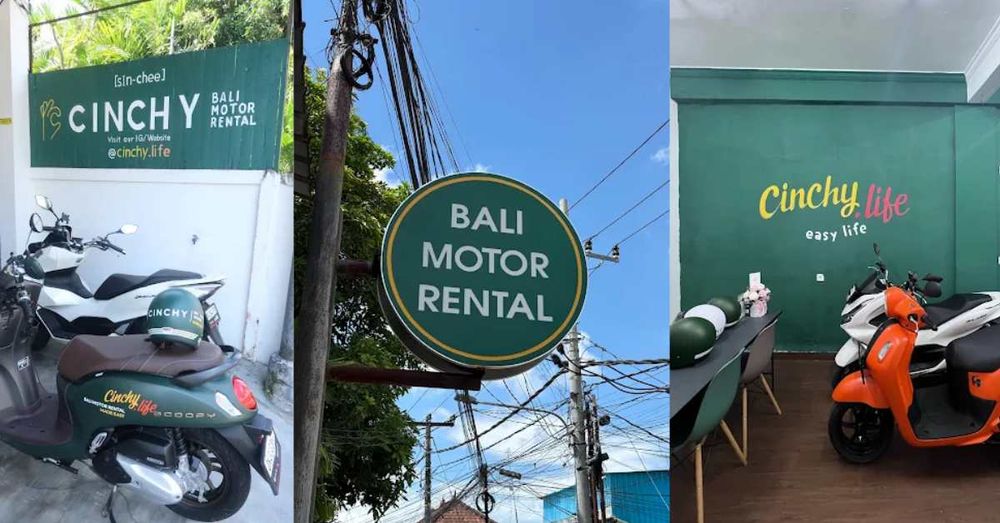
Your scooter plays an important role in your overall riding experience, especially if you plan to travel beyond central Bali.
Cinchy focuses on keeping its scooters regularly serviced and in good condition for everyday riding.
The rental process is also designed to be straightforward, whether you need a scooter for a short trip or a longer Bali itinerary.
Cinchy offers several rental packages and provides customer support around the clock, making it easier to get assistance if you need help during your rental.
For longer Bali rides, the Comfort category can be a practical option.
It includes the Yamaha NMAX and Honda PCX, two larger scooters that offer a more comfortable riding experience for longer routes.
The Comfort category starts from IDR 155K/day, while weekly rentals start from IDR 125K/day and monthly rentals from IDR 80K/day.
Delivery and pickup are available at several locations across Bali. You can get free delivery and pickup at I Gusti Ngurah Rai Airport, Seminyak, Kuta, and Legian.
Delivery to other locations is also available, starting from IDR 20,000 for Canggu, IDR 40,000 for Sanur, and IDR 65,000 for Nusa Dua.
Your rental also comes with practical essentials for Bali riding, including a helmet, hair net, phone holder, and raincoat.
If you want additional equipment, optional upgrades such as a new helmet, new visor, or full tank of fuel are also available.
Cinchy's 24/7 customer support provides another layer of convenience if you need assistance during your trip.
Cinchy also provides several insurance options so you can choose coverage based on your preferences.
Knowing how to brake properly is one of the most important skills for anyone riding a scooter in Bali.
Use both brakes progressively, anticipate hazards, slow down before corners and steep descents, and give yourself more time and space when roads are wet, slippery, or unpredictable.
If you are looking for a well-maintained scooter for exploring Bali, Cinchy offers well-maintained scooters, convenient delivery and pickup options, flexible rental periods, 24/7 support, and multiple insurance choices.
 travel tips
 hidden gems
 scooter guides
 riding tips
 bali guides
 cultural insight