1


Stay in Touch
Get the latest updates, special offers, and exclusive Cinchy perks straight to your inbox.


Jl. Plawa No.50, Seminyak, Kec. Kuta, Kabupaten Badung, Bali 80361

CALL US 24/7
(+62-851-7424-6249)
Copied!

We’ll be Back
at
8:30 AM-9 PM WITA




Payment Partners


© 2026 CINCHY. ALL RIGHTS RESERVED.
Cinchy Blog / Why Is Canggu Traffic So Bad? Congestion Spots & How to Survive It
Published: 11 Feb 2026

By Syahrial Maulana Sudarto
Travel Enthusiast
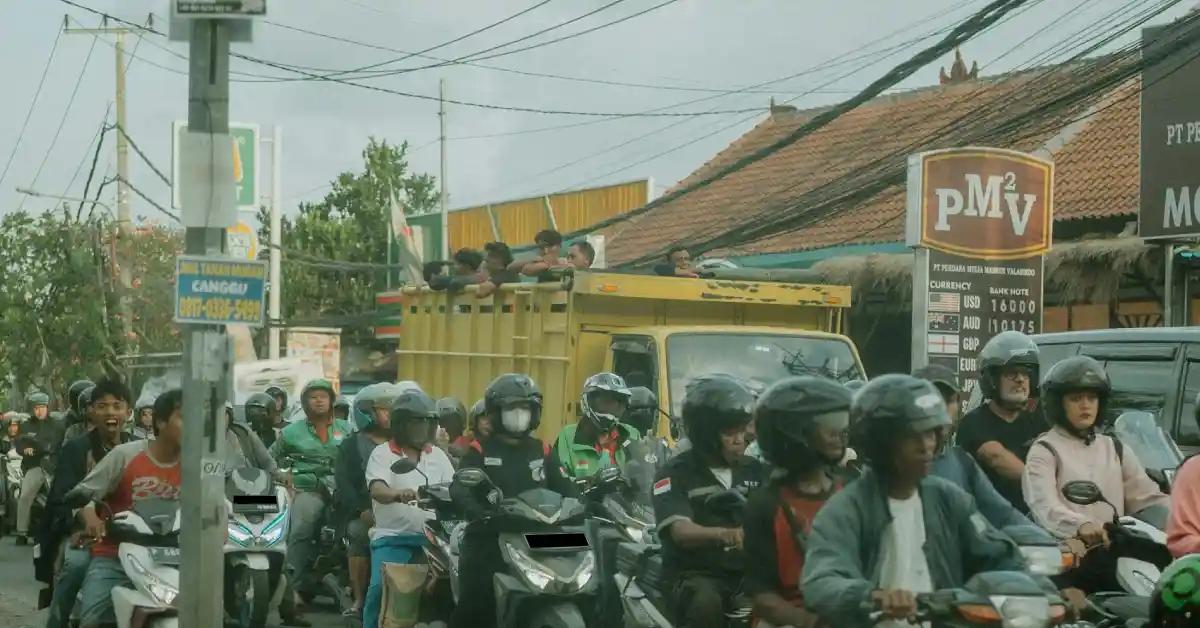
You’ve found your slice of paradise in Canggu, the perfect blend of surfing, brunch spots, and digital nomad energy.
But if you’ve been here for more than a day, you’ve probably experienced the other side of this paradise: the absolute nightmare of its traffic congestion.
You’re not alone in asking: why is Canggu traffic so bad? A trip that should take 10 minutes often turns into a frustrating 45-minute crawl, especially during peak hours.
This isn't just an inconvenience, it can genuinely impact your holiday experience.
This article will break down the root causes of the notorious Canggu gridlock, identify the main choke points you need to avoid, and, most importantly, give you practical, insider tips on how to survive (and even thrive) on the area’s busy roads.

The severe traffic in Canggu is not a single issue; it’s a perfect storm of rapid development, infrastructure limitations, and sheer volume.
This is the core problem. Canggu’s roads, many of which were once just small, narrow farm paths, were never designed for the current volume of vehicles.
Bali as a whole has a staggering imbalance: the latest data shows the island is home to over 5.2 million vehicles, significantly exceeding its population of about 4.3 million.
This massive fleet of cars and scooters is funneled into a relatively small area, causing the roads to reach capacity daily.
Canggu’s explosive global popularity is a double-edged sword. The area has seen a frantic building surge of villas, resorts, beach clubs, and trendy cafes.
While this provides endless options for tourists, every new venue generates more vehicle movement, delivery trucks, tourist transport, and customer scooters.
The area has become a victim of its own success, where the infrastructure simply hasn’t kept up with the pace of commercial expansion.
Unlike major metropolitan areas, Canggu and its surrounding areas suffer from a major lack of reliable mass public transportation.
This absence forces almost everyone, locals, expats, and tourists—to rely on private transportation, predominantly cars and motorbikes, which drastically increases the volume of vehicles per kilometre of road.
If there were efficient buses or a light rail system, the roads would be instantly quieter.
While this is a sensitive topic, local traffic behaviour certainly contributes to the gridlock. Vehicles often ignore traffic laws or basic courtesy, leading to aggressive manoeuvres.
The common phenomenon of "rebut jalur" (aggressively taking the right-of-way or blocking an intersection) is rampant at junctions, causing the entire flow to seize up.
When a key intersection gets blocked, the congestion ripples backward for kilometres, which explains why Canggu traffic is so bad even miles away from the main spots.
Read Also:
A Comprehensive Guide About Traffic Fines in Bali
Risks of Speeding on a Motorbike in Bali You Should Know
What Tourists Should Know When Pulled Over by Police in Bali
How to Avoid Traffic Jams in Bali: Worst Time & Top Tricks
List of Traffic Jams in Seminyak You Should Anticipated

If you’re planning your daily route, it’s crucial to be aware of these notorious traffic spots.
Often called "the busiest part of town." Batu Bolong is the central artery leading directly to the main surf beach and is lined with the most famous cafes, bars, and beach clubs.
The road is constantly slowed by vehicles entering and exiting crowded parking areas, or cars and taxis waiting for passengers. Avoid this stretch at all costs from late afternoon to sunset.
Slightly wider than Batu Bolong, Berawa is another central area that has undergone intense development.
The road gets severely congested, mainly due to the constant stream of traffic to and from the large beach clubs, resorts, and popular restaurants in the area.
Access roads leading into villas and large complexes frequently interrupt the main traffic flow.
This is the main arterial road connecting the greater Canggu area to other parts of Bali. It’s used heavily by everyone: local residents, tourists, expats, and logistics trucks.
The sheer volume makes this road a major congestion point, especially as it links the various popular tourist streets.
This major intersection sits on the Berawa-Canggu-Dalung route and is infamous for severe traffic jams.
Because it's a critical junction where multiple dense traffic streams converge, this spot is a frequent cause of the area's horror traffic.
Now that you know why Canggu traffic is so bad and where the problems are, here’s how you can navigate the area like a seasoned local.
The simplest way to beat the crowds is timing. Traffic usually starts building up around 2:00 PM, with the absolute peak hour often occurring around 5:00 PM as everyone rushes for sunset, dinner, or to leave the beach clubs.
If your destination is only a short distance, plan to travel outside of 10:00 AM to 1:00 PM and 7:00 PM to 9:00 PM.
Be psychologically prepared for horror traffic jams during major holiday seasons (like Christmas, New Year’s, or long weekends).
During these times, travel times can quadruple. Leave far earlier than you think necessary and pack your patience.
Keep an eye on what local authorities are doing. They are actively trying to "untangle" the traffic:
If you are staying in Canggu, a car is arguably your worst enemy. It is bulky, hard to park, and you will be stuck for hours at the choke points.
For almost any journey within the area, a motorbike is the only way to retain your mobility and sanity.
Motorbikes are far more agile in dense traffic, have more parking options, and allow you to quickly bypass long queues.
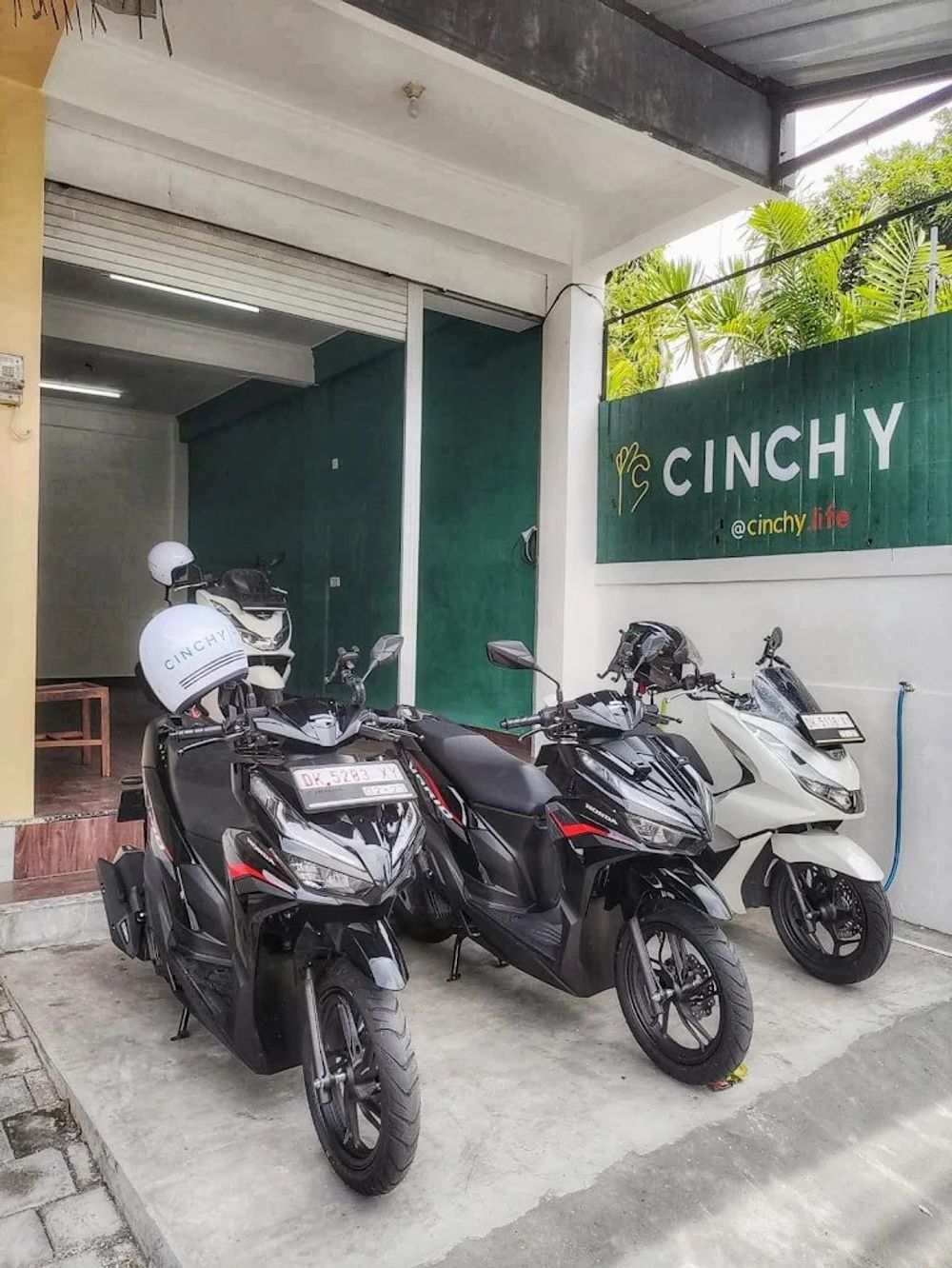
That’s where Cinchy comes in.
As a trusted scooter rental provider in Bali, Cinchy is designed to make your travel hassle-free, even when the traffic is at its worst.
Why Choose Cinchy?
Cinchy offers competitive prices designed to fit any holiday budget:
| Package | Example Motorbike (Honda Vario/Honda Scoopy/Yamaha Fazzio) | Starting Price (Approximate) |
| Daily Rental | IDR 95,000/day | ~US$5.84 or \~AU$9 |
| Weekly Rental | IDR 560,000 | ~US$34.44 or \~AU$53.38 |
| Monthly Rental | IDR 1,500,000 | ~US$92.24 or \~AU$142.97 |
Ready to navigate Canggu’s crowds with ease? Book our well-maintained Cinchy scooter now!
 travel tips
 hidden gems
 scooter guides
 riding tips
 bali guides
 cultural insight