1


Stay in Touch
Get the latest updates, special offers, and exclusive Cinchy perks straight to your inbox.


Jl. Plawa No.50, Seminyak, Kec. Kuta, Kabupaten Badung, Bali 80361

CALL US 24/7
(+62-851-7424-6249)
Copied!

We’re Here
Everyday
8:30 AM-9 PM WITA




Payment Partners


© 2026 CINCHY. ALL RIGHTS RESERVED.
Cinchy Blog / 16 Top Historical Destinations in Bali to Explore
Published: 11 Aug 2026

By Syahrial Maulana Sudarto
Travel Enthusiast
Quick Answer
“What historical destinations in Bali that I need to explore?”
Bali is home to many historical destinations, from ancient archaeological sites and royal palaces to traditional villages, museums, and monuments. The best historical places in Bali reveal different periods of the island’s past, including ancient kingdoms, Balinese royal history, religious heritage, colonialism, and the struggle for independence.
Free Cancellation
24/7 Support
Insurance
Start Date - End Date
Start Time
End Time
Duration
0 Day(s)
Key Takeaways:
A historical destination in Bali does not have to be an ancient temple. The island’s historical heritage includes archaeological remains, royal residences, ancient inscriptions, traditional villages, museums, and monuments connected to important events.
This makes Bali especially interesting for history travelers. You can explore an 11th-century archaeological complex in the morning, visit a former royal palace in the afternoon, and learn about Bali’s independence struggle later the same day.
UNESCO’s Cultural Landscape of Bali covers five areas totaling about 19,500 hectares, with the subak irrigation system dating back to at least the 9th century. This shows how Bali’s history is closely connected not only to monuments, but also to agriculture, religion, communities, and the landscape.
Goa Gajah, also known as the Elephant Cave, is one of Bali’s most recognizable archaeological sites.
The complex contains an ancient cave, stone carvings, bathing pools, statues, and other archaeological remains.
The site is generally associated with Bali’s ancient Hindu-Buddhist heritage and is traditionally dated to around the 11th century.
Its combination of religious architecture and archaeological remains makes it an excellent introduction to ancient Bali.
If you're still uncertain about your next steps, don't worry, as we're here to address all your queries and concerns.
There is no single “oldest” historical destination in Bali, but Gunung Kawi, Goa Gajah, and Blanjong Inscription are among the most significant sites for exploring ancient Bali. Blanjong Inscription, for example, is dated to 913 CE, while Gunung Kawi is associated with Bali’s early 11th-century royal period.
Some of the best ancient sites in Bali include Gunung Kawi, Goa Gajah, Yeh Pulu, Tebing Tegallinggah, and Pura Penataran Sasih. These archaeological sites provide insight into ancient Balinese religion, royal history, architecture, inscriptions, and everyday life.
Bali Museum in Denpasar is one of the best places to start if you want an overview of Balinese history and culture. For a more immersive experience, visit archaeological sites such as Gunung Kawi and Goa Gajah, royal heritage sites such as Kerta Gosa, and historical monuments such as Bajra Sandhi.
For royal history, consider Kerta Gosa and Klungkung Palace, Ubud Palace, Taman Ujung Water Palace, Tirta Gangga Water Palace, and Pura Taman Ayun. These destinations are connected to Bali’s former kingdoms and offer examples of royal architecture, gardens, water systems, and religious traditions.
Many historical temples and archaeological sites in Bali can be visited by tourists, but access varies. Some are active places of worship, so visitors should follow local rules, dress appropriately, and avoid restricted areas or ceremonies when requested. Always check the latest visitor information before traveling.
Yes, if you group destinations by location. For example, Goa Gajah, Yeh Pulu, Tebing Tegallinggah, and Pura Penataran Sasih can form an archaeology-focused route around Gianyar and Pejeng. For East Bali, you can combine destinations such as Taman Ujung and Tirta Gangga with other nearby attractions.
Gunung Kawi is one of Bali’s most impressive ancient archaeological sites, featuring ten rock-cut candi carved into the cliffs along the Pakerisan River.
The site is associated with Bali’s ancient royal period. Government archaeological records connect the Pakerisan area with inscriptions dated to 1022 and 1023 CE, while some of the shrines are traditionally associated with King Udayana and his descendants.
Yeh Pulu offers something different from many historical temples in Bali: a glimpse into everyday life.
Its approximately 25-meter-long rock relief depicts human activities, religious figures, and scenes that provide clues about life in Bali centuries ago.
The site was rediscovered in 1925 and later investigated by the Dutch Colonial Archaeological Bureau.
Tebing Tegallinggah is a lesser-known archaeological site near other historical attractions in the Bedulu area.
Its rock-cut remains make it particularly interesting for travelers looking beyond Bali’s famous temples.
It can also be combined with Goa Gajah and Yeh Pulu for a historical day trip around Gianyar.
Pura Besakih, often called the Mother Temple of Bali, is the island’s largest temple complex and one of its most important religious heritage sites.
Its historical significance goes beyond its spectacular location on the slopes of Mount Agung.
The complex represents the long development of Balinese Hindu religious traditions and remains an active sacred site today.
Pura Taman Ayun was built as the royal temple of the Mengwi Kingdom and is one of the most important examples of Bali’s royal water-temple tradition.
It is also part of UNESCO’s Cultural Landscape of Bali. UNESCO identifies Taman Ayun as an 18th-century Royal Water Temple, while the broader subak landscape demonstrates a water-management tradition dating back to at least the 9th century.
Kerta Gosa is one of the best places to explore Bali’s royal history.
It was part of the former Klungkung royal complex and is particularly known for its traditional paintings depicting moral stories, justice, and the consequences of human actions.
Nearby Puri Agung Klungkung adds more context to the history of the Klungkung Kingdom and Bali’s royal political landscape.
Taman Ujung Water Palace was developed by the Karangasem royal family and combines Balinese architectural traditions with European influences.
Its pools, bridges, gardens, and former royal structures make it one of the most visually distinctive historical places in East Bali.
It is especially worthwhile for travelers interested in royal architecture and the history of the Karangasem Kingdom.
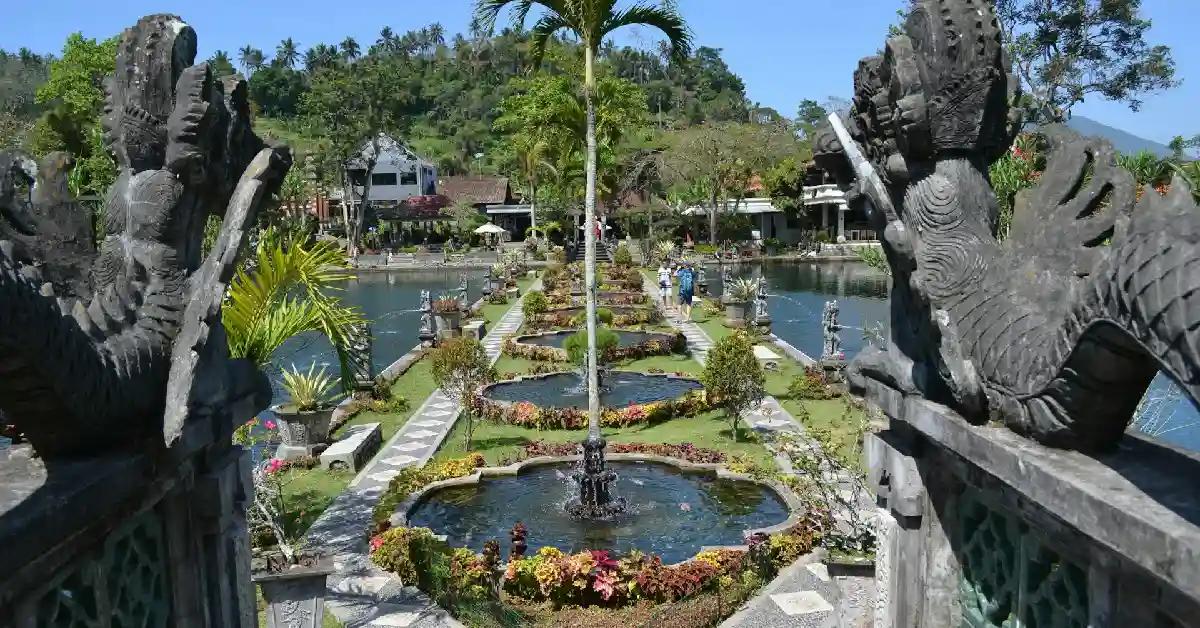
Tirta Gangga is another important royal heritage destination in Karangasem.
The complex was developed by the Karangasem royal family and is centered around water, gardens, fountains, pools, and Balinese architectural elements.
Unlike a conventional historical museum, Tirta Gangga lets visitors experience royal heritage through its landscape and architecture.
Ubud Palace, or Puri Saren Agung, is closely connected with Ubud’s royal family and the development of the town as an important center of Balinese art and culture.
Its location in central Ubud also makes it one of the easiest historical destinations to add to an itinerary, especially if you want to have a day trip to Ubud.
Pairing the palace with nearby cultural attractions can provide a broader understanding of Ubud’s royal and artistic heritage.
Tenganan is one of the best places to experience living cultural heritage in Bali.
Rather than focusing on a single monument, the village preserves traditional settlement patterns, architecture, customs, and community practices.
The village is associated with the Bali Aga tradition, making it particularly valuable for travelers interested in traditional Balinese culture and the island’s pre-Majapahit cultural heritage.
Bali Museum is one of the best destinations for travelers who want to understand Bali’s history through artifacts rather than archaeological sites.
Its collections cover aspects of Balinese culture, traditional life, art, archaeology, and historical development.
Visiting the museum can also provide useful context before exploring historical destinations elsewhere on the island.
Bajra Sandhi Monument is particularly important for understanding Bali’s more recent history.
The monument commemorates the struggle of the Balinese people against colonialism and contains dioramas and historical artifacts.
Unlike ancient archaeological sites, Bajra Sandhi helps connect Bali’s long history with its colonial period and independence-era story.
Blanjong Inscription is one of Bali’s most significant archaeological inscriptions.
The stone inscription is located at Pura Blanjong in Sanur and is written using Old Javanese and Pranagari scripts, with Old Javanese and Sanskrit language elements.
The inscription is dated to Saka 835, equivalent to 913 CE, and mentions King Sri Kesari Warmadewa, an important figure in early Balinese history.
Pura Penataran Sasih is an important historical temple in the Pejeng area, one of Bali’s richest archaeological landscapes.
The temple is especially associated with ancient artifacts and the long religious history of the region.
For travelers exploring ancient Bali, it can complement visits to Goa Gajah, Yeh Pulu, and other archaeological sites around Gianyar.
Penglipuran is best understood as a living heritage destination rather than an archaeological ruin.
Its traditional houses, settlement layout, community customs, and carefully maintained village environment provide insight into how Balinese communities preserve inherited traditions.
It is a good choice if you want to experience traditional Balinese architecture and culture alongside more conventional historical sites.
One of the events that every Bali tourist should attend in Penglipuran is Penglipuran Village Festival.
Your best choice depends on the type of history you want to explore:
| If you want to explore... | Visit... |
| Ancient archaeology | Gunung Kawi |
| Ancient rock carvings | Yeh Pulu |
| Early Balinese history | Blanjong Inscription |
| Royal heritage | Kerta Gosa |
| Royal water palaces | Taman Ujung or Tirta Gangga |
| UNESCO heritage | Pura Taman Ayun |
| Museum collections | Bali Museum |
| Colonial and independence history | Bajra Sandhi |
| Traditional village life | Tenganan |
| Traditional architecture | Penglipuran |
Bali’s history is not preserved in one single museum.
It exists across archaeological sites, royal compounds, temples, inscriptions, traditional villages, agricultural landscapes, and monuments.
UNESCO notes that Bali has around 1,200 water collectives, with individual subak groups typically managing water supplies for approximately 50 to 400 farmers.
This living system shows that Bali’s heritage is still connected to everyday community life rather than existing only as preserved monuments.
For travelers, this makes historical tourism in Bali more than a sightseeing checklist. Each destination reveals a different part of the island’s story.
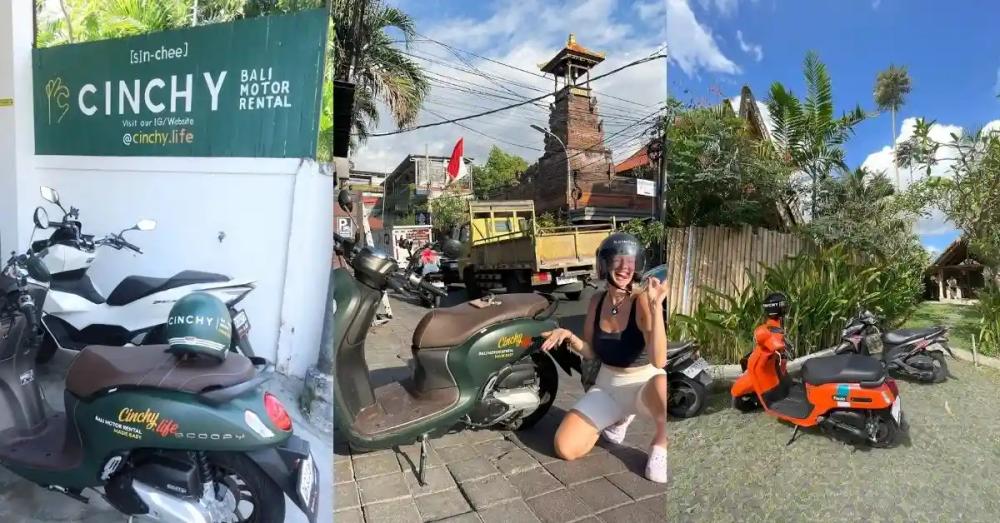
If you plan to visit several historical destinations, Cinchy can be a convenient option for renting a scooter in Bali.
Its Compact category includes Honda Scoopy, Yamaha Fazzio, and Honda Vario, with daily rates starting from IDR 95K/day, while the Comfort category includes Yamaha NMAX and Honda PCX, starting from IDR 155K/day.
The scooters are regularly maintained, and you can choose rental periods ranging from daily to monthly packages depending on your itinerary.
Cinchy also makes the process straightforward, with 24/7 customer support and delivery or pickup options focused on Seminyak and I Gusti Ngurah Rai International Airport.
When booking early, use the code EARLY5 to receive 5% off your rental.
The rental requirements are simple: a valid passport or KTP, a valid International Driving License or SIM C, round-trip flight tickets, and hotel booking details covering your rental period.
Basic rental equipment includes a helmet, hair net, phone holder, and raincoat, while Basic, Full Coverage, and VIP insurance options are available depending on your preference.
 travel tips
 hidden gems
 scooter guides
 riding tips
 bali guides
 cultural insight