1


Stay in Touch
Get the latest updates, special offers, and exclusive Cinchy perks straight to your inbox.


Jl. Plawa No.50, Seminyak, Kec. Kuta, Kabupaten Badung, Bali 80361

CALL US 24/7
(+62-851-7424-6249)
Copied!

We’re Here
Everyday
8:30 AM-9 PM WITA




Payment Partners


© 2026 CINCHY. ALL RIGHTS RESERVED.
Cinchy Blog / How to Fix Weak or Sticking Scoopy Motorcycle Brakes
Published: 06 Mar 2026

By Ulfah Alifah
Travel Enthusiast
Free Cancellation
24/7 Support
Insurance
Start Date - End Date
Start Time
End Time
Duration
0 Day(s)
Brake problems on a Honda Scoopy are not just an inconvenience — they are a direct safety risk on every road you ride. Weak brakes that require a hard squeeze before they bite, or brakes that stick and drag without releasing fully, can be the difference between a controlled stop and a serious accident. Both problems are extremely common in Bali's riding environment and have clear, diagnosable causes with straightforward fixes. This guide covers every cause of weak and sticking Scoopy brakes, how to diagnose each one, repair costs across Bali workshops in 2026, and what to do if the problem occurs on a rental.
Bali's riding environment creates a unique combination of stresses that accelerate brake wear faster than most riders expect.
Heavy daily traffic in areas like Kuta, Seminyak, and Canggu means constant stop-start braking that heats brake pads and discs far beyond what touring or open-road riding produces. Bali's steep roads — the climbs to Kintamani, the hairpins above Ubud, and the descent into Uluwatu — put prolonged, heavy load on the rear brake drum or disc.
Bali's wet season delivers a second layer of stress. Rainwater mixed with road grit creates an abrasive slurry that accelerates brake pad wear and introduces rust to disc rotors and drum surfaces overnight. Flooding pushes water and sand directly into brake drum assemblies — the Honda Scoopy's rear drum brake is particularly vulnerable because its open design allows debris ingress.
The result is that brake pads and shoes in Bali may need replacement every 6,000 to 10,000 km — significantly sooner than the 15,000 km figures typically quoted for temperate-climate riding.
Before diagnosing, it helps to clearly identify which problem you have — because they often have different causes and different fixes.
Weak brakes feel like this:
Sticking or dragging brakes feel like this:
Both problems can occur simultaneously in a neglected brake system and both require immediate attention before continued riding.
The single most common cause of weak braking is simply worn friction material. The Honda Scoopy uses a hydraulic disc brake on the front and either a drum brake or disc brake on the rear depending on the model year. Both systems rely on friction material pressed against a metal surface. When this material wears thin, braking force decreases.
Honda Scoopy brake specifications:
Below these minimums, braking performance becomes unsafe.
Signs pads or shoes are worn:
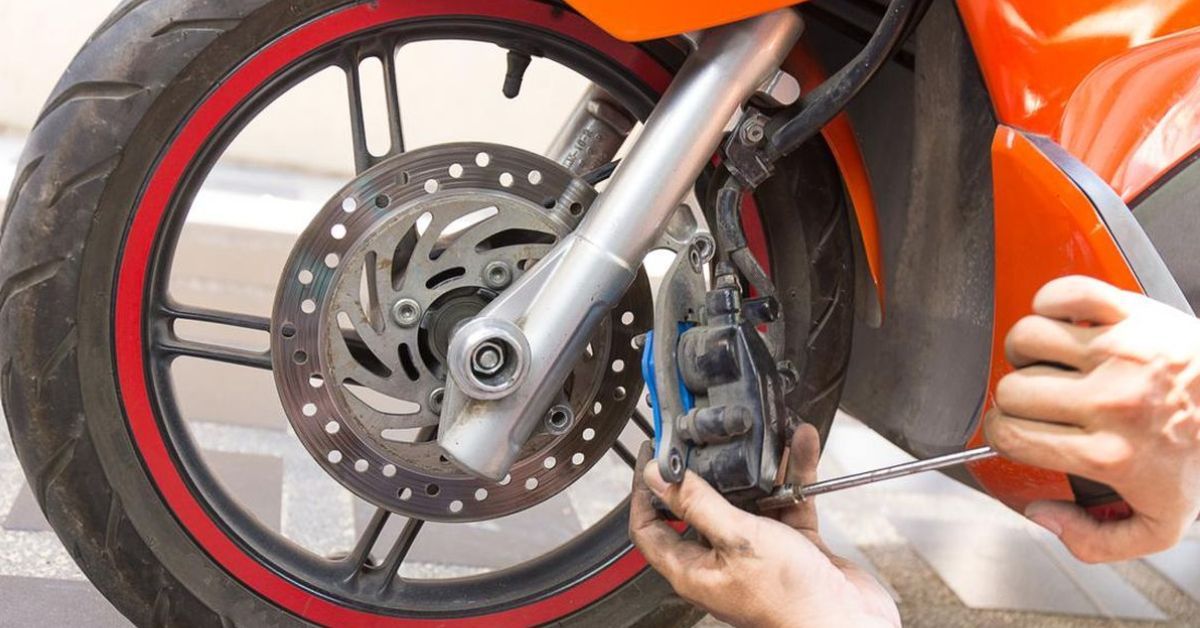
Fix: Brake pad replacement is one of the most straightforward motorcycle repairs. Any Bali workshop can complete it in 20 to 30 minutes.
The front disc brake on the Honda Scoopy is hydraulically operated. Brake fluid transmits the pressure from your hand on the lever to the calliper that clamps the disc. When air enters the brake line — through a loose fitting, a cracked line, or a fluid reservoir that was allowed to run empty — the air compresses under pressure instead of transmitting it. The result is a spongy, soft lever that travels far without producing strong braking force.
Signs of air in the brake line:
Fix: The brake system needs bleeding — a process where fresh brake fluid is pushed through the system to purge air bubbles. This is a workshop job that takes approximately 20 to 30 minutes.
Honda recommends replacing brake fluid every 2 years regardless of appearance. Old brake fluid absorbs moisture from the air, lowers the boiling point of the fluid, and can cause sudden brake fade during heavy use.
Oil, chain lubricant, or brake fluid that contacts the brake pad or disc surface destroys friction material effectiveness almost completely. A single drop of chain lube flung onto a disc pad can reduce braking force by 60 to 70% on that wheel.
Signs of contamination:
Fix:
Prevention: When lubricating the chain, always cover the rear disc and rear tyre with a cloth. Apply chain lube minimally and wipe off any excess immediately.
The disc or drum surface itself wears over time and can develop grooves, scores, and ridges from contaminated pad material or normal wear. A heavily scored disc creates uneven braking — the pad alternately grabs and releases as it passes over ridges rather than maintaining consistent contact.
Minimum disc thickness for Honda Scoopy:
A worn disc below minimum thickness can flex under braking load, causing unpredictable, inconsistent brake feel.
Fix:
For a comprehensive guide on all types of motorcycle service and repair available at Bali workshops — including brake service, disc replacement, and full maintenance cost breakdowns — read our article on motorcycle services in Bali: types, costs, and duration guide.
The front disc brake calliper contains one or two pistons that push the brake pads against the disc when hydraulic pressure is applied. When the brake lever is released, the pistons are supposed to retract slightly, releasing the pad from the disc. If the piston seals dry out, corrode, or swell from contaminated brake fluid, the piston does not retract — and the pad continues to rub against the disc permanently.
Signs of a seized calliper:
Fix: The calliper pistons need to be cleaned, freed, and relubricated — or the calliper seals replaced. This is a workshop-specific repair:
The rear drum brake on older Honda Scoopy models uses a mechanical actuating arm and cable system. After riding through flood water, sand, or heavy rain, water and grit can enter the drum and cause the brake shoes to stick against the drum surface. This is one of the most common post-rain brake complaints in Bali.
Signs of a jammed drum:
Immediate fix (minor sticking after rain):
Workshop fix (severe sticking or corrosion):
For the complete guide on post-flood motorcycle care — including how to clear water from the brake drum, engine, and electrical systems — read our full guide on riding a motorcycle in Bali's flood and post-flood care.
On mechanically-actuated rear drum brakes, the cable tension determines how far the brake shoe moves when the pedal is pressed — and how fully it releases when the pedal is released. A cable that is too tight due to incorrect adjustment or natural cable stretch means the brake shoe never fully releases from the drum surface.
Signs of cable misadjustment:
Fix: Brake cable adjustment is done using the adjuster nut on the cable where it enters the drum actuating arm. Loosening the adjuster by 1 to 2 turns (counterclockwise) releases cable tension and allows the shoe to retract fully. The brake free-play should allow approximately 20 to 30mm of pedal movement before the brake begins to engage.
This is a 5-minute roadside fix requiring no tools beyond your fingers. Any roadside workshop can also do it for IDR 10,000 to IDR 25,000 in labour.
A disc that has warped from overheating — typically from prolonged heavy braking on a long descent without rest — develops a slight lateral wobble as it spins. This wobble causes the calliper pistons to be repeatedly pushed back and then re-contact the disc surface, creating a pulsing sensation through the lever and intermittent drag.
Signs of a warped disc:
Fix:
Prevention: On long descents like the road from Kintamani to Tegalalang, use engine braking rather than continuous brake application. Close the throttle, allow the engine compression to slow the scooter, and use the brakes intermittently rather than holding them continuously. This prevents the disc from overheating.
For a detailed guide on managing engine and brake load on Bali's steep downhill roads safely — including technique for both descent and ascent — read our article on how to ride a scooter on uphill roads in Bali.
Even with perfectly maintained brakes, using them incorrectly in Bali's conditions causes accidents. Here is the correct technique for every common Bali braking scenario:
Apply both brakes together — front and rear simultaneously — with progressive pressure. Do not grab the front brake suddenly or stamp the rear pedal. Smooth, progressive application loads the front suspension, increases the front contact patch, and maximises stopping force.
The front brake provides approximately 70% of total stopping power. Many new riders avoid it out of fear — but a scooter braked only on the rear takes significantly longer to stop. For beginners learning correct braking technique for Bali's traffic, read our guide on how to ride a scooter for beginners in Bali with confidence.
Increase your braking distance by at least 50% in wet conditions. Apply brakes earlier and more gently — wet discs take an additional moment to develop full braking force as the surface water is wiped away by the first light pad contact (this is called the "wet lap" effect).
For the complete guide on riding safely in Bali's wet season — including wet braking distances, cornering in rain, and dealing with flooded roads — read our full article on essential tips for safe scooter riding during Bali's rainy season.
In Bali's narrow gang roads, brake early before entering the alley — not inside it. The surfaces are often tiled or brick, which become extremely slippery when wet and have less grip than asphalt even when dry. Keep speed low enough that braking is gentle, not emergency.
For a full guide on managing speed and braking in Bali's narrow alley network — including how to navigate tight junctions and avoid conflicts with oncoming bikes — read our article on how to ride a scooter in a small alley in Bali.
If emergency braking is required, apply maximum pressure on both brakes simultaneously while keeping the scooter as upright as possible. Do not lock either wheel — a locked rear wheel causes the rear to slide sideways, and a locked front wheel causes the scooter to fall immediately.
If the rear locks, ease off the rear brake slightly until the wheel rolls again. Maintain maximum front brake pressure as long as the scooter is upright and pointing straight. For a step-by-step guide on what to do immediately after an accident — whether emergency braking was successful or not — read our full article on what to do if you get in a scooter accident in Bali.
Catching brake problems before you ride is infinitely better than discovering them at 50 km/h. This 30-second check should become a non-negotiable daily habit:
For the complete pre-ride motorcycle inspection checklist covering every safety system — read our guide on what to check before you ride a motorcycle in Bali.
For the specific pre-rental handover checklist — including how to document existing brake wear before accepting any rental scooter — read our full guide on things to check before renting a scooter in Bali.
If you notice brake problems during a Cinchy rental — weak braking, sticking, or unusual noise — pull over safely immediately and call Cinchy's 24/7 support line:
Do not continue riding with suspect brakes. Cinchy's team will troubleshoot remotely, dispatch a technician, or arrange a replacement scooter depending on the severity and your location.
Every Cinchy scooter undergoes a full brake inspection before delivery — front pad thickness checked, rear drum or disc condition assessed, fluid level confirmed, lever and pedal travel tested. A brake fault that develops mid-rental is Cinchy's responsibility to resolve at no cost to you, provided it was not caused by improper use such as riding through deep flood water without reporting it.
For the complete guide covering every situation where Cinchy steps in during your rental — including mechanical faults, accidents, and emergency assistance — read our article on what to do if your Cinchy scooter breaks down.
For full details on what Cinchy's support team provides and how to request each type of help during your rental, read our article on what to do if you need help during your Cinchy rental.
Any competent motorcycle workshop in Bali can handle brake pad replacement, cable adjustment, and basic drum cleaning — the most common brake repairs. For hydraulic calliper work, disc replacement, or brake fluid bleeding, seek out a Honda AHASS workshop for guaranteed parts quality and technical competency.
For the complete directory guide to finding trusted repair workshops across all areas of Bali — including how to evaluate quality and what to ask before agreeing to service — read our practical guide on how to find a scooter repair near you in Bali.
For Honda AHASS-specific service information — including locations across Bali, service procedures, and cost benchmarks — read our full article on motorcycle repair dealers in Bali for Honda.
Quick reference for the most common brake repairs in Bali:
The most common brake repair — worn pads and basic drum service — costs a maximum of IDR 200,000. These are some of the lowest-cost safety repairs available, and neglecting them risks a repair bill far higher than that in the event of an accident.
Brake problems on a Honda Scoopy are almost always caught early by a thorough pre-ride check and resolved cheaply by any capable workshop in Bali. Weak brakes and sticking brakes have clear causes, fast diagnoses, and affordable fixes. The only dangerous scenario is ignoring the warning signs.
Every Cinchy Honda Scoopy is delivered with a full brake inspection completed. You start every rental with brakes that have been checked, adjusted, and confirmed safe — so you can focus entirely on riding.
👉 Explore Cinchy Life's Honda Scoopy fleet — safety-checked before every single delivery:
Explore Cinchy Life →
👉 Book your Honda Scoopy now — inspected brakes, tested safety, 24/7 support included:
Book Your Scoopy →
 travel tips
 hidden gems
 scooter guides
 riding tips
 bali guides
 cultural insight