1


Stay in Touch
Get the latest updates, special offers, and exclusive Cinchy perks straight to your inbox.


Jl. Plawa No.50, Seminyak, Kec. Kuta, Kabupaten Badung, Bali 80361

CALL US 24/7
(+62-851-7424-6249)
Copied!

We’ll be Back
at
8:30 AM-9 PM WITA




Payment Partners


© 2026 CINCHY. ALL RIGHTS RESERVED.
Cinchy Blog / Flat Tire or Just Needs Air on a Motorcycle, How Do I Know?
Published: 10 Oct 2026

By Syahrial Maulana Sudarto
Travel Enthusiast
Quick Answer
“How do I know if my motorcycle tire is flat or just needs air?”
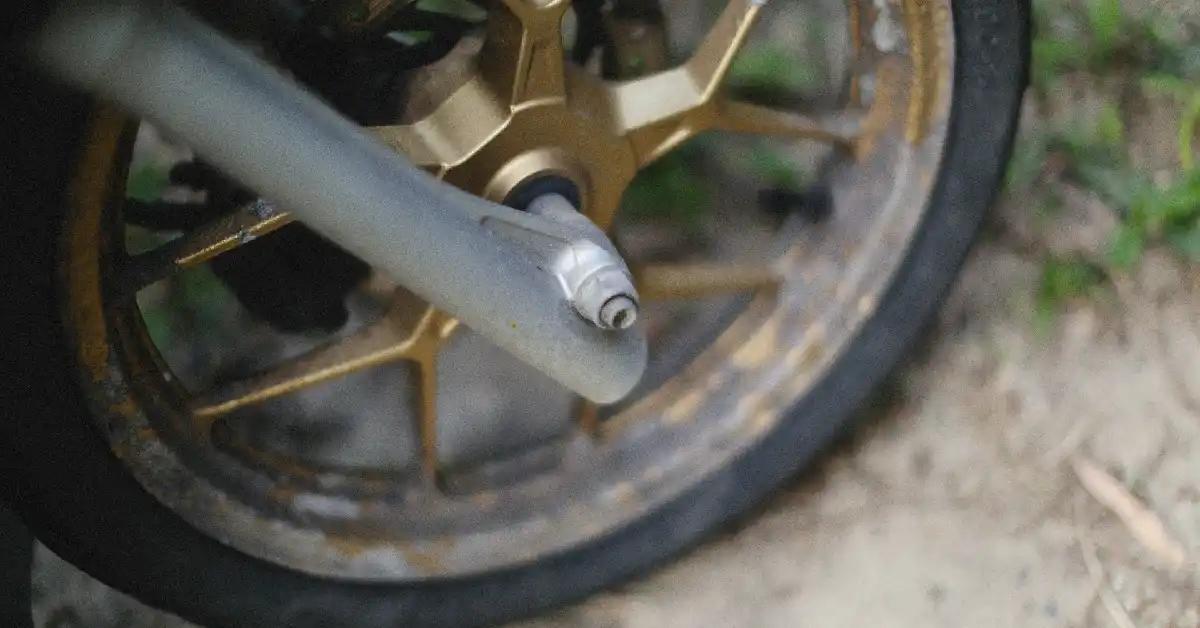
A motorcycle tire that only needs air usually looks slightly low but still holds its shape and maintains pressure after inflation. A flat or leaking tire may look severely deflated, show a puncture or damage, or lose pressure again soon after being inflated. Check the pressure with a gauge, inspect the tire, and compare it with the manufacturer's recommended cold pressure.
Free Cancellation
24/7 Support
Insurance
Start Date - End Date
Start Time
End Time
Duration
0 Day(s)
Key Takeaways:
The first thing to understand is that low tire pressure and a flat tire are not exactly the same thing.
An underinflated motorcycle tire still contains air but has less pressure than recommended. It may look slightly softer than usual while still maintaining most of its normal shape.
A flat motorcycle tire has lost a significant amount of air and may no longer maintain its intended shape.
It can also be caused by an active leak, such as a puncture, damaged valve, or problem around the rim.
| Sign | Just Needs Air | Flat or Leaking |
| Appearance | Slightly soft | Severely deflated or deformed |
| Pressure | Below recommended level | Very low or rapidly decreasing |
| After inflation | Usually holds pressure | May lose pressure again |
| Puncture | Usually none visible | May have a nail, screw, or other object |
| Valve | No obvious leak | May hiss or show bubbles |
| Handling | May feel slightly different | Can feel unstable or difficult to control |
This distinction matters because a tire that only needs air today could still have a slow leak. If the same tire repeatedly loses pressure, it needs further inspection rather than repeated inflation.
Visual inspection is useful, but it is not enough to determine whether your motorcycle tire has the correct pressure.
The best starting point is a reliable tire pressure gauge. Check the pressure when the tire is cold, ideally before riding or after the motorcycle has been parked long enough for the tires to cool.
Always compare the reading with the motorcycle manufacturer's recommended cold tire pressure for the front or rear tire. Do not automatically use the maximum PSI printed on the tire sidewall as your normal riding pressure.
There is also no universal PSI number that automatically means a motorcycle tire is flat. The correct pressure varies depending on the motorcycle, tire specification, load, and manufacturer's recommendation.
After checking the pressure, inspect the motorcycle tire carefully.
A severely underinflated tire may appear visibly flattened, sag toward the ground, or show unusual sidewall deformation. You may also notice a larger contact patch between the tire and road surface.
Look closely at the tread and sidewall for:
However, don't assume that a tire is fine simply because you cannot see a puncture. Small punctures and slow leaks may not be obvious during a quick visual inspection.
If your tire pressure is below the recommended level and there is no obvious severe damage, inflate it to the correct pressure.
Then check the pressure again after inflation.
If the tire maintains its pressure, the problem may simply have been low tire pressure caused by normal air loss or insufficient inflation.
If the pressure drops noticeably again shortly afterward, however, you should suspect a motorcycle tire leak.
Repeatedly adding air without finding the cause can leave you with the same problem later, potentially while you are riding.
A slow tire leak can be harder to identify than a completely flat tire.
Your motorcycle tire may appear normal after inflation, but its pressure gradually decreases over hours or days. You might notice that you need to refill the same tire more frequently than usual.
Common signs of a slow leak include:
A slow leak can come from more than a puncture. The valve stem, valve core, tire bead, rim, or tube can also be involved, depending on the motorcycle and tire setup.
Not every motorcycle tire leak is caused by a nail.
A damaged or leaking valve stem can allow air to escape gradually. The valve core can also develop a leak, making the tire repeatedly lose pressure even when there is no visible puncture.
For a tubeless motorcycle tire, the area where the tire meets the wheel rim can also be relevant. A damaged rim or poor bead seal can cause air to escape.
For a tube-type tire, the inner tube itself may be damaged even when the outside of the tire looks relatively normal.
If you cannot identify the source of the leak yourself, having the tire inspected by a qualified tire professional is the safer option.
Your motorcycle's behavior can also provide clues that the tire pressure is not correct.
An underinflated front tire can affect steering response, cornering, and stability. The motorcycle may feel heavier to steer or less precise when changing direction.
A low rear tire can also change the motorcycle's handling and stability, particularly during acceleration, cornering, or when carrying additional weight.
However, handling symptoms should not replace a pressure check. A motorcycle can feel different for many reasons, and the tire pressure gauge provides a much more reliable measurement.
You should not continue riding a motorcycle with a severely underinflated, visibly damaged, or rapidly leaking tire.
Riding with incorrect tire pressure can affect handling, grip, tire wear, and heat buildup. In severe cases, continued operation can contribute to tire damage or failure.
If the tire is only slightly below the recommended pressure and has no visible damage, inflate it correctly before riding and monitor the pressure. If it immediately loses air again, stop and have it inspected instead of continuing your trip.
This is particularly important before longer rides around Bali, where a tire problem can become much more inconvenient once you are away from your accommodation.
A motorcycle tire can lose air for several reasons, including:
This is why simply adding air does not always solve the underlying problem.
If your tire repeatedly requires inflation, treat the recurring pressure loss as a warning sign rather than a routine maintenance task.
If you want to fill air in motorcycle tires in a gas station in Bali, make sure to check this out: Your Guide on How to Put Air in Tires at a Gas Station in Bali.
You can use this simple process when you are unsure what is happening:
Does the tire look severely deflated or damaged?
→ Yes: Avoid riding and inspect it or seek professional assistance.
→ No: Check the tire pressure with a gauge.
Is the pressure below the manufacturer's recommended level?
→ Yes: Inflate it to the recommended cold pressure.
→ No: Continue inspecting the tire if it still appears or feels unusual.
Does the tire lose pressure again after inflation?
→ Yes: Suspect a slow leak and check the puncture, valve, rim, bead, or tube.
→ No: The tire may have simply needed air.
This approach is more reliable than trying to determine the condition of a motorcycle tire based on appearance alone.
Regular tire checks can help you identify problems before they become roadside emergencies.
Check your motorcycle tire pressure regularly, particularly before a long trip. Always check it when the tires are cold and use the manufacturer's recommended pressure.
You should also inspect the tread and sidewalls for punctures, cuts, cracks, bulges, and unusual wear.
If you recently hit a pothole, curb, or other significant obstacle, check the tire and wheel even if the tire does not immediately appear flat.
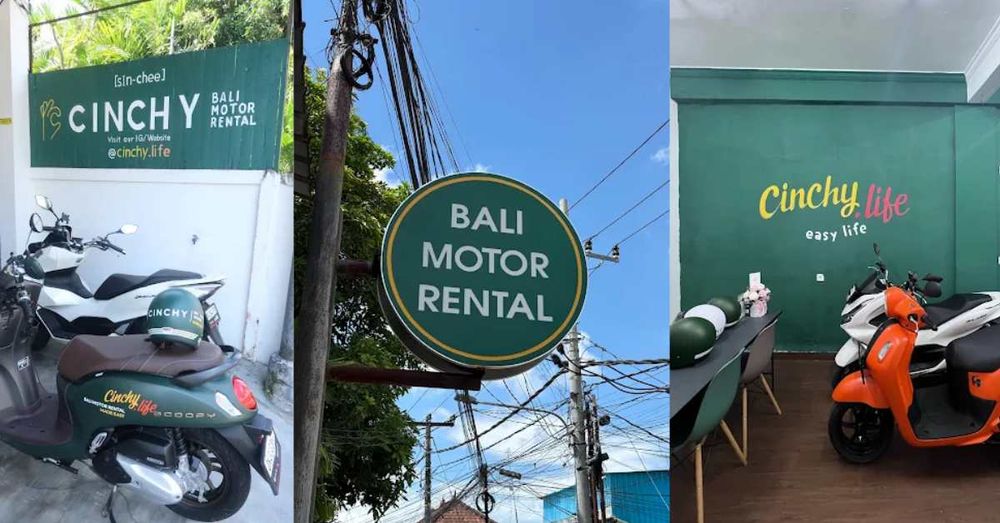
If you are planning to explore Bali by scooter, Cinchy offers well-maintained scooters that are regularly serviced, with a straightforward booking process and 24/7 customer support.
You can also check real-time scooter availability online, so you can see which options are available for your dates before making a reservation.
Cinchy offers Compact scooters, including Honda Scoopy, Yamaha Fazzio, and Honda Vario, starting from IDR 95K/day.
For more comfort, the Comfort category includes Yamaha NMAX and Honda PCX, starting from IDR 155K/day.
If your Bali trip is planned during peak season, booking your scooter early can help you secure your preferred category before availability becomes limited.
👉 Rent a scooter in Cinchy now, book early and save 5% with code EARLY5!
If you're still uncertain about your next steps, don't worry, as we're here to address all your queries and concerns.
Check the tire pressure with a gauge and compare it with the manufacturer's recommended cold pressure. If it holds pressure after inflation, it may simply have needed air. If it loses pressure again, investigate a possible leak.
Repeated pressure loss is the main warning sign. A tire that becomes soft again after inflation may have a puncture, leaking valve, damaged rim, bead problem, or tube issue.
Avoid riding if the tire is severely underinflated, visibly damaged, or rapidly losing air. Incorrect pressure can affect handling and contribute to excessive tire heat and damage.
Use the motorcycle manufacturer's recommended pressure for the specific front or rear tire. Do not use the maximum PSI printed on the tire sidewall as a universal riding-pressure recommendation.
Yes. Air can escape through a leaking valve stem, valve core, damaged bead or rim, tube damage, or other tire-related problems even when there is no obvious puncture.
Yes. Motorcycle tire pressure should generally be checked when the tires are cold so the reading can be compared accurately with the manufacturer's recommended cold pressure.
 travel tips
 hidden gems
 scooter guides
 riding tips
 bali guides
 cultural insight