
1


Stay in Touch
Get the latest updates, special offers, and exclusive Cinchy perks straight to your inbox.


Jl. Plawa No.50, Seminyak, Kec. Kuta, Kabupaten Badung, Bali 80361

CALL US 24/7
(+62-851-7424-6249)
Copied!

We’ll be Back
at
8:30 AM-9 PM WITA




Payment Partners


© 2026 CINCHY. ALL RIGHTS RESERVED.
Cinchy Blog / Dangers of Worn-out Scoopy Motorcycle Tires and How to Stay Safe in the Rain
Published: 06 Mar 2026

By Ulfah Alifah
Travel Enthusiast
Free Cancellation
24/7 Support
Insurance
Start Date - End Date
Start Time
End Time
Duration
0 Day(s)
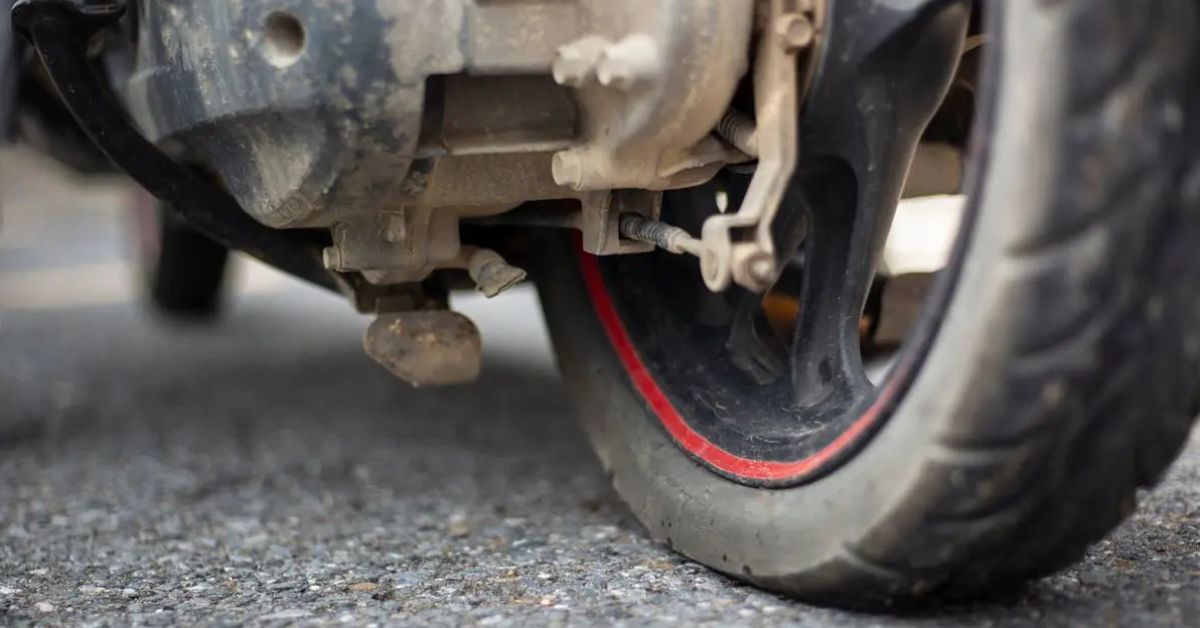
Riding a Honda Scoopy on worn-out tires in Bali's wet season is one of the most preventable causes of serious accidents on the island. Tires are the only part of your scooter that physically connects you to the road — and when that contact is compromised by worn tread, low pressure, or cracked rubber, the risk of skidding, hydroplaning, and losing control increases dramatically. This guide explains exactly what tire wear looks like, why it becomes so dangerous in rain, how to check your tires properly, and what to do to stay safe on Bali's roads when the wet season arrives.
Bali experiences two distinct riding environments that stress tires beyond what most riders expect: intense dry-season heat and sudden, heavy wet-season rain.
During the dry season — April through September — Bali's road surfaces reach high temperatures that accelerate rubber degradation. The intense UV exposure and heat cause the tire compound to harden and develop micro-cracking on the sidewall, reducing grip even before the tread is visibly worn.
During the wet season — October through March — Bali's roads become genuinely hazardous for scooters running old or worn tires. Heavy rain arrives suddenly, sometimes within minutes, and can drop 50 to 100mm of water in under an hour. This water does not drain immediately — it pools on Bali's uneven road surfaces, creating a layer of water between the tire and the road.
A tire with adequate tread depth channels this water away from the contact patch and maintains grip. A worn tire cannot channel water quickly enough — the contact patch floats on a thin film of water rather than gripping the asphalt. This is hydroplaning — and when it happens on a scooter, steering becomes unresponsive almost instantly.
The result is a rider who feels the handlebars go light, the scooter begin to drift, and has almost no ability to correct direction or stop — all in the space of a second.
Tread depth is the measurement from the top of the tire's rubber surface to the bottom of the deepest groove in the tread pattern. These grooves are the channels that push water out from under the tire as it rolls forward.
The deeper the grooves, the faster water is evacuated. The shallower the grooves, the slower the evacuation — and at a certain point, no meaningful evacuation happens at all.
The legal minimum tread depth for motorcycle tires in Indonesia is 1mm. However, safety experts recommend replacing motorcycle tires well before this limit — most tire manufacturers consider 1.6mm the absolute minimum for safe wet-weather use.
A new Honda Scoopy tire starts with approximately 5 to 6mm of tread depth. At 3mm, wet weather performance begins to decline noticeably. At 2mm, braking distances on wet roads increase significantly. At 1mm or below, the tire is unsafe for any wet-road riding.
The challenge in Bali is that tires can reach these dangerous levels much faster than riders expect. Bali's road surfaces — including rough asphalt, speed bumps, and the occasional gravel path — wear tires faster than smooth highway conditions. A scooter ridden daily in Bali can consume a rear tire in as little as 8,000 to 12,000 km under heavy use.
You do not need any tools to perform a basic tread depth check — though a tread depth gauge (available at any motorcycle shop for IDR 15,000 to IDR 30,000) gives you an accurate reading.
Honda Scoopy tires have small raised rubber markers built into the grooves of the tread — called Tread Wear Indicators (TWIs). They are located at the bottom of the main tread grooves and are marked with a small triangle or "TWI" symbol on the tire sidewall.
When the tire surface wears down to the same height as these indicators, the tire has reached its minimum safe depth and must be replaced immediately. If you can see the TWI markers clearly at the same level as the tire surface — your tire is dangerously worn.
Even with adequate tread depth remaining, a tire can be unsafe if the rubber compound has aged badly. Look for:
Correct tire pressure is as important as tread depth for wet-weather safety. Under-inflated tires reduce the contact patch geometry, increase heat buildup, and make the tire more prone to rolling off the rim under cornering stress in wet conditions.
Correct Honda Scoopy tire pressure:
For a complete step-by-step guide on checking and inflating your scooter's tires at a Bali petrol station — including how to use the air machine correctly — read our guide on how to put air in tires at a gas station in Bali.
For a comprehensive pre-ride inspection checklist that includes the tire check alongside brakes, lights, and fuel — read our full guide on what to check before you ride a motorcycle in Bali.
As described above, worn tires cannot channel water fast enough during heavy rain. At speeds above 30 km/h on a wet road with a worn tire, the front or rear wheel can lift off the asphalt surface entirely and glide on a thin film of water. The rider has no steering or braking control while hydroplaning.
Prevention: Replace tires before tread depth reaches 2mm. Slow down significantly in heavy rain — particularly on straight sections where speed tends to creep up.
A worn tire's braking performance in wet conditions is dramatically worse than a new tire's. Research across tire testing agencies consistently shows that worn tires (at or near 1.6mm tread) require 50% to 70% more distance to stop on a wet road compared to new tires at the same speed.
In Bali's traffic — where dogs, scooters, and pedestrians enter the road without warning — this extended stopping distance eliminates your ability to avoid accidents that a rider on new tires could easily have avoided.
Bali's roads are full of tight corners — in Ubud's mountain roads, in Canggu's narrow gang intersections, and on the winding cliffs above Uluwatu. In wet conditions, worn tires lose traction far earlier in a corner than new tires. The scooter begins to slide before the rider feels the usual warning signals, making it extremely difficult to recover.
Worn tires have a thinner rubber layer between the road surface and the inner chamber. A nail or sharp piece of debris that would have been stopped by the deeper rubber of a new tire passes straight through a worn tire, causing an immediate puncture.
In Bali's wet season, road debris — nails, glass, and sharp stones — is constantly washed onto road surfaces from construction sites and drainage channels. A wet road with a worn tire is a puncture waiting to happen.
For a full guide on what to do when your Scoopy gets a puncture — including how to pull over safely, find a bengkel tambal ban, and the cost of repair — read our complete article on what to do if your Scoopy's tubeless tire gets a puncture.
Old tires — even those that appear to have remaining tread — can suffer sudden internal separation. The steel or polyester belt layers inside the tire delaminate from heat cycling, impact, or age. When this happens at speed, the tire loses its shape instantly and the scooter becomes impossible to control.
Replace tires based on age as well as tread depth. Honda recommends replacing tires after 5 years from manufacture date regardless of remaining tread — the date code is moulded into the tire sidewall as a 4-digit number (e.g., "2422" means the 24th week of 2022).
Riding through flooded sections of road on worn or cracked tires dramatically increases the risk of sidewall failure. Water penetrates the micro-cracks in the sidewall rubber and weakens the internal structure. Combined with the lateral stress of water resistance pushing against the tire, the sidewall can fail suddenly.
For a full guide on the risks of riding through flooded roads in Bali — including when to stop, when to push the scooter through, and what to check after riding through water — read our guide on motorcycle flood damage in Bali you need to be aware of.
Even well-maintained tires with adequate tread require adjusted riding technique in wet conditions. Bali's rain is intense, arrives suddenly, and creates road conditions that are far more slippery than most riders from drier climates are accustomed to.
As soon as rain starts falling, reduce your speed by at least 20 to 30 km/h from your dry-weather pace. The first minutes of rain are the most dangerous — oil, dust, and debris that accumulated during the dry period mix with the first rainfall to form an extremely slippery surface layer. This early slick disappears once rain has washed the road clear, but the first 5 to 10 minutes of a rain shower are statistically the highest-risk period.
In dry conditions, a 2-second following distance behind the vehicle in front is adequate. In wet conditions, increase this to at least 4 seconds. Your braking distance is longer, the vehicle in front may stop suddenly, and spray from their tires reduces your visibility.
Apply both brakes progressively and early — not sharply and late. Hard braking on a wet road locks tires even with good tread. Locked tires on a wet surface have almost no directional control and even less stopping power than a rolling tire with ABS modulation.
Start braking earlier than you think you need to. If you notice a hazard ahead, apply light brake pressure immediately rather than waiting until the last second.
In wet conditions, lean your scooter less aggressively through corners than you would in dry weather. The less you lean, the less lateral stress you put on the tire contact patch — and the more grip remains available. Take wide, gradual lines through corners rather than sharp, late-apex lines.
For detailed guidance on riding Bali's steep and winding roads safely — including body position, brake technique, and cornering lines — read our guide on how to ride a scooter on uphill roads in Bali.
White road markings, pedestrian crossing paint, manhole covers, and metal grating become extremely slippery when wet — far slicker than the asphalt beside them. Avoid crossing these surfaces mid-corner. If you must cross them, do so in a straight line with no braking or acceleration inputs while the tire is on the painted or metal surface.
Bali's narrow gang (alley) roads that connect villas and local residences become particularly treacherous in the rain. These surfaces are often tiled, brick, or rough concrete — each with dramatically different grip levels. Water pools unevenly, debris washes directly onto the surface, and the narrow width leaves no room to manoeuvre around hazards.
Slow to a near-walking pace on gang roads in the rain. Follow any vehicle in front of you at a safe distance to learn the surface condition before you enter a section blind.
For a full guide on navigating Bali's narrow alley roads safely — dry or wet — read our article on how to ride a scooter in a small alley in Bali.
A full poncho improves visibility by keeping you drier, but it does not protect your extremities. In Bali's heavy rain, exposed hands on the handlebars get cold and numb within minutes — reducing grip strength and reaction time significantly. Wear waterproof gloves on longer rides and tuck your poncho tightly to prevent it from catching air or tangling in the wheel.
Despite your best precautions, a skid can still happen. Knowing the correct response in the first half-second is what determines whether you recover or fall.
Front wheel skid (handlebar suddenly goes light or pulls sideways):
Rear wheel skid (back of the scooter steps out sideways):
For the complete guide on what to do immediately after a scooter accident in Bali — including medical response, police reporting, and insurance filing — read our full article on what to do if you get in a scooter accident in Bali.
If your tires are at or near the TWI marker, show cracking, or are more than 3 to 4 years old — replace them before the next wet weather ride.
Options across Bali:
For practical guidance on finding a trusted workshop anywhere in Bali for tire replacement or any other service — read our guide on how to find a scooter repair near you in Bali.
For a full breakdown of all motorcycle service types, costs, and turnaround times across Bali workshops in 2026 — read our comprehensive article on motorcycle services in Bali: types, costs, and duration guide.
The easiest and most effective thing any rider can do to stay safe in Bali's rain is to spend 60 seconds checking their tires before every ride. This habit catches low pressure, tread wear, and visible sidewall cracking before you are on a wet road at 50 km/h.
The four-point daily tire check:
For the complete pre-rental tire inspection checklist — including what to check and document before accepting any scooter — read our full guide on things to check before renting a scooter in Bali.
Every Cinchy Honda Scoopy is inspected before delivery — including a full tire check covering tread depth, sidewall condition, pressure, and age. No Cinchy scooter is delivered with tires that fall below safe tread depth, and tire pressure is confirmed before handover.
If you notice any tire concern during your rental — unusual vibration, pulling to one side, or a spongy feel when braking — pull over safely and contact Cinchy's 24/7 support team immediately:
Cinchy's team will assess whether the tire is safe to continue riding or arrange assistance. For a complete guide on every scenario where Cinchy's roadside support steps in during your rental, read our article on what to do if you need help during your Cinchy rental.
For full details on Cinchy's insurance coverage — including what happens if a wet-road accident causes damage — read our guide on renting a scooter in Bali with accident and theft insurance.
Worn tires in Bali's rain are not an inconvenience — they are a genuine safety risk with measurable consequences. Tread depth, rubber condition, and correct pressure determine whether your Scoopy responds to your inputs or slides out from under you. Check your tires before every ride. Replace them when tread reaches 2mm or sidewall cracks appear. And when the rain starts, slow down, increase your distance, and let your tires do their job.
👉 Explore Cinchy Life's Honda Scoopy fleet — delivered with inspected, safe tires every time:
Explore Cinchy Life →
👉 Book your Honda Scoopy now — tire-checked, pressure-set, and 24/7 supported:
Book Your Scoopy →
 travel tips
 hidden gems
 scooter guides
 riding tips
 bali guides
 cultural insight