
1


Stay in Touch
Get the latest updates, special offers, and exclusive Cinchy perks straight to your inbox.


Jl. Plawa No.50, Seminyak, Kec. Kuta, Kabupaten Badung, Bali 80361

CALL US 24/7
(+62-851-7424-6249)
Copied!

We’ll be Back
at
8:30 AM-9 PM WITA




Payment Partners


© 2026 CINCHY. ALL RIGHTS RESERVED.
Cinchy Blog / What Should You Do If Your Scoopy’s Tubeless Tire Gets a Puncture?
Published: 06 Mar 2026

By Ulfah Alifah
Travel Enthusiast
Free Cancellation
24/7 Support
Insurance
Start Date - End Date
Start Time
End Time
Duration
0 Day(s)
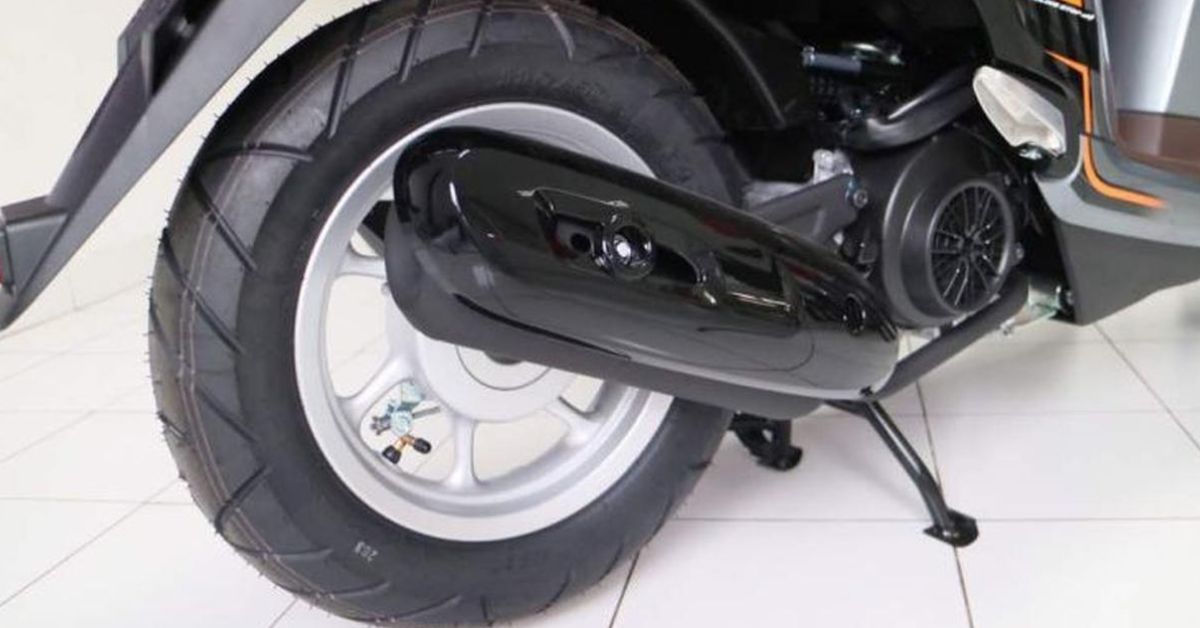
A flat tire is one of the most common problems scooter riders face on Bali's roads — and if you are riding a Honda Scoopy, you will want to know exactly what to do when it happens. The good news is that tubeless tires — which all modern Honda Scoopy models use — are far more forgiving than tube tires. They deflate slowly rather than instantly, giving you time to react safely and get to a repair shop. This guide covers every step from the moment you notice something is wrong to the moment you are back on the road.
Before diving into the steps, it helps to understand why tubeless tires behave differently from traditional tube tires during a puncture.
A standard tube tire has an inner tube filled with air. When it gets punctured, air escapes immediately through the tube — causing a sudden, dramatic blowout that can throw a rider off balance in an instant.
A tubeless tire seals directly against the rim with no inner tube. When a nail or sharp object pierces the tire, the object itself often acts as a partial plug. Air leaks slowly around the puncture, giving you a gradual loss of pressure rather than a sudden blowout.
This slow deflation is what makes tubeless tires safer. You usually have several minutes — sometimes longer — to safely reduce speed, steer to the side of the road, and come to a controlled stop. This is why every modern Honda Scoopy comes with tubeless tires as standard.
The earlier you spot the signs, the more control you have over the situation. Here is what to watch and feel for while riding:
If you notice any of these signs while riding, do not ignore them. Do not pull the brakes hard or swerve suddenly. Maintain a steady, gentle grip on the handlebars, reduce the throttle gradually, and steer smoothly toward the side of the road.
Once you suspect a puncture, your only objective is to get off the main road safely and calmly.
Follow these steps:
Do not continue riding on a flat or near-flat tubeless tire. Even though the tire deflates slowly, riding on low pressure risks damaging the tire sidewall, bending the rim, and making the scooter increasingly unstable.
Once you are safely off the road, inspect the tire carefully:
For a full pre-ride tire inspection checklist — including how to check tread depth, pressure, and sidewall integrity before you start riding — read our guide on things to check before renting a scooter in Bali.
Here is the practical advantage of being in Bali: roadside tire repair shops are everywhere. They are called bengkel tambal ban — tambal means patch, ban means tire — and they are found on almost every main road, in every neighbourhood, and along most tourist routes across the island.
Look for these visual markers:
If you cannot see a shop nearby, use Google Maps and search "tambal ban terdekat" (nearest tire repair). Results will show nearby shops with ratings and approximate distances.
Alternatively, ask any local for directions. The phrase "Tambal ban di mana?" (Where is a tire repair shop?) will be understood by anyone nearby. Balinese people are consistently helpful to riders in distress.
For a complete practical guide on how to find any type of scooter repair shop in Bali — including tips on choosing between a certified dealer and a roadside workshop — read our full article on how to find a scooter repair near you in Bali.
When you reach a bengkel tambal ban, here is what the repair process looks like:
This is the most common repair for a simple nail or screw puncture in the tread area:
This type of repair is fast — usually 5 to 15 minutes — and fully restores the tire's air-holding ability. It is safe for continued riding after the repair is complete.
Cost: IDR 20,000 – IDR 35,000 (~USD 1.30 – USD 2.15)
For larger punctures, cuts that are too wide for a plug, or damage near the shoulder of the tire, the mechanic may remove the tire from the rim and apply a patch from the inside. This takes longer — typically 20 to 30 minutes — but provides a stronger, longer-lasting repair.
Cost: IDR 35,000 – IDR 75,000
If the leak is from a damaged valve stem rather than the tire tread, the mechanic replaces the entire valve core or valve stem. This is a 5-minute job.
Cost: IDR 10,000 – IDR 25,000
If the tire has severe sidewall damage, a large gash, or the tread is worn below the safe depth, no repair can restore its structural integrity. A new tire must be fitted.
Cost: IDR 150,000 – IDR 400,000 depending on brand and size
For a comprehensive guide on all types of motorcycle repair services available in Bali — including full cost estimates, turnaround times, and what to look for in a workshop — read our detailed article on motorcycle services in Bali: types, costs, and duration guide.
After any tubeless repair, always ask the mechanic to inflate the tire to the correct pressure before you leave the shop. Do not assume they will do this automatically.
The recommended tire pressure for the Honda Scoopy is:
These figures are printed on a sticker near the swingarm or chain guard of most Scoopy models. Always use the manufacturer's recommended pressure — not a guessed figure.
Under-inflation after a repair is a common oversight. A tire repaired and refilled to only 20 PSI instead of 29 PSI will feel and handle similarly to a flat tire — causing handling problems and excessive heat buildup that shortens tire life.
For a full step-by-step guide on how to check and inflate your scooter tire at a Bali petrol station — including the difference between regular air and nitrogen — read our complete guide on how to put air in tires at a gas station in Bali.
If you are riding a Cinchy rental scooter and get a flat tire, the first step is straightforward: call Cinchy's 24/7 support line immediately.
Cinchy's support team will troubleshoot the situation with you over the phone, guide you to the nearest trusted repair point, or dispatch roadside assistance if needed.
Important: Tire puncture repair costs are the renter's responsibility regardless of which insurance plan was selected. Cinchy's Basic and Full Insurance plans cover accident-related mechanical damage — not tire punctures from road debris. The repair cost of IDR 20,000 to IDR 35,000 falls to the rider.
However, if the rim is damaged due to the puncture — for example, if you rode on the flat for some distance before noticing — and that rim damage was not present at the start of the rental, the renter is responsible for the rim repair cost as well. This is exactly why stopping as soon as you notice a flat is so important.
For full details on what Cinchy's insurance plans cover and what remains the renter's financial responsibility, read our complete guide on renting a scooter in Bali with accident and theft insurance.
Bali's roads are a mix of smooth asphalt, cracked pavement, gravel shoulders, and construction debris. Some areas — particularly in Denpasar, parts of Ubud, and along new development zones in Canggu — have significantly higher debris concentrations.
Here are habits that meaningfully reduce your puncture risk:
For expert advice on how to ride safely in Bali's unique traffic conditions — including how to adapt your riding style to local road surfaces and patterns — read our full guide on how to adapt to Bali's local riding style.
Bali's wet season — October through April — brings additional tire risks. Rain washes debris onto roads that were clean during the dry season, and standing water hides hazards that are invisible until you hit them.
During rain and immediately after heavy showers:
For a full set of safety tips on riding a scooter in Bali's rainy season — including how to handle road flooding, wet braking, and visibility challenges — read our complete guide on essential tips for safe scooter riding during Bali's rainy season.
One specific scenario worth addressing: if you notice decreased traction or handling instability while riding on one of Bali's many uphill routes — to Kintamani, Bedugul, or on the roads above Ubud — treat it as a possible tire issue immediately.
Uphill riding puts more load on the rear tire. A slow puncture that is barely noticeable on flat roads becomes significantly more dangerous on a steep incline. The rear tire loss of traction on a hill can cause the scooter to slide backward or jackknife.
If your rear wheel slips or feels soft on a climb, ease off the throttle gently, do not brake hard, and steer gradually to the nearest safe stopping point.
For a complete guide on how to handle Bali's steep and winding uphill roads safely — including body positioning, throttle control, and brake technique — read our article on how to ride a scooter on uphill roads in Bali.
In rare cases — particularly at higher speeds or on very rough surfaces — a tubeless tire puncture can cause a loss of control serious enough to result in an accident. If this happens, the same accident response protocol applies:
For the complete step-by-step guide on what to do after any scooter accident in Bali — including legal procedures, insurance filing, and emergency contact numbers — read our full article on what to do if you get in a scooter accident in Bali.
A tubeless tire puncture is a minor inconvenience when handled correctly. Pull over safely, locate a bengkel tambal ban nearby, pay IDR 20,000 to IDR 35,000 for a repair, check your pressure, and get back on the road. In Bali, the entire process rarely takes more than 30 minutes.
If you are renting from Cinchy Life, your Honda Scoopy is delivered with tires in excellent condition — inspected for tread depth, sidewall integrity, and proper pressure before every rental. Every Cinchy scooter includes 24/7 roadside support if anything more serious occurs during your ride.
For a full guide on renting a Honda Scoopy in Bali — including pricing, included gear, and everything to know before your first ride — read our article on how to rent a Honda Scoopy in Bali.
And for tips on getting the most efficient ride out of your Scoopy in Bali's terrain — including fuel management and riding habits that reduce tire wear — read our guide on Honda Scoopy fuel consumption in Bali rides.
👉 Explore Cinchy Life's Honda Scoopy fleet and full rental inclusions:
Explore Cinchy Life →
👉 Book your Honda Scoopy in Bali — delivered with inspected tires, 24/7 support included:
Book Your Scoopy →
 travel tips
 hidden gems
 scooter guides
 riding tips
 bali guides
 cultural insight