
1


Stay in Touch
Get the latest updates, special offers, and exclusive Cinchy perks straight to your inbox.


Jl. Plawa No.50, Seminyak, Kec. Kuta, Kabupaten Badung, Bali 80361

CALL US 24/7
(+62-851-7424-6249)
Copied!

We’re Here
Everyday
8:30 AM-9 PM WITA




Payment Partners


© 2026 CINCHY. ALL RIGHTS RESERVED.
Cinchy Blog / Bali vs Yogyakarta: Should I Visit Bali or Yogyakarta in 2026?
Published: 15 May 2026

By Ulfah Alifah
Travel Enthusiast
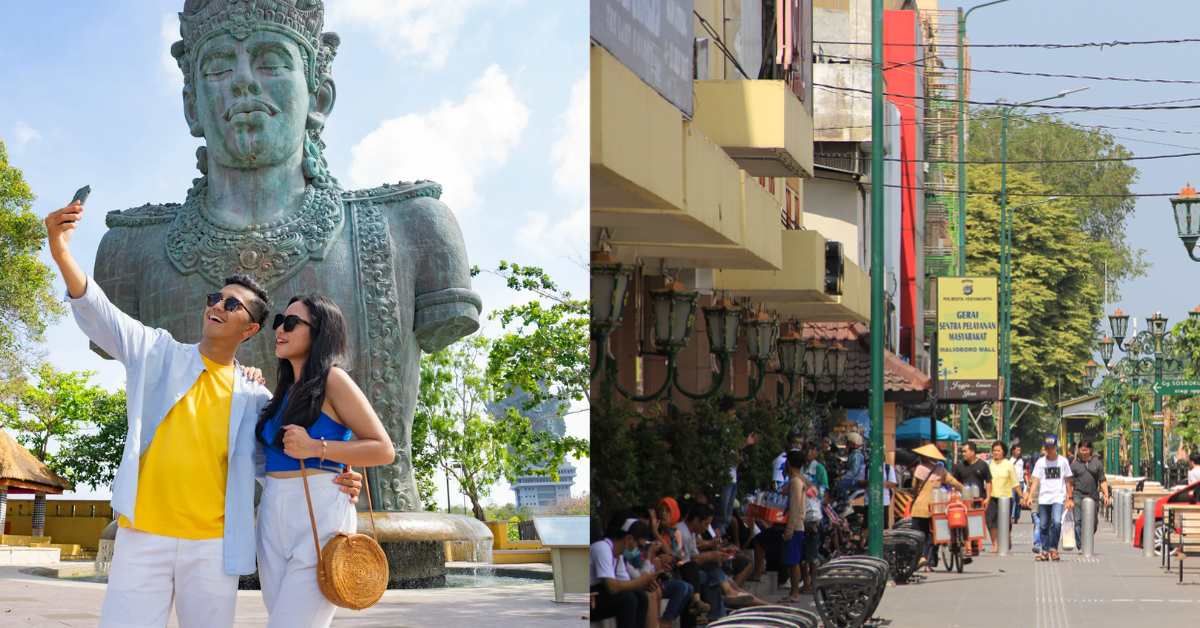
Choosing between Bali and Yogyakarta is one of the most common travel dilemmas in Southeast Asia. Both destinations are incredible — but they offer very different experiences. Whether you want surf, temples, street food, nightlife, or deep cultural immersion, this guide breaks it all down so you can make the right call for your 2026 trip.
Bali is Indonesia's most famous travel destination, and for good reason. It's a small island in the Lesser Sunda group, sitting just east of Java, but it punches well above its weight in terms of things to do and see.
The island is home to a unique form of Balinese Hinduism that shapes everything — from the flower offerings placed on doorsteps each morning to the temple ceremonies that fill the calendar year-round. You'll find stunning rice terraces in Ubud, iconic sea temples like Tanah Lot and Uluwatu, world-class surf breaks, white-sand beaches, and a nightlife scene that rivals party capitals around the world.
Bali also has a strong international infrastructure. It has a major international airport, a wide range of hotels and villas for every budget, a thriving digital nomad community, and some of the best restaurants in Asia. It's the kind of place that's easy to visit for the first time — and even easier to return to.
Yogyakarta, often called "Jogja" by locals, is the cultural capital of Java and arguably the soul of Indonesian civilization. It sits on the southern coast of Java, flanked by the volcanic Mount Merapi to the north and the Indian Ocean to the south.
Jogja is home to two of the most important UNESCO World Heritage Sites in Southeast Asia: Borobudur, the world's largest Buddhist temple, and Prambanan, a stunning complex of Hindu temples. The city itself is still ruled by its own Sultan — Sri Sultan Hamengkubuwono X — making it one of the only royal cities in modern Indonesia.
Street art, batik workshops, wayang puppet performances, gamelan music, and the famous Malioboro shopping street all add to a city that feels deeply rooted in its own identity. Yogyakarta is less developed for international tourism than Bali, which is both its challenge and its charm.
Bali is a full island province covering approximately 5,780 square kilometres. Yogyakarta (the Special Region of Yogyakarta) covers around 3,133 square kilometres. In terms of land, Bali is bigger — but Yogyakarta's city centre is compact and walkable in a way that much of Bali is not. Bali requires significant travel time between its main areas (Seminyak, Ubud, Uluwatu, Amed), while Jogja's key attractions are closer together, making it easier to cover more ground in less time.
For both destinations, the best time to visit is during the dry season, which runs from April to October. If you're heading to Bali specifically, April is an exceptional time — the island enters its dry season golden window with clear skies and cooler breezes. In Yogyakarta, July and August offer the most reliable dry weather, and the city is buzzing with local festivals and cultural performances. Avoid December to February for both destinations if you dislike rain, as this is peak wet season.
Both destinations are tropical and warm year-round. Bali's temperatures average around 27–30°C, while Yogyakarta tends to run slightly hotter, averaging 30–32°C in the dry season. Bali's coastal areas benefit from sea breezes that cool things down, especially in Seminyak and Canggu. Yogyakarta can feel more humid in the city centre, though the mountain slopes near Merapi are noticeably cooler. Both cities receive significant rainfall between November and March, so pack a light rain jacket regardless of when you visit.
Bali is the clear winner for outdoor sports variety. Surfing is the headline act — with beginner-friendly breaks at Kuta and Seminyak, intermediate waves at Canggu, and expert barrels at Uluwatu and Padang Padang. You can also go white-water rafting on the Ayung and Telaga Waja rivers, ATV riding through rice fields, mountain biking, and paragliding above the cliffs of Uluwatu.
Yogyakarta isn't far behind. It's the base camp for trekking Mount Merapi, one of the world's most active volcanoes. Sunrise hikes to the crater rim are among the most memorable outdoor experiences in all of Indonesia. The city also sits close to cave systems like Jomblang Cave, where a beam of sunlight dramatically pierces through the cave ceiling — an image that has gone viral on social media.
Bali's scenery is layered and varied. You get terraced rice fields in Ubud, volcanic mountains in the centre, dramatic sea cliffs in the south, black-sand beaches in the north, and lush jungle river valleys in the east. Every corner of the island has a different visual character.
Yogyakarta's scenery is defined by its cultural landmarks and volcanic backdrop. The silhouettes of Borobudur at sunrise or Prambanan at dusk are some of the most photographed images in Southeast Asia. The landscape between Jogja and the sea — fields of sugar cane, scattered villages, and the outline of Merapi in the distance — has its own understated beauty.
Bali wins this category with ease. From the bustling shores of Kuta to the sophisticated vibes of Seminyak Beach, the hidden coves of the Bukit Peninsula, and the surf-driven energy of Canggu, Bali's coastline offers something for every type of beach lover.
Yogyakarta's beaches are located about an hour south of the city along the Indian Ocean coast. Parangtritis is the most famous — dramatic, windswept, and steeped in Javanese mystical tradition — but the beaches here are rough, with strong currents that make swimming dangerous. If beaches are your priority, Bali is the right choice.
Bali has a world-class hotel scene. International brands like Four Seasons, COMO, Bulgari, and St. Regis all have properties here, sitting alongside hundreds of boutique hotels and guesthouses at every price point. Competition keeps prices competitive even at the luxury end.
Yogyakarta's hotel scene is more modest. You'll find solid mid-range options around Malioboro and the Kraton area, and a handful of elegant heritage-style hotels like the Plataran Kraton and Hyatt Regency Yogyakarta. It won't match Bali for pure luxury, but quality accommodation is easy to find and generally more affordable.
Private villa culture is essentially a Bali invention — and it remains one of the island's greatest assets. From a three-bedroom villa in Seminyak with a private pool and chef to a jungle hideaway in Ubud perched above a river gorge, the villa market in Bali is unmatched anywhere in Southeast Asia. You get extraordinary value here, especially for groups or couples.
Yogyakarta has a growing number of villa-style guesthouses and boutique retreats, particularly around the city's quieter residential areas. But the volume and quality of private pool villas doesn't come close to Bali. If a private villa stay is central to your trip vision, Bali is the destination.
Bali's dining scene is international, diverse, and genuinely excellent. You can eat wood-fired pizza in Seminyak, Japanese omakase in Ubud, raw vegan bowls in Canggu, and fresh-caught seafood by the shore in Jimbaran — all within a single day if you wanted. The island has developed a real food culture, with talented chefs from around the world choosing to live and cook here.
Yogyakarta's food scene is more locally focused — and that is absolutely a strength. The city is famous for its Javanese cuisine, and eating here is a deep cultural experience. Gado-gado, soto Betawi, sate klathak, oseng-oseng mercon, and the city's beloved gudeg (jackfruit stew) are dishes you can't properly understand until you've eaten them in Jogja. For food adventurers who want authentic local flavour over international variety, Yogyakarta has the edge.
Water sports in Bali are extensive and well-developed. From jet skiing and parasailing in Tanjung Benoa to surfing lessons in Kuta and wakeboarding in Sanur, the infrastructure is firmly in place for both beginners and advanced water sport enthusiasts.
Yogyakarta does not have a comparable water sports scene. Its Indian Ocean coastline is too rough and dangerous for most recreational water activities. This is one category where Bali has a clear and decisive advantage.
Bali is one of the top diving destinations in Asia. The USS Liberty shipwreck at Tulamben is a world-famous dive site that attracts thousands of divers each year. Nusa Penida offers encounters with manta rays and the elusive Mola mola sunfish. Menjangan Island in the north-west is known for pristine coral walls and spectacular visibility.
Yogyakarta has no meaningful snorkelling or diving scene. Its southern coast beaches face the open Indian Ocean, which is too rough and murky for underwater exploration. If diving or snorkelling is on your itinerary, there is no contest — book Bali.
Bali's inland adventures centre on Ubud and the central highlands. White-water rafting on the Ayung River, cycling through Tegallalang rice terraces, trekking to Mount Batur's summit for sunrise, and visiting traditional villages in Penglipuran are all bucket-list worthy experiences.
Yogyakarta's inland adventures are anchored by Mount Merapi. You can hike to the crater, visit the Merapi National Park, explore ancient cave systems like Goa Jomblang, and cycle through rural Javanese villages. The cave experiences in particular are genuinely unique — nothing in Bali matches the surreal atmosphere of a vertical cave with a natural light beam.
Both destinations are considered safe for tourists. Indonesia as a whole ranks well for traveller safety, and neither Bali nor Yogyakarta has a reputation for violent crime against visitors.
The main risks in Bali involve petty theft, scooter accidents, and occasional tourist scams around popular sites. Yogyakarta is generally considered even calmer — locals are famously warm and helpful, and the city has a strong community culture that deters crime. Solo travellers, including women, frequently cite Yogyakarta as one of the safest cities they've visited in Southeast Asia. If you're riding a scooter in Bali, always follow the rules of the road and local laws to stay safe.
Bali has one of the most famous nightlife scenes in Asia. Seminyak is packed with rooftop bars and beach clubs. Kuta is the centre of backpacker party culture. Canggu has evolved into the go-to spot for a hipper, more laid-back bar scene with live music and DJ nights. Uluwatu's clifftop venues offer unforgettable sundowner experiences.
Yogyakarta is not a party city. Nightlife here is low-key — a handful of live music bars, warungs serving cold beer, and cultural performances like the Ramayana Ballet at Prambanan. This isn't a weakness if you prefer a quieter evening. But if you came to party, Bali is where you need to be.
Bali's lifestyle is fast-paced, cosmopolitan, and strongly influenced by its large international community. There are co-working spaces, CrossFit gyms, smoothie bars, beach clubs, and wellness retreats catering to every lifestyle preference. Digital nomads, expats, surfers, yogis, and luxury travellers all find their tribe here easily.
Yogyakarta moves at a slower, more deliberate pace. Life here revolves around the rhythm of the Javanese royal calendar, local food markets, and neighbourhood social life. It's a city where locals still walk to the market in the morning and gather at the town square in the evening. For travellers who want to feel genuinely embedded in Indonesian daily life rather than an expat bubble, Jogja delivers that authentically.
Bali's culture is rooted in a form of Hinduism unique to the island — a blend of Hindu, Buddhist, and indigenous Balinese animist traditions. This manifests in daily offerings (canang sari), elaborate temple ceremonies, traditional dance performances (Kecak, Legong, Barong), and a deep spiritual relationship between the Balinese people and their land.
Yogyakarta is the heart of Javanese culture — the language, the philosophy, the arts, and the royal court traditions all originate here. It was the centre of the Indonesian independence movement, and the Sultan is still a beloved and active public figure. Batik-making, shadow puppetry (wayang kulit), gamelan music, and keris (dagger) craftsmanship are all living traditions in Yogyakarta. Both cities are culturally rich, but Jogja goes deeper.
Balinese food is delicious and distinctive. Babi guling (spit-roast suckling pig), bebek betutu (slow-cooked duck), lawar (minced meat and vegetable mix), and nasi campur are all local specialties worth trying. Ubud has a strong vegetarian and vegan food scene. International food of almost every cuisine is also easy to find.
Yogyakarta's food identity is built around gudeg — a sweet, slow-cooked jackfruit dish served with rice, chicken, and krecek (spicy buffalo skin). The city's street food culture along Malioboro and in its night markets is a genuine highlight. Bakpia pastries are the iconic local souvenir snack. If authentic Javanese flavours excite you, Yogyakarta's food scene is deeply satisfying.
Bali's shopping is international, varied, and high-quality. Seminyak has designer boutiques, concept stores, and gallery spaces. Ubud has silver jewellery workshops, wood carvings, and handmade textiles. Kuta has the big souvenir markets. The island's shopping scene caters to both luxury buyers and backpackers hunting for deals.
Yogyakarta's shopping is anchored by Malioboro Street — one of Indonesia's most famous shopping strips, lined with batik sellers, leather goods, silver jewellery, and wayang puppets. The traditional market Beringharjo is a sensory experience worth walking through even if you don't buy anything. The crafts here feel genuinely handmade rather than mass-produced, and bargaining is expected.
Both destinations are family-friendly, but they appeal to families in different ways. Bali offers a huge range of dedicated family activities — water parks, animal sanctuaries, surf lessons for kids, cooking classes, and beach clubs with family areas. Yogyakarta has overtaken Bali as the most popular domestic family holiday destination, according to end-of-2025 travel data. Its slower pace, safer streets, and UNESCO heritage sites make it a great educational trip for older children.
For families with young children who want resort facilities, Bali is likely the better fit. For families with older kids who are curious about history and culture, Yogyakarta offers something genuinely memorable.
Bali has been a honeymooner's paradise for decades. Private pool villas in Ubud or Seminyak, couples spa retreats, candlelit dinners on cliffside terraces in Uluwatu, and sunrise treks to Mount Batur all deliver that perfect romantic atmosphere. The island has an established honeymoon infrastructure that is hard to beat.
Yogyakarta can also be a romantic destination for the right couple — particularly those who value culture, slow travel, and authentic experiences over luxury pampering. A private tour of Borobudur at sunrise, a batik-making class together, and dinner by the Prambanan temples at sunset are genuinely special moments. But for pure honeymoon infrastructure and romance packaging, Bali is the stronger choice.
Bali has romance built into its landscape. Sunset views from Tanah Lot Temple, clifftop restaurants in Uluwatu, couples yoga retreats in Ubud, and flower-filled villa pools all contribute to an island that feels designed for love.
Yogyakarta's romance is quieter and more intellectual — shared exploration of ancient temples, cycling through village roads at dusk, watching a shadow puppet performance together. It rewards couples who connect through shared discovery rather than curated luxury.
For Instagram and visual content, both cities deliver strong material. Bali's aesthetics are globally recognisable — terraced rice fields, ornate temple gates, beach clubs with infinity pools, and lush jungle cafés. The island essentially invented the "tropical escape" visual language used across social media.
Yogyakarta's aesthetics are more ancient and monumental. Borobudur at sunrise with misty mountains behind it, the intricate stone reliefs of Prambanan, and the traditional batik workshops of Malioboro all photograph beautifully. If your travel photography focuses on heritage and human culture rather than beach lifestyles, Yogyakarta will give you more original material.
Bali has a wide budget range. Budget travellers can survive on IDR 300,000–500,000 (approximately USD 18–30) per day for accommodation, food, and local transport. Mid-range travellers spending IDR 1,000,000–2,000,000 per day (USD 60–120) will have access to excellent villas and restaurants. Luxury experiences can run to USD 500+ per night without difficulty.
Yogyakarta is generally cheaper than Bali across almost all categories. Budget guesthouses near Malioboro can cost as little as IDR 150,000–250,000 per night. Street food meals at the night markets are well under IDR 50,000. Even mid-range hotels and guided temple tours come in cheaper than equivalent experiences in Bali. For budget-conscious travellers, Yogyakarta represents excellent value.
On a pure value basis, Yogyakarta gives you more for your money. Your IDR stretches further here, and the quality of the cultural experiences — Borobudur, Prambanan, the Kraton — is world-class at a fraction of what you'd pay for similar heritage sites in Europe or East Asia.
Bali's value lies in its diversity. You can be at the beach in the morning, in the rice fields in the afternoon, and at a world-class restaurant in the evening — all without leaving the island. For the breadth of experiences on offer, Bali justifies its slightly higher price point.
Both cities have strong shopping scenes, but they serve different tastes. Bali wins for international goods, luxury boutiques, and contemporary design. If you're after designer swimwear, premium homeware, or high-end jewellery, Seminyak and Ubud are where you'll spend your money.
Yogyakarta wins for traditional crafts, authentic batik fabric, handmade silver work from Kotagede, and cultural souvenirs with real heritage value. Malioboro Street and the Beringharjo Market are the places to explore. If you want to bring home something genuinely Javanese — hand-drawn batik, a wayang puppet, or a piece of Kotagede silverwork — Yogyakarta is the better shopping destination for meaningful keepsakes.
Bali is one of the world's top digital nomad destinations, full stop. Canggu in particular has become a global hub for remote workers, with dozens of co-working spaces, fast fibre internet, a rich social scene, and an established community of location-independent professionals. Getting around by scooter makes it easy to move between co-working spaces and cafés — and renting a scooter in Bali is one of the most practical and liberating decisions you can make as a digital nomad.
Yogyakarta is emerging as an alternative for nomads who prefer a quieter environment and lower costs, but it doesn't yet have the co-working infrastructure or the international nomad community that Bali has built over the past decade.
Bali is the overwhelming choice for long-term expat living. It has established expat communities across Canggu, Seminyak, Ubud, and Sanur. International schools, foreign-owned businesses, English-speaking medical facilities, and a long history of welcoming foreign residents make it the most accessible Indonesian island for those wanting to build a life here.
Yogyakarta has a smaller but loyal expat community, often connected to its universities and arts institutions. It's a good fit for academics, artists, and people genuinely interested in immersing themselves in Javanese culture. But for the full expat lifestyle package — services, community, and infrastructure — Bali leads significantly.
For international visitors, Indonesia's visa system applies equally to both destinations. The most common option is the Visa on Arrival (VoA), available to citizens of many countries at major entry points including Ngurah Rai International Airport in Bali and Yogyakarta International Airport (YIA). The VoA grants a 30-day stay, extendable for another 30 days.
Since September 2025, all international travellers arriving in Indonesia must also complete the All Indonesia Arrival Card — a unified digital customs and immigration form that replaced the old paper system. This must be filled out before you land, regardless of whether you're flying into Bali or Yogyakarta. Make sure your documentation is in order before you board.
If you measure value purely in terms of cost versus quality of cultural experience, Yogyakarta wins. Two UNESCO World Heritage Sites, a living royal court, extraordinary street food, and genuine cultural immersion — all at budget-friendly prices.
If you measure value as the breadth of experiences packed into a single destination — beaches, culture, nightlife, outdoor sports, food, shopping, and wellness — Bali offers an extraordinary return on your travel investment. For most travellers, Bali's sheer variety makes it the better all-round value, especially if this is your first trip to Indonesia.
Packing for both destinations follows similar principles, with a few key differences. For Bali, pack light breathable clothing, swimwear, a sarong (required at temples), reef-safe sunscreen, comfortable sandals, and a light rain jacket for wet season. If you plan to ride a scooter — which we strongly recommend — closed-toe shoes and a comfortable helmet are essential.
For Yogyakarta, add modest clothing for temple visits (long pants and a shirt with sleeves), comfortable walking shoes for navigating Malioboro and the heritage sites, and a light layer for evenings or a sunrise trek on Mount Merapi. Both destinations are casual — leave the formal wear at home. A small daypack is useful for both cities. Keep a digital copy of your passport and travel documents accessible at all times.
Booking tours in Bali is straightforward. A wide range of local and international operators offer day trips to Ubud, sunrise treks to Mount Batur, surf lessons in Canggu, and snorkelling trips to Nusa Penida. Many Bali hotels can also arrange tours directly. For independent exploration, the best way to get around Bali is by scooter — it gives you total freedom to explore hidden roads, local warungs, and off-the-beaten-path temples on your own schedule.
You can book your scooter rental directly through Cinchy — just select your pick-up date, time, and preferred model, and your bike will be delivered to your hotel or villa. For Yogyakarta, guided tours to Borobudur and Prambanan are best booked in advance, especially during peak season, as sunrise slot tickets sell out quickly. Local guides here are knowledgeable, affordable, and well worth hiring for a full cultural experience.
Ready to plan your Indonesian adventure? Start exploring Bali with Cinchy — from scooter rentals to insider travel tips, we make getting around easier.
So, should you visit Bali or Yogyakarta in 2026? The honest answer is: it depends on what you want from your trip — and ideally, you visit both.
Choose Bali if you want:
Choose Yogyakarta if you want:
Choose both if you want the full spectrum of what Indonesia has to offer in one trip. Fly into Bali, spend a week on the island, then take a short domestic flight to Yogyakarta for three to four days. It's the combination that seasoned Indonesia travellers recommend most — and in 2026, it's easier and more affordable to do than ever.
If Bali is on your itinerary, make sure you read the complete guide to getting around Bali by scooter before you arrive. And for travellers arriving from Java by land, check out the complete guide to arriving in Bali by bus for practical tips on the overland route from Yogyakarta.
For side-by-side comparisons with other Indonesian islands, you might also find these useful:
Whichever destination you choose, Indonesia won't disappoint. Both Bali and Yogyakarta are world-class travel destinations that reward curious, open-minded travellers with experiences that stay with you long after the trip ends.
 travel tips
 hidden gems
 scooter guides
 riding tips
 bali guides
 cultural insight