Bali and Lombok sit side by side in Indonesia, separated by just a narrow stretch of water. Yet they feel like completely different worlds. Bali is one of the most visited islands on Earth — vibrant, layered, and endlessly busy. Lombok is wilder, quieter, and still largely off the beaten path. This guide puts them head to head across every major category so you can pick the right island for your 2026 trip — or decide to visit both.
A Brief Introduction to Bali
Bali is a small volcanic island in Indonesia, positioned between Java to the west and Lombok to the east. It is one of the most visited destinations in Southeast Asia, drawing millions of travelers each year from around the world.
The island is extraordinary for its range. Ancient Hindu temples, emerald rice terraces, world-class surf beaches, volcanic peaks, buzzing beach clubs, wellness retreats, jungle waterfalls, and an internationally acclaimed café scene all exist on the same small island. Bali is a place that somehow satisfies the backpacker looking for a $10 guesthouse and the honeymooner who wants a private pool villa — often in the same neighborhood.
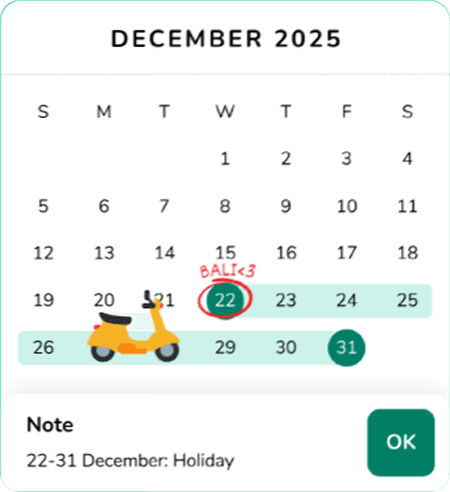
Planning to explore Bali on two wheels?
Book your scooter in advance.
Guaranteed Reservation.
Use Promo Code: EARLY5
Save 5% by booking 1 month ahead
Every area of Bali has its own personality. Canggu draws digital nomads and surfers. Seminyak is polished and social. Ubud is spiritual and artsy. Uluwatu has dramatic clifftop drama and legendary breaks. Sanur is calm and family-friendly. If you are figuring out which part suits your travel style, the Canggu vs Ubud guide is a great read before you book.
Bali's tourism industry is mature and well-developed, which means incredible convenience — but also real crowds, traffic, and in some areas, a feeling that things have become overly commercialized.
A Brief Introduction to Lombok
Lombok is Bali's next-door neighbor — just 35 km east across the Lombok Strait. It is the second largest island in the West Nusa Tenggara province and is home to around 3.7 million people, the majority of whom follow the Sasak culture and Muslim faith.
Where Bali is busy, Lombok is peaceful. Where Bali is curated, Lombok is raw. The island gets roughly half the number of tourists that Bali receives each year — and that difference is felt immediately once you arrive. Beaches here are cleaner and far less crowded. The pace of life is slower. The locals are warm and largely unbothered by tourism, giving interactions a more genuine quality.
Lombok's main travel draws include the Gili Islands (three small paradise islands off its northwest coast), Mount Rinjani (Indonesia's second-highest volcano and one of Asia's great trekking experiences), stunning beaches in the south around Kuta Lombok, and incredible surf breaks at Desert Point.
The island is still developing its tourism infrastructure, which means some areas lack the convenience of Bali — but also means the adventure and authenticity are still very much intact.
Bali vs Lombok: Head-to-Head Comparison
Accessibility
Bali:
- Direct international flights connect Bali's Ngurah Rai International Airport (DPS) to Singapore, Sydney, Tokyo, Kuala Lumpur, Dubai, Seoul, and many more
- Most nationalities receive a Visa on Arrival (VoA) for 30 days, extendable to 60 days — cost is approximately $35 USD
- A digital All Indonesia Arrival Card must be completed before landing — the complete step-by-step guide makes this easy
- Getting around is simple: ride-hailing apps (Gojek, Grab) are widely available, private drivers are affordable, and scooter rentals are the most popular and flexible option at $5–$9 per day — book yours through Cinchy for guaranteed door-to-door delivery
Lombok:
- Lombok International Airport (LOP) has growing connections but fewer direct international flights than Bali
- Most travelers arrive from Bali — either by fast boat (~2–3 hours from Padang Bai or Sanur), public ferry (~4–5 hours), or a short domestic flight (~30 minutes)
- Grab and Gojek are available in Mataram and some tourist areas but are less reliable than in Bali
- Scooter rental is the best way to explore independently, but ride-hailing coverage outside main towns is patchy
Verdict: Bali wins on pure accessibility. Lombok is easy to reach from Bali, making it a natural addition rather than a standalone destination for most international travelers.
Traffic
Bali:
- Traffic is one of the most common complaints from visitors and long-term residents
- Canggu, Seminyak, Kuta, and Ubud all experience heavy congestion during peak hours
- Getting from Seminyak to Ubud can take 90 minutes or more on a bad day
- A scooter remains the most efficient way to navigate Bali's roads — book yours with Cinchy and skip the headache of unreliable alternatives
Lombok:
- Traffic is minimal by comparison — one of Lombok's most underrated qualities
- Outside of Mataram (the capital), roads are quiet and easy to navigate
- Kuta Lombok, the main tourist hub in the south, is described by digital nomads as "like Canggu 10 years ago" — in the best possible way
- Self-driving a scooter around Lombok is genuinely enjoyable and stress-free
Verdict: Lombok wins for traffic — by a significant margin. If open roads and stress-free riding matter to you, Lombok is the better choice.
Beaches
Bali beaches:
- Enormous variety — white sand at Nusa Dua and Seminyak, dramatic black volcanic sand at Amed and Lovina, clifftop coves in Uluwatu, and the wild coastline of Nusa Penida
- Canggu's beaches are beloved by surfers and sunset-seekers alike — explore all of them in our guide to beaches in Canggu
- Popular beaches in the south can get crowded and occasionally littered during peak season
Lombok beaches:
- Widely considered cleaner, less crowded, and in many areas more pristine than Bali's most popular stretches
- Selong Belanak — a long, sweeping bay of powder-white sand with turquoise water and very few visitors
- Tanjung Aan — one of the most beautiful beaches in all of Indonesia, with two distinct textures of white sand meeting in a perfect bay
- Mawun Beach — quiet, horseshoe-shaped, and strikingly beautiful
- Pink Beach (Pantai Tangsi) in southeast Lombok — one of only a handful of naturally pink sand beaches in the world
Verdict: Bali wins for beach variety. Lombok wins for pristine, uncrowded, and visually stunning beaches.
Nature
Bali:
- Rich and diverse — rice terraces at Tegalalang and Jatiluwih, jungle waterfalls at Sekumpul and Gitgit, volcanic peaks including Mount Batur (2,152 m) and Mount Agung (3,031 m), the Sacred Monkey Forest, and lush Ubud valley landscapes
- UNESCO-listed Jatiluwih rice terraces are a highlight of the island's natural heritage
Lombok:
- Wilder and more rugged than Bali
- Mount Rinjani (3,726 m) — Indonesia's second-highest volcano and one of Asia's most celebrated trekking destinations
- Benang Stokel and Benang Kelambu waterfalls, the crater lake Segara Anak inside Rinjani, remote beaches in the southeast, and the lush forested interior
- A lot of Lombok's nature remains genuinely untouched — particularly outside the main tourist corridors
Verdict: Both are spectacular. Bali wins for accessible and varied nature. Lombok wins for raw, unspoiled wilderness and serious adventure.
Atmosphere
Bali:
- Energetic, cosmopolitan, and always on
- Bustling cafés, beach clubs, yoga studios, temple ceremonies, and tourist activity create a constant hum of energy
- Social and outward-looking — you are never far from meeting other travelers or joining a community
Lombok:
- Slow, calm, and genuine
- The Sasak culture shapes daily life independently of tourism — traditions, villages, and religious practices feel authentic rather than packaged for visitors
- Interactions feel more organic and unhurried
- Perfect for travelers who want to decompress, disconnect, and absorb a quieter version of Indonesian life
Verdict: Bali wins for social energy and cultural performance. Lombok wins for authenticity and genuine tranquility.
Stays
Bali:
- One of the widest accommodation ranges in Southeast Asia
- Guesthouses from $15–$30/night, mid-range boutique hotels from $50–$150/night, private pool villas from $80–$200/night, and ultra-luxury clifftop resorts from $400+/night
- Strong design culture means even budget accommodation often looks beautiful
Lombok:
- Accommodation is noticeably cheaper and less developed than Bali
- Guesthouses and homestays from $10–$25/night, boutique eco-lodges from $40–$100/night, and luxury glamping options in the hills
- Fewer five-star international chains — but a growing number of boutique and design-led properties, particularly in south Lombok and on the Gili Islands
Verdict: Bali wins for accommodation variety and range at every price point. Lombok wins for rawer, more locally rooted stays at lower prices.
Diving
Bali diving:
- Nusa Penida is world-famous for encounters with manta rays and the rare mola mola (ocean sunfish)
- Tulamben (USS Liberty Shipwreck) — one of the most accessible and memorable wreck dives on Earth
- Amed has healthy, shallow coral gardens ideal for beginners
- Menjangan Island in northwest Bali offers excellent wall diving with exceptional visibility
Lombok diving:
- The Gili Islands are a global diving hotspot — Gili Trawangan, Gili Meno, and Gili Air together form one of Southeast Asia's best dive destinations
- Sea turtles are abundant and reliably encountered on almost every dive
- Belongas Bay in south Lombok offers advanced drift dives with hammerhead sharks and thresher sharks — genuinely exciting for experienced divers
- Water visibility regularly exceeds 25–30 meters in clear conditions
Verdict: A strong tie — both are outstanding. Bali offers more variety; Lombok/Gili Islands offer better visibility and easier turtle encounters.
Surfing
Bali:
- One of the world's great surfing destinations — full stop
- Uluwatu, Padang Padang, Bingin, and Impossibles serve up world-class reef breaks for intermediate to advanced surfers
- Kuta Beach remains the best beginner surf zone in Southeast Asia — consistent, forgiving, and loaded with surf schools
- Canggu's Echo Beach is great for intermediates looking for a more social session
Lombok:
- Desert Point (Bangko Bangko) on the southwest tip is considered one of the world's best left-hand barrels — a serious pilgrimage for advanced surfers
- Gerupuk Bay — four different breaks in one location, accessible by boat, ideal for all levels
- Mawi Beach — powerful waves with fewer crowds than Bali's most famous breaks
- Ekas Bay is emerging as a surf destination for those who want uncrowded waves and untouched surroundings
Verdict: Bali wins for consistent beginner and intermediate surfing. Lombok wins for raw, uncrowded advanced surf experiences — especially Desert Point.
Living Cost
Bali:
- Budget traveler: $30–$60/day
- Mid-range traveler (villa, café meals, activities): $70–$120/day
- Comfortable monthly expat lifestyle: $1,200–$2,000/month
- Food prices in tourist areas have crept up — local warungs are still excellent value at $2–$5 per meal, but cafés and restaurants in Canggu and Seminyak can run $10–$25 per dish
Lombok:
- Budget traveler: $20–$40/day
- Mid-range: $50–$90/day
- Monthly expat lifestyle: $800–$1,400/month
- Food, transport, and accommodation all cost noticeably less than in Bali
- Local warungs serve meals for $1–$3 per person across most of the island
Verdict: Lombok wins on raw daily cost. Bali wins on value for money — you pay more but you get more infrastructure, convenience, and experience in return.
Best Time to Visit
Bali:
- Dry season (May to October) is the peak season and best time for beaches, surfing, and outdoor activities
- April–May and September–October are shoulder season sweet spots — warm weather, fewer crowds, lower prices
- November to March is wet season — morning sunshine is common; afternoons can bring rain
- Our Weather in Bali in April 2026 guide gives a full month-by-month breakdown
Lombok:
- May to October is also the dry season and the best time to visit — ideal for Mount Rinjani trekking, diving, and beach time
- Mount Rinjani's national park is closed from January to March due to wet season conditions
- Outside peak season, Lombok can be even quieter than usual — some guesthouses and smaller venues close temporarily
- July and August are the most crowded months on the Gili Islands
Verdict: Both islands share a best season — May to October. Plan to visit during this window for either destination.
Accommodation
Bali:
- Extraordinary range — from backpacker dorms to five-star cliff-top resorts
- Private pool villas are Bali's signature accommodation type and are available from around $80–$200/night
- Strong hostel and co-living culture in Canggu and Seminyak makes it easy to meet fellow travelers
Lombok:
- Smaller range but growing fast — especially in south Lombok and the Gili Islands
- Glamping, eco-lodges, and rustic surf camps offer a unique stay experience not commonly found in Bali
- Gili Trawangan has a strong range of boutique and mid-range options; Gili Meno is quieter and more couple-oriented
Verdict: Bali wins for accommodation choice and range. Lombok wins for character, intimacy, and value.
Nightlife
Bali:
- One of Southeast Asia's most celebrated nightlife scenes
- Seminyak and Kuta host large-scale beach clubs, full-production clubs, and live music venues
- Canggu has a brilliant selection of rooftop bars, sunset sessions, and laidback beach parties
- Ubud offers a gentler evening scene — dinner, Kecak dance, wine bars, and early nights
- Our Bali nightlife guide covers the best spots, what to wear, what to avoid, and where to go for every vibe
Lombok:
- Nightlife is minimal by comparison
- Kuta Lombok has a handful of relaxed beach bars and surf hang-outs — think sunset Bintangs, acoustic sessions, and bonfire circles
- Gili Trawangan is Lombok's nightlife hub and has a well-known rotation: Monday at one bar, Tuesday at another — a unique, small-island party tradition
- Senggigi has a quiet strip of bars but the scene has shrunk significantly in recent years
Verdict: Bali wins for nightlife — easily. Lombok is for travelers who prefer quiet evenings under the stars.
Shopping
Bali:
- Outstanding shopping destination with enormous variety
- Ubud Art Market: handmade batik, silver jewelry, woven goods, and carved wooden items at negotiable prices
- Seminyak and Canggu boutiques: locally designed swimwear, fashion, and artisan homeware
- Kuta: surf brands, souvenirs, and leather goods in high volume
Lombok:
- Cottonwood weaving (tenun ikat) is the island's most distinctive handicraft — hand-woven textiles using traditional techniques
- Sukarara Village and Pringgasela Village are the best places to watch and buy authentic Sasak weaving directly from local artisans
- Pottery from Banyumulek village is another Lombok-specific craft worth seeking out
Verdict: Bali wins for shopping variety and convenience. Lombok wins for authentic, locally produced crafts with genuine cultural meaning.
Safety
Bali:
- Generally very safe for tourists — violent crime is rare
- Main risks: petty theft in crowded areas, scooter accidents, tourist scams near temples and taxi stands
- Drug laws in Indonesia are extremely strict — zero tolerance applies to possession and trafficking
- Before your trip, read the local laws and cultural norms in Bali guide to make sure you are not caught off guard
Lombok:
- Also very safe for tourists — crime against visitors is rare
- Lombok is generally even calmer than Bali in terms of tourist-targeted scams due to lower foot traffic
- Mount Rinjani trekking carries real physical risks — altitude, loose volcanic scree, and remote conditions require proper preparation and a licensed guide
- The 2018 earthquake (magnitude 7.0) reminded visitors of seismic risk across the region — check current advisories before travel
Verdict: Both destinations are safe for careful travelers. Lombok has fewer scams and less crowd-related risk; Bali has better emergency medical infrastructure.
Dining Scene
Bali:
- One of the best food scenes in Southeast Asia — both for local dishes and international cuisine
- Must-try Balinese dishes: nasi goreng, satay, babi guling, lawar, bebek betutu, and nasi campur
- World-class café culture in Canggu and Seminyak — Australian-style brunch spots, cold brew coffee bars, vegan bowls, and high-end restaurants
- Check out the best things to do in Canggu guide for a curated selection of the top dining spots in Bali's most food-obsessed neighborhood
Lombok:
- Local food is excellent and very affordable
- Sasak cuisine is distinct from Balinese — highlights include ayam taliwang (grilled spicy chicken), plecing kangkung (water spinach in chili sambal), and beberuk (eggplant and corn salad)
- Kuta Lombok and the Gili Islands have a growing selection of good cafés and international restaurants
- The food scene is much smaller and simpler than Bali's — but authenticity and value are both high
Verdict: Bali wins for food variety, café culture, and international cuisine. Lombok wins for raw authenticity and local flavor at low prices.
Neighbouring Islands
Bali's neighbours:
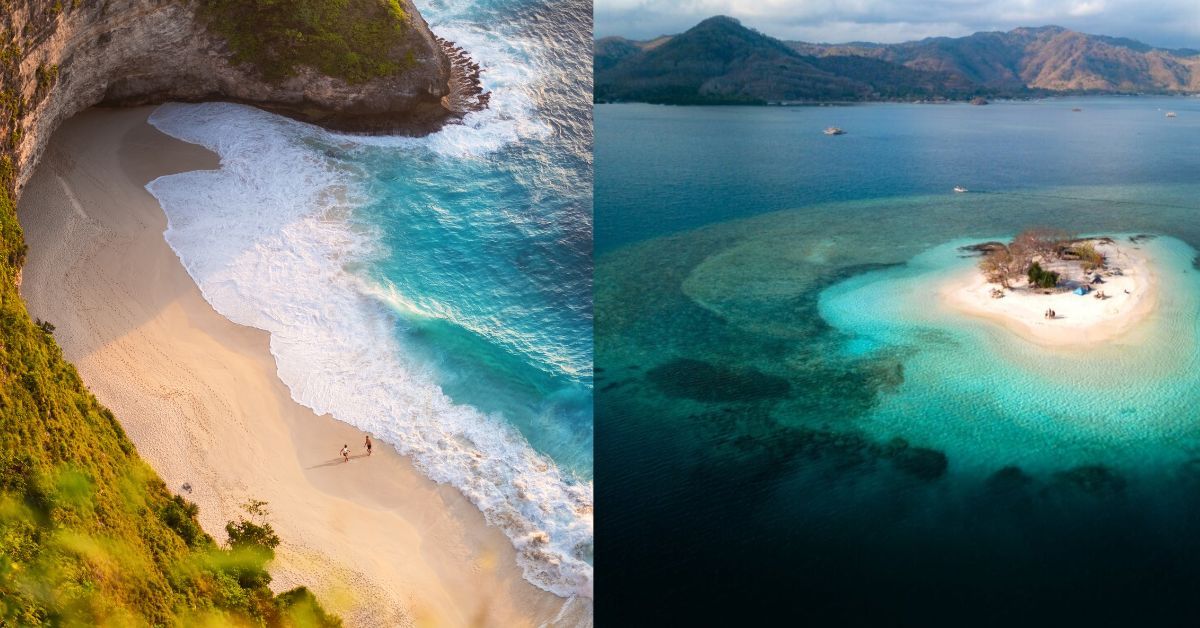
- Nusa Penida — dramatic cliffs, manta rays, and the famous Kelingking Beach; just 45 minutes by fast boat
- Nusa Lembongan — relaxed, smaller sibling to Nusa Penida; good for snorkeling and day trips
- Nusa Ceningan — the smallest of the three; beautiful turquoise lagoon and a yellow suspension bridge connecting it to Lembongan
Lombok's neighbours:
- Gili Trawangan — the most famous, with a lively backpacker and dive scene and the best nightlife on Lombok's outer islands
- Gili Meno — the most secluded and romantic of the three; perfect for honeymooners or anyone wanting genuine peace
- Gili Air — the middle ground: calm, friendly, with better food than Meno and fewer parties than Trawangan
- Further afield: the Gili Sudak, Gili Nanggu, and Secret Gili groups offer even more remote day-trip options
Verdict: Both island groups are excellent. Bali's Nusa Islands win for dramatic scenery. Lombok's Gili Islands win for diving, snorkeling, and island-hopping variety.
Service Philosophy
Bali:
- Tourism is deeply embedded in Bali's economy and culture — hospitality is professional and well-practiced
- Service in hotels, restaurants, and tour operations is generally smooth and responsive
- In very tourist-heavy areas, service can feel transactional; in smaller neighborhoods and local warungs, warmth comes naturally
- Balinese people are widely known for their genuine kindness — a quality that stands out even in a crowded destination
Lombok:
- Service is less polished but often more genuine
- Sasak culture is famously hospitable — locals are friendly, curious, and willing to go out of their way to help visitors
- Because tourism is newer and smaller in scale, interactions feel less scripted and more personal
- Expect slightly longer waits and less predictability in service, but more real connection
Verdict: Bali wins for professional service. Lombok wins for human warmth and authentic hospitality.
Accessibility and Effort
Getting around Bali is easier, but it takes patience in traffic. Grab and Gojek work reliably across most of the island. Renting a scooter through a trusted provider like Cinchy means it gets delivered straight to your door with no fuss — the most efficient way to explore at your own pace.
Lombok requires more planning. Transport outside main hubs needs to be arranged in advance. Private drivers are available and affordable but need to be pre-booked. On the positive side, when you get somewhere in Lombok, you often feel like you discovered it yourself — a feeling that has largely disappeared from Bali's most visited spots.
Things to Do
Bali top activities:
- Sunrise hike up Mount Batur (2,152 m)
- Visit Tanah Lot, Uluwatu, Tirta Empul, and Besakih temples
- Snorkel or dive with manta rays at Nusa Penida
- Take a Balinese cooking class or batik workshop
- White-water raft the Ayung River
- Cycle through rice terraces at Tegalalang or Jatiluwih
- Catch a traditional Kecak fire dance at sunset
- Stay in the loop with the Bali Events in April 2026 guide for festivals, markets, and cultural events happening this season
Lombok top activities:
- Trek Mount Rinjani — 2 to 4 days, with summit at 3,726 m and the sacred crater lake Segara Anak
- Snorkel and dive across the Gili Islands
- Surf Desert Point, Gerupuk Bay, and Mawi Beach
- Explore the traditional Sasak villages of Sade and Ende
- Visit the Pura Lingsar temple — a unique place where Hindus and Sasak Muslims worship together
- Day trip to the Secret Gili Islands for untouched beaches and calm water
Verdict: Bali wins for activity variety and ease. Lombok wins for adventure depth, especially for trekkers and divers.
Honeymoon
Bali for a honeymoon:
- In 2026, Bali was named the world's number one honeymoon destination — ahead of the Maldives and Mauritius
- Private pool villas with floating breakfasts, flower petal baths, couples' spa treatments, and romantic clifftop dinners at Uluwatu are all easy to arrange at various price points
- Bali adds cultural richness and adventure to romance — ideal for couples who want more than just a beach
Lombok for a honeymoon:
- Gili Meno is one of Indonesia's most romantic spots — a tiny, car-free island with white sand, turquoise water, and almost no crowds
- South Lombok's new boutique resort scene around Kuta and Selong Belanak is growing fast
- Better for couples who want genuine seclusion without the price tag of the Maldives
Verdict: Bali wins for honeymoon infrastructure and variety. Lombok wins for seclusion and natural romance at a lower price.
Anniversary
For an anniversary trip, the decision comes down to what kind of celebration you want.
Bali is ideal if you want variety — a clifftop dinner one night, a rice terrace picnic the next, a spa day at an Ubud resort, and a beach club sunset session on the last evening. Bali's hospitality industry is well-practiced at orchestrating meaningful anniversary experiences at every price point.
Lombok suits couples who value escape over entertainment. A private beachfront villa in Selong Belanak, sunrise over Mount Rinjani from a scenic viewpoint, and a dinner of freshly grilled lagoon fish on Gili Meno — simple, beautiful, and deeply peaceful.
Verdict: Bali for a rich and varied celebration. Lombok for a pure, private, and natural escape.
Digital Nomad
Bali:
- One of the world's top digital nomad destinations — full stop
- Hundreds of co-working-friendly cafés and dedicated co-working spaces across Canggu, Ubud, and Seminyak
- Indonesia's Digital Nomad Visa (E33G) allows stays of up to 12 months
- Monthly cost of living from $1,000–$1,800 for a comfortable lifestyle
- A huge community of remote workers makes networking, events, and collaboration easy
Lombok:
- Growing but still small nomad scene — best concentrated in Kuta Lombok
- Good cafés with Wi-Fi, a handful of co-working spaces, and a tight-knit community
- Monthly cost of living is lower — around $700–$1,200 for a comfortable lifestyle
- Internet reliability varies outside the main hubs and requires more planning
- "Like Canggu 10 years ago" — more intimate, more local, and more focused
Verdict: Bali wins for digital nomads who need infrastructure and community. Lombok wins for nomads who value focus, peace, and lower costs.
Rice Fields
Bali rice fields:
- The Tegalalang Rice Terraces near Ubud are among the most photographed landscapes in all of Asia — UNESCO-recognized and genuinely breathtaking
- Jatiluwih in central Bali is a larger and less touristy alternative with sweeping panoramic terraces
- Sidemen Valley in east Bali offers rice terrace walks with views of Mount Agung as a backdrop
- Rice farming is still actively practiced across much of rural Bali
Lombok rice fields:
- Less famous but genuinely beautiful — rice fields in the Sembalun Valley and around Tetebatu in central Lombok are lush and largely untouched by mass tourism
- Tetebatu village is Lombok's version of Ubud — a peaceful base for rice terrace walks, waterfall hikes, and local village visits
- Far fewer crowds than Tegalalang and a more authentic agricultural atmosphere
Verdict: Bali wins for iconic rice terrace scenery and accessibility. Lombok wins if you want the same beauty without the crowds and selfie sticks.
Climbing Volcanoes
Bali:
- Mount Batur (2,152 m) — the most popular volcano hike in Indonesia; a doable 2-hour sunrise trek for most fitness levels
- Summit views over the caldera lake and neighboring volcanoes are genuinely spectacular
- Mount Agung (3,031 m) — Bali's highest peak and most sacred volcano; a harder, more serious overnight climb requiring a licensed guide
Lombok:
- Mount Rinjani (3,726 m) — Indonesia's second-highest volcano and one of Asia's greatest trekking experiences
- The standard route takes 2 to 4 days depending on your target — you can aim for the summit at 3,726 m or hike to the crater rim (2,641 m) to look down at the stunning Segara Anak crater lake
- The summit push (usually starting at 2 AM) involves steep climbs on loose volcanic sand — physically demanding but unforgettable
- All treks require a licensed guide and a park permit; the park is closed January to March
Verdict: Lombok wins for volcanic trekking — Mount Rinjani is a bucket-list adventure in a league of its own. Bali wins for a shorter, more accessible volcanic sunrise experience.
So, Bali or Lombok? Which is the Best Island to Visit?
Here is a clean breakdown to make your decision easier:
Choose Bali if you:
- Are visiting Indonesia for the first time and want the most complete, convenient experience
- Want variety — culture, food, nightlife, beaches, adventure, and wellness all in one place
- Are a digital nomad who needs co-working infrastructure and a vibrant community
- Want the most accessible and easiest trip to plan and navigate
- Are celebrating a honeymoon or anniversary and want variety alongside romance
Choose Lombok if you:
- Have already been to Bali and want something rawer and more authentic
- Want uncrowded, pristine beaches without tour groups and selfie spots
- Are a serious surfer chasing Desert Point or a diver who wants the Gili Islands
- Plan to trek Mount Rinjani — one of Asia's most rewarding volcano hikes
- Travel for peace, nature, and genuine local culture over convenience and nightlife
The best option for many travelers? Do both. Fast boats run regularly between Bali and Lombok and take 2–4 hours. Spend 5–7 days in Bali, cross to the Gili Islands for 3 days of diving and relaxation, then spend 3–4 days exploring south Lombok. It is one of the best two-week itineraries in all of Southeast Asia.
Plan your Bali leg of the trip with Cinchy and make sure your island base is sorted before you arrive.
FAQs
Is It Worth Going to Lombok From Bali?
Yes — absolutely. Lombok is one of the most underrated island destinations in Southeast Asia, and it sits right next door to Bali. Fast boats from Sanur or Padang Bai (Bali) reach Bangsal or Lembar (Lombok) in approximately 2 to 4 hours. For anyone spending more than one week in Indonesia, adding 3 to 5 days in Lombok — or on the Gili Islands — transforms a good trip into a great one. The contrast between Bali's energy and Lombok's calm makes each destination feel more vivid.
How Many Days in Lombok is Enough?
- Minimum visit (Gili Islands only): 3 days
- Good coverage (Gili Islands + south Lombok beaches): 5 days
- Full Lombok experience (Gili + south + Rinjani trek): 7–10 days
- Rinjani alone requires 2 to 4 days depending on your target — summit or crater rim
If your time is limited, prioritize Gili Trawangan and Tanjung Aan Beach for a compact but deeply rewarding Lombok experience.
Is Lombok a Party Island?
No — Lombok is not a party island. The majority of Lombok's population follows Islam, and nightlife is intentionally low-key compared to Bali. The exception is Gili Trawangan, which has a rotating party scene and a lively backpacker culture. Outside of Gili T, evenings in Lombok are quiet, local, and largely centered around sunset beers, fresh seafood dinners, and early nights. If nightlife is a priority, Bali is the right choice.
Is Lombok Bigger Than Bali?
Yes — Lombok is actually slightly larger than Bali. Lombok covers approximately 4,725 km², while Bali covers around 5,780 km². They are similar in physical size but Bali has a significantly larger population (around 4.3 million vs. Lombok's 3.7 million) and receives far more tourists. The perception that Lombok is "smaller" comes from the fact that its tourism infrastructure covers only a small portion of the island's total area.
Who Should Choose Bali and Who Should Choose Lombok?
Choose Bali if you are:
- A first-time visitor to Indonesia
- Traveling for culture, food, nightlife, or wellness
- A digital nomad needing co-working and community infrastructure
- A honeymooner who wants variety and convenience alongside romance
- A traveler who values ease and organization over raw adventure
Choose Lombok if you are:
- A repeat Bali visitor looking for something new
- An adventurer planning to trek Mount Rinjani
- A surfer chasing uncrowded, powerful waves
- A diver who wants the Gili Islands experience
- A slow traveler who values peace, authenticity, and lower costs
Is Lombok Safe for Families Compared to the Established Infrastructure of Bali?
Both destinations are safe for families, but Bali has a significant infrastructure advantage. Bali has international hospitals, established pediatric healthcare, a wide range of family-friendly resorts, waterparks, wildlife parks, and kids' activity providers. Transport and navigation are easier, and English is spoken reliably everywhere.
Lombok is safe but less equipped for families with young children. Medical facilities outside Mataram are limited, and some roads and beaches are more remote. The Gili Islands (car-free, calm water) are actually excellent for families with older kids. As Lombok continues to develop, the family-friendly offering will only improve.
How Do the Beaches Actually Compare Between Bali and Lombok?
Bali offers beach variety — surfer beaches, black sand beaches, beach clubs, and dramatic cliff-backed coves. But in terms of cleanliness, crowd levels, and raw natural beauty, Lombok's beaches are generally considered superior. Tanjung Aan, Selong Belanak, and Mawun are pristine, uncrowded, and stunning. Bali's most famous beaches (Kuta, Seminyak, Canggu) are busier, noisier, and occasionally suffer from litter during peak season. For those who prioritize natural beach quality, Lombok wins.
What is the Most Efficient Way to Travel Between These Two Islands?
- Fast boat (Padang Bai → Bangsal or Teluk Nare): approximately 2–3 hours, costs $20–$35 per person — the most popular choice for backpackers and travelers heading to the Gili Islands
- Fast boat (Sanur → Gili Islands direct): some operators offer this route in approximately 90 minutes
- Public ferry (Padang Bai → Lembar): approximately 4–5 hours, very cheap ($3–$5) — better if you are bringing a motorbike
- Domestic flight (DPS → LOP): approximately 30 minutes, flights start from $30–$60 — best if you are pressed for time and heading directly to south Lombok
Book the fast boat in advance during peak season (July–August), as boats fill up quickly.
Before you head to Bali, make sure your transport is sorted from day one. Book a scooter with Cinchy for reliable door-to-door delivery — no haggling, no surprises, just the freedom to explore Bali at your own pace before you hop across to Lombok. You can also check our Kuta vs Canggu guide and languages spoken in Bali guide to get a head start on your Bali experience.
Fastest Way to Book a Bike in Bali
Just 1 Minute. Reservation Guaranteed.
Use Promo Code: EARLY5
Save 5% by booking 1 month ahead















 travel tips
 hidden gems
 scooter guides
 riding tips
 bali guides
 cultural insight