1


Stay in Touch
Get the latest updates, special offers, and exclusive Cinchy perks straight to your inbox.


Jl. Plawa No.50, Seminyak, Kec. Kuta, Kabupaten Badung, Bali 80361

CALL US 24/7
(+62-851-7424-6249)
Copied!

We’re Here
Everyday
8:30 AM-9 PM WITA




Payment Partners


© 2026 CINCHY. ALL RIGHTS RESERVED.
Cinchy Blog / Low Season in Bali: When It Is, What to Expect & Travel Tips
Published: 29 Aug 2026

By Syahrial Maulana Sudarto
Travel Enthusiast

Quick Answer
“When is the low season in Bali?”
Bali’s low season generally falls from January to March, with another quieter period around November to early December. These months usually bring fewer tourists, more accommodation availability, and potentially lower travel costs, but they also overlap with Bali’s rainy season. For better weather with moderate crowds, consider the shoulder season in May, June, September, or October.
Free Cancellation
24/7 Support
Insurance
Start Date - End Date
Start Time
End Time
Duration
0 Day(s)
Key Takeaways:
There is no single official low-season calendar for Bali because tourism demand changes depending on weather, international and domestic holidays, school vacations, and major events.
In general, January to March is considered Bali’s main low-season period, while November to early December can also be quieter before the Christmas and New Year travel rush.
April to June and September to October are often better described as shoulder season.
They can offer an attractive middle ground for travelers who want relatively good weather without the crowds and prices of July and August.
January, February, and March are commonly associated with lower tourist demand.
They also fall within Bali’s rainy season, which generally lasts from November to March.
Bali typically experiences the wet season from November to March and the dry season from April to October, although seasonal patterns are becoming less predictable.
This period can be a good choice if you prefer quieter attractions, flexible itineraries, and potentially better accommodation rates.
However, travelers who want guaranteed sunny beach days should be prepared for changing weather.
November can also be a good low-season option, especially before travelers arrive for Christmas and New Year.
If you're still uncertain about your next steps, don't worry, as we're here to address all your queries and concerns.
January to March are generally the main low-season months, while November to early December can also be quieter.
Accommodation, flights, and activities may be more affordable during lower-demand periods, but prices vary by property, route, booking date, and holiday period.
No. Rain can come in short or heavy tropical showers, so flexible planning is more useful than assuming it will rain continuously.
September is generally better classified as shoulder season. It can offer a good balance of relatively dry weather and lower crowds than July and August.
Yes, some areas remain busy year-round. Low season means lower overall demand, not an empty island.
Yes, if you want flexible transportation and are comfortable riding in Bali. A scooter can make it easier to move between attractions, cafés, beaches, and other destinations without depending entirely on scheduled transport.
Official tourism data supports the idea that November can be considerably quieter than peak periods.
According to BPS-Statistics Indonesia, Bali recorded 483,364 direct foreign tourist arrivals in November 2025, down 18.74% from October. Star-rated hotel occupancy also fell to 57.97%.
That makes November particularly interesting for travelers who want lower demand without necessarily committing to the middle of the rainy season.
April to June is usually better described as shoulder season rather than true low season.
The weather generally becomes drier, while tourist demand gradually increases toward July and August. If you want a combination of more favorable weather and fewer crowds than peak season, this period can be an excellent compromise.
September and October can offer a similar advantage after the July-August peak.
July and August are among Bali’s busiest travel months.
The weather is generally drier, international summer holidays increase demand, and popular tourist areas can become significantly busier.
For comparison, Bali recorded 697,107 foreign tourist arrivals in July 2025, while the star-rated hotel occupancy rate reached 67.75%.
Christmas and New Year create another peak period, so November’s quieter atmosphere can change rapidly as December progresses.

Bali’s tourism season is influenced by more than just weather.
The rainy season is one factor, but travel demand also changes around school holidays, international vacation periods, Indonesian public holidays, Christmas and New Year, and major cultural events.
This is why the tourism season and weather season are not exactly the same thing.
For example, September can have relatively favorable weather while still seeing less demand than July or August. Likewise, a month that is generally considered low season can become busy around a major holiday.
Yes, but do not expect an empty island.
Low season generally means lower tourist demand compared with peak season, not that popular destinations suddenly have no visitors.
Seminyak, Canggu, Ubud, and Uluwatu still have restaurants, beach clubs, cafés, and attractions operating normally. Traffic can also remain busy in certain areas.
The difference is that you may have an easier time finding accommodation, making restaurant reservations, or visiting popular attractions without the same level of peak-season demand.
Here’s how Bali look like during low season:
Quieter periods can make popular areas feel more relaxed. Hotels and villas may also have more availability, giving travelers greater flexibility when choosing where to stay.
Low-season demand can create better deals for flights, hotels, villas, tours, and other travel services. However, prices are not automatically lower for everything, so compare dates and total trip costs before booking.
The main trade-off is weather. Indonesia Travel states that humidity in Indonesia generally ranges between 70% and 90%, while rainfall is the main seasonal variable.
Rain does not necessarily mean it will rain all day. Tropical showers can be brief, but heavy rain can sometimes affect outdoor activities, road conditions, and sea travel.
No. A rainy-season trip does not automatically mean continuous rain from morning to night.
You may experience sunny periods followed by afternoon or evening showers. However, weather varies by location and day, so keeping your itinerary flexible is important.
Heavy rainfall can affect hiking, waterfalls, snorkeling, diving, beach activities, and boat transfers. Sea conditions can also change, particularly when traveling between Bali and nearby islands.
If you are planning outdoor activities, check the latest weather and sea conditions instead of relying only on historical seasonal patterns.
For many travelers, yes.
Low season is especially suitable if you:
It may be less suitable if you only have a few days and want guaranteed sunshine for beach activities every day.
If weather is your top priority but you still want to avoid peak-season crowds, May, June, September, and October can be worth considering as shoulder-season alternatives.
| Season | Typical Period | Weather | Crowds | Best For |
| Low Season | Jan–Mar, Nov–early Dec | Wetter | Lower | Budget and flexible travelers |
| Shoulder Season | Apr–Jun, Sep–Oct | Generally better | Moderate | Balance of weather and crowds |
| High Season | Jul–Aug | Drier | Higher | Beach and outdoor activities |
| Peak Period | Late Dec–early Jan | Variable | Very high | Christmas and New Year travel |
These periods are general guidelines rather than fixed rules. Individual hotels and travel businesses may use different seasonal calendars.
Yes. Even if you plan to travel during low season, checking availability before your trip can make your transportation planning easier.
For peak-season travel, booking earlier is even more important because demand can increase significantly.
Cinchy also offers 5% off with the code EARLY5 when you book your scooter early before your Bali holiday during peak season.
That means you can secure your preferred scooter ahead of time while potentially saving on the rental.
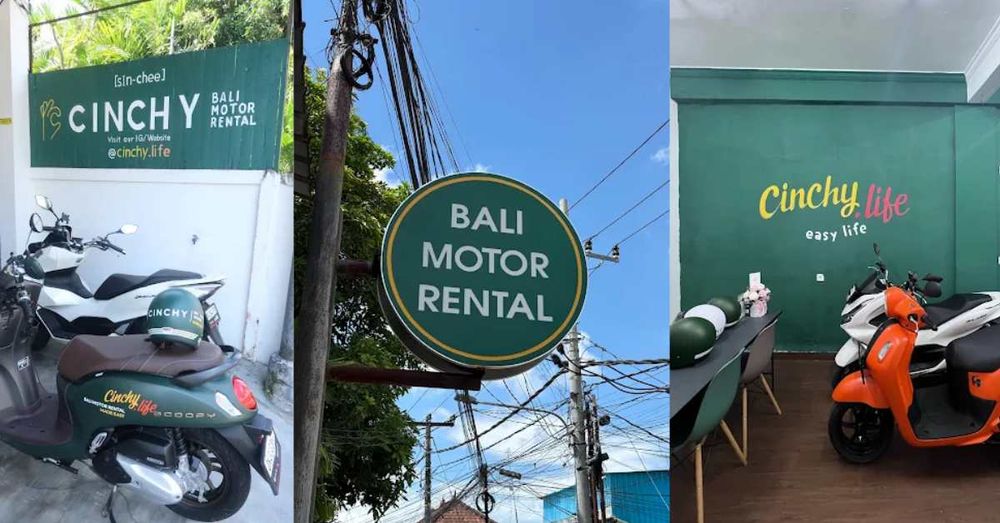
Cinchy focuses on making scooter rental straightforward, whether you are visiting Bali for a short holiday or staying for several weeks.
The scooters are regularly maintained and checked to help provide a safer and smoother riding experience. The rental process is also designed to be simple, with 24/7 customer support available if you need assistance.
Cinchy offers two main scooter categories:
The Compact category includes models such as the Honda Scoopy, Yamaha Fazzio, and Honda Vario.
Prices start from IDR 95K/day, with weekly rates from IDR 80K/day and monthly rates from IDR 50K/day.
This category is suitable if you prioritize easy handling, fuel efficiency, and a practical scooter for everyday travel around Bali.
The Comfort category includes the Yamaha NMAX and Honda PCX.
Prices start from IDR 155K/day, with weekly rates from IDR 125K/day and monthly rates from IDR 80K/day.
This option can be more comfortable if you plan to spend longer periods riding around Bali or prefer a larger scooter.
Delivery and pickup are available at several locations:
The standard rental also includes useful essentials such as a helmet, hairnet, phone holder, and raincoat, which can be particularly practical during Bali’s rainy season.
Cinchy also offers different insurance options. Basic Coverage has a deductible for covered repairs and does not cover theft. Full Coverage has no deductible for repairs resulting from scratches or accident damage. VIP adds theft protection subject to the mandatory theft protocol, while exclusions apply to negligence and certain types of damage.
Personal injury and third-party liability are not covered by these damage protections, so renters remain responsible for their own medical expenses and third-party liabilities.
Low season can be one of the most rewarding times to experience Bali if you value flexibility, quieter surroundings, and potentially better travel costs.
The key is to balance the benefits of lower demand with rainy-season weather and occasional changes to outdoor plans.
If you want a convenient way to explore Bali on your own schedule, check Cinchy’s real-time scooter availability, choose the category that suits your trip, and book ahead to secure your preferred scooter.
 travel tips
 hidden gems
 scooter guides
 riding tips
 bali guides
 cultural insight