1


Stay in Touch
Get the latest updates, special offers, and exclusive Cinchy perks straight to your inbox.


Jl. Plawa No.50, Seminyak, Kec. Kuta, Kabupaten Badung, Bali 80361

CALL US 24/7
(+62-851-7424-6249)
Copied!

We’ll be Back
at
8:30 AM-9 PM WITA




Payment Partners


© 2026 CINCHY. ALL RIGHTS RESERVED.
Cinchy Blog / Best Mountains in Every Indonesia's Island for Climbing
Published: 28 May 2026

By Ulfah Alifah
Travel Enthusiast
Free Cancellation
24/7 Support
Insurance
Start Date - End Date
Start Time
End Time
Duration
0 Day(s)
Indonesia is one of the most exciting places on Earth for mountain climbers. With more than 17,000 islands and over 400 volcanoes, this country gives you a mountain adventure unlike anything else in the world. Whether you are a beginner looking for your first summit or a seasoned trekker chasing remote peaks, Indonesia has a mountain — and an island — waiting for you.
This guide covers the best mountain to climb on each of Indonesia's major islands. You will find practical tips, difficulty levels, and what makes each summit worth the climb.
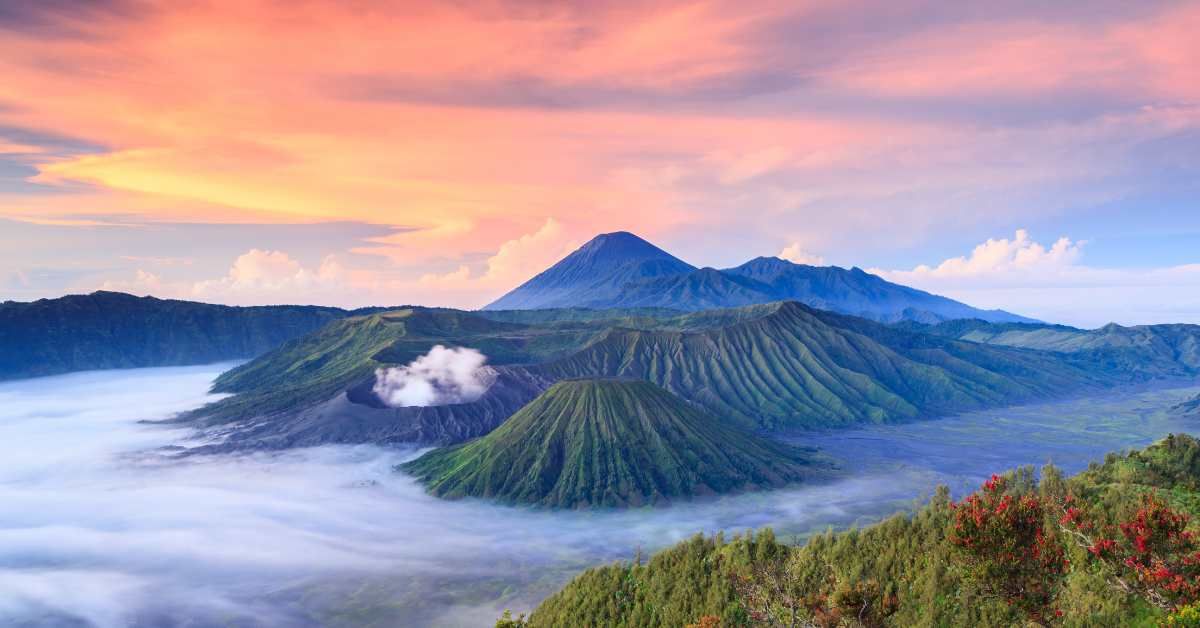
Indonesia sits on the Pacific Ring of Fire, which means its mountains are mostly volcanoes. Many are still active. That geological energy creates dramatic landscapes — glowing craters, sulfur vents, crater lakes in electric colors, and views that stretch over entire island chains.
Beyond the scenery, climbing in Indonesia connects you to deep local culture. Many summits are sacred. Trails pass through villages where locals have farmed and worshipped for centuries. You will meet other trekkers from around the world, share hot instant noodles at 3 AM before summit push, and understand why so many people come back to Indonesia to climb again.
If you are planning a broader Indonesia adventure, check out this guide on 5 places you should visit in a one-week trip in Indonesia — mountains are only one piece of the puzzle.
Elevation: 3,031 meters
Difficulty: Moderate to Hard
Best time to climb: April – October (dry season)
Mount Agung is the highest peak on Bali and the most sacred. Balinese Hindus consider it the home of the gods, and the great temple Pura Besakih sits on its southwestern slope. When you stand at the summit, you can see Mount Rinjani on Lombok on a clear day, along with the full coastline of Bali stretching below.
The main trailhead starts at Pura Pasar Agung. Most trekkers begin the ascent around midnight to reach the summit for sunrise. The trail is steep, rocky, and physically demanding, but the reward is one of the most breathtaking sunrises you will ever see in Southeast Asia.
There is also Mount Batur for those who want an easier Bali climb. At 1,717 meters, Batur is an active volcano inside a giant caldera. The trail takes about 2 hours and is popular with first-time hikers. Sunrise from the top of Batur is iconic — you can see the caldera lake shimmering in the morning light while clouds roll through the valley below.
Getting around Bali for your trek: Most trailheads are not accessible by public transport. Renting a scooter is often the most flexible and affordable way to reach base areas. If you are new to riding in Bali, read this guide on whether beginners can rent a scooter in Bali before you go.
You also want to make sure you carry the right paperwork when riding. This article on essential documents to carry when riding in Bali has everything you need to know — including IDP requirements, STNK, and what happens if you get stopped by police.
Elevation: 3,676 meters
Difficulty: Hard
Best time to climb: May – October
Mount Semeru is the highest peak on Java and the highest volcano in Indonesia outside of Papua. It is also one of the most active. Semeru erupts almost daily, releasing plumes of ash and gas from its Jonggring Seloko crater. For experienced trekkers, climbing Semeru is a bucket-list experience.
The trek begins at Ranu Pani village in East Java and passes through two stunning crater lakes — Ranu Kumbolo and Ranu Regulo. The views around Ranu Kumbolo alone are worth the journey. The final push to the summit is exhausting and involves loose volcanic sand that slides underfoot with every step.
Permits are required and are limited in number. Book your permit well in advance, especially during peak season (June–August). Guides are also required for foreign climbers.
Elevation: 3,726 meters
Difficulty: Hard
Best time to climb: May – November
Mount Rinjani is the second-highest volcano in Indonesia and one of the most stunning mountains in all of Southeast Asia. Its crater holds Segara Anak, a turquoise crater lake at 2,000 meters above sea level. Inside that lake, a baby volcano called Gunung Baru has emerged — a mountain within a mountain.
The standard trek takes 3–4 days and begins from either Senaru or Sembalun village. The Sembalun route is more popular because it allows trekkers to reach the summit on the second day before descending to the crater rim and lake. The trek is long, steep, and physically tough — but nothing compares to watching the sunrise from Rinjani's summit with the crater lake glowing below you.
Rinjani is deeply sacred to the Sasak people of Lombok and the Balinese Hindu community, who hold annual ceremonies at the lake. Treat the mountain with respect.
Practical tip: Lombok is a separate island from Bali. Many trekkers fly into Bali first, explore the island, and then take a ferry or short flight to Lombok. If you are spending time in Bali before or after your Rinjani trek, check out this 4-day Bali itinerary to make the most of your time on the island.
Elevation: 3,805 meters
Difficulty: Hard
Best time to climb: February – August
Mount Kerinci is the highest volcano in Indonesia and the highest peak in Sumatra. It sits inside Kerinci Seblat National Park, one of the last remaining habitats of the Sumatran tiger, Sumatran rhinoceros, and sun bear. Just being in this national park is an experience.
The trek to the summit starts from the village of Kersik Tuo and takes 2–3 days round-trip. The trail passes through dense tropical rainforest, montane cloud forest, and finally an open volcanic ridge below the summit. The crater rim at the top releases sulfuric gases — bring a bandana or mask.
Kerinci is not for beginners. The trail is steep, the weather can change quickly, and the altitude gain is serious. But for experienced trekkers, it is the crown jewel of Sumatra.
Elevation: 3,478 meters
Difficulty: Hard
Best time to climb: April – October
Mount Latimojong is the highest peak in Sulawesi and one of the most challenging treks in Indonesia. The mountain sits in a remote range in South Sulawesi and requires a multi-day jungle approach before you even reach the upper slopes.
The trek takes 7–10 days round-trip from Baraka village. You will pass through dense tropical rainforest, traverse ridge lines, and push through challenging terrain. The summit, Rante Mario, rewards those who make it with sweeping views of Sulawesi's rugged interior.
For a gentler Sulawesi mountain experience, the Lore Lindu National Park offers excellent highland trekking with abundant wildlife and scenic lake views.
Elevation: 2,851 meters
Difficulty: Moderate
Best time to climb: April – November
Mount Tambora is one of the most historically significant mountains on Earth. In 1815, it produced the largest volcanic eruption in recorded history — an event so powerful it ejected enough ash and debris to cause the "Year Without a Summer" across the Northern Hemisphere in 1816.
Today, Tambora is quiet. Its giant caldera — 6 kilometers wide and 1 kilometer deep — is one of the largest post-eruption calderas you can walk to. The trek starts from Pancasila village and takes 3–4 days. The caldera walls drop dramatically below you at the rim, revealing layers of volcanic rock in shades of brown, orange, and black.
Tambora is often overlooked in favor of Java and Bali's mountains, but that remoteness is part of its appeal. Fewer crowds, raw volcanic scenery, and a direct connection to one of nature's most powerful historical events.
Elevation: 1,639 meters
Difficulty: Easy
Best time to climb: April – November
Mount Kelimutu is unique in the entire world. Its summit holds three crater lakes, each a different color — turquoise, deep green, and near-black — that shift hues over time due to chemical changes from volcanic gases. Locals call the lakes the "World's Navel" and believe the souls of the dead rest in them.
The trail from Moni village is well-marked and takes just 1–2 hours to reach the summit. This makes Kelimutu perfect for travelers of all fitness levels. The best time to arrive is just before sunrise, when the colors are most vivid and the mist adds an otherworldly atmosphere.
Kelimutu is not a technical climb, but it is one of the most memorable mountain experiences in Indonesia. The combination of volcanic science, local spirituality, and visual drama is unlike anything else.
Elevation: 3,027 meters
Difficulty: Very Hard
Best time to climb: April – October
Mount Binaiya is the highest peak in the Maluku Islands and one of the most remote climbs in Indonesia. It sits on Seram Island and requires a multi-day trek through dense tropical rainforest, river crossings, and rugged terrain. The journey takes 6–8 days round-trip, starting from Piliana or Kanikeh village.
Wildlife is abundant in this forest — rare birds, endemic reptiles, and plant species found nowhere else on Earth. For serious adventure trekkers who want to go truly off the beaten path, Binaiya is an extraordinary goal.
Elevation: 4,884 meters
Difficulty: Extreme (Technical Rock Climbing)
Best time to climb: February – October
Puncak Jaya, also called Carstensz Pyramid, is the highest mountain in Indonesia — and one of the Seven Summits of the world (the highest peaks on each continent, counting Oceania). It sits in the central highlands of Papua and is an extremely challenging technical rock climb, not a standard hike.
Reaching base camp requires a chartered flight from Timika, as the region has no accessible road network. The climb itself involves technical rock climbing with fixed ropes and vertical faces. The summit sits near one of the world's few equatorial glaciers, though that glacier is rapidly retreating due to climate change.
This is strictly a climb for experienced mountaineers with technical skills and proper gear. Most expeditions are guided and require advance permits and coordination with Indonesian authorities.
Elevation: 2,278 meters
Difficulty: Hard (due to remoteness)
Best time to climb: April – October
Bukit Raya is the highest point on the island of Borneo that lies within Indonesian territory (Kalimantan). It sits in the Bukit Raya-Bukit Baka National Park, a vast protected rainforest shared with the orangutan. Getting there is an adventure in itself — involving boat travel up rivers and multi-day jungle trekking before you reach the summit.
The mountain is not technically difficult in terms of terrain, but its remoteness, dense jungle, and high humidity make it one of the toughest climbs in Indonesia. Expect leeches, river crossings, and limited trail infrastructure. Go with a licensed local guide — it is not optional here.
Before you pack your boots and head to any trailhead, here are the most important things to know:
Indonesia's mountains are spread across dozens of islands, so getting between them requires planning. Domestic flights connect the major hubs — Bali, Lombok, Flores, Makassar, Manado, Jayapura, and Medan. Ferries and speedboats connect Bali to Lombok and the Nusa Tenggara islands.
Once you are on an island, the challenge is getting to the trailhead. On islands like Bali and Lombok, renting a scooter is the most practical and affordable solution. Cinchy offers daily, weekly, and monthly scooter rentals in Bali with delivery, insurance, and 24/7 support — perfect for travelers who want flexibility without the cost of a car hire.
Before you ride, make sure you understand the legal requirements. If you hold a non-Indonesian license, read about riding legal requirements in Bali to avoid fines. For those coming from specific countries, this article on whether you can drive a scooter in Bali with an Indian license is a useful read — the same IDP rules broadly apply to all foreign nationals.
If you are basing yourself in Bali and wondering which area to stay in, check out this comparison between Canggu and Ubud — both are good bases depending on whether you prefer surf culture or rice-terrace tranquility.
Indonesia's mountains are among the most diverse, dramatic, and accessible in the world. Whether you want to catch sunrise over a caldera on Bali, trek through Sumatran jungle to a smoking summit, or stand at the top of Oceania on Puncak Jaya — this country will exceed every expectation.
The islands are waiting. The trails are open. All you need to do is show up.
Ready to explore Indonesia? Start planning your trip at Cinchy.life — your trusted local guide for getting around Bali and beyond.
Need a scooter for your Bali adventure? Book your scooter with Cinchy today — easy online booking, delivery to your door, and 24/7 support.
 travel tips
 hidden gems
 scooter guides
 riding tips
 bali guides
 cultural insight