
1


Stay in Touch
Get the latest updates, special offers, and exclusive Cinchy perks straight to your inbox.


Jl. Plawa No.50, Seminyak, Kec. Kuta, Kabupaten Badung, Bali 80361

CALL US 24/7
(+62-851-7424-6249)
Copied!

We’re Here
Everyday
8:30 AM-9 PM WITA




Payment Partners


© 2026 CINCHY. ALL RIGHTS RESERVED.
Cinchy Blog / Bali vs Thailand: Should You Visit Bali or Thailand in 2026?
Published: 28 Apr 2026

By Ulfah Alifah
Travel Enthusiast
Free Cancellation
24/7 Support
Insurance
Start Date - End Date
Start Time
End Time
Duration
0 Day(s)
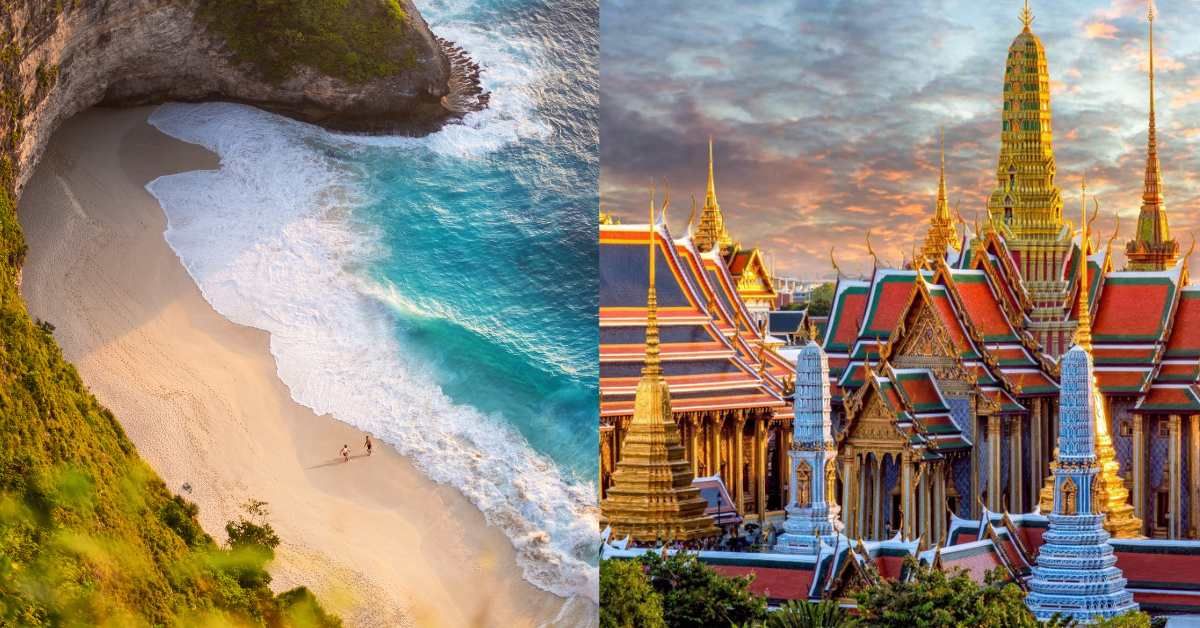
Two of the most iconic travel destinations in Southeast Asia. One big decision. Bali and Thailand both draw millions of visitors every single year. Both promise warm weather, crystal-clear water, incredible food, and memories that last a lifetime. But they are not the same place — not even close.
If you are trying to decide between the two for your 2026 trip, this guide covers everything. From beaches and budget to safety, visas, digital nomad life, and romantic getaways — we break it all down, section by section, so you can pick the destination that fits your style.
Bali is a small island in Indonesia, sitting just east of Java. It is known as the "Island of the Gods," and once you spend a few days here, you will understand why. The island blends Hindu culture, lush rice terraces, volcanic peaks, surf beaches, and one of the most vibrant café scenes in the world — all packed into one destination.
What makes Bali special is that it does not feel like just one place. Every area has its own personality. Kuta and Seminyak are busy, commercial, and buzzing with nightlife. Canggu is the home of surfers, digital nomads, and specialty coffee. Ubud is the cultural and spiritual heart of the island. Nusa Penida is dramatic, raw, and unforgettable. Bali draws backpackers, honeymooners, yogis, families, and remote workers all at once — and somehow serves all of them well.
Getting around is easiest by scooter. Roads in Bali wind through rice fields, jungle paths, and coastal towns — and a scooter puts you in control of your own adventure. If you are planning to explore beyond your hotel, book your scooter with Cinchy for reliable, insured, and hassle-free delivery to your door.
Thailand is a whole country, not just an island. It is a large, diverse nation with a mix of beach destinations, mountain cities, ancient temples, and modern urban centres. The most popular spots for tourists include Phuket and Koh Samui in the south, Koh Phangan for the Full Moon Party crowd, Chiang Mai in the north, Bangkok as the capital, and Krabi for dramatic limestone scenery.
Thailand has excellent infrastructure. Roads are well-maintained, transport is organized, and everything from tours to transfers runs smoothly. The Thai tourism industry has been built and refined over decades, and it shows. The country's food scene is world-famous — bold, fragrant, and packed with flavor at every price point.
Thailand is also a country of contrasts. Chaotic Bangkok can feel a world away from the peaceful rice fields of Chiang Mai. Phuket's beach clubs are nothing like the spiritual retreat scene in Pai. If you want variety within a single trip, Thailand delivers — though navigating that variety takes more time and planning. If you are specifically weighing up a beach-to-beach comparison, our Bali vs Phuket guide and Bali vs Koh Samui guide break down those specific matchups in full detail.
Thailand wins this comparison without question. Thailand covers approximately 513,000 square kilometres and has a population of over 70 million people. Bali, by contrast, is a small island of just 5,780 square kilometres with around 4.3 million residents.
In practical terms, Thailand is a country while Bali is one island within Indonesia. A single trip to Thailand can take you from tropical beaches in the south to mountain temples in the north — distances that require domestic flights. Bali is small enough to explore most of by scooter within a few days.
The best time to visit Bali is during the dry season, which runs from April to October. April and May are particularly good months — the skies are clear, crowds are lighter than peak July and August, and prices are slightly lower. If you are planning a trip during this window, our Bali in April travel guide covers everything you need to know about weather, events, and what to do.
For Thailand, the best time depends on where you are going. Southern Thailand (Phuket, Koh Samui, Krabi) is best from November to April, when the Andaman Sea is calm and clear. Northern Thailand (Chiang Mai) is best from November to February when temperatures are cooler. Bangkok is visited year-round but is most pleasant from November to March.
Bali has two main seasons. The dry season runs from May to October, with sunny days, low humidity, and temperatures ranging from 26°C to 32°C (79°F to 90°F). The wet season runs from November to March, bringing afternoon rain showers — but mornings are usually still sunny and warm.
Thailand's weather varies by region, but the country is tropical across the board. Southern Thailand's dry season is November to April on the Andaman side and January to September on the Gulf of Thailand side (where Koh Samui sits). Average temperatures across Thailand range from 25°C to 35°C year-round. Humidity is high everywhere, especially during monsoon months.
Bali is outstanding for outdoor adventure. You can hike Mount Batur at sunrise, cycle through rice terraces in Ubud, white-water raft down the Ayung River, or do a sunrise yoga session on a clifftop. The variety of outdoor activities packed into a small island is hard to match.
Thailand also has great outdoor options. Rock climbing in Krabi, elephant sanctuary visits in Chiang Mai, trekking in Doi Inthanon National Park, and zip-lining through jungle canopies in the north are all popular. Both destinations offer something for active travelers, but Bali has more diversity in a smaller geographic area.
Bali's scenery is layered and dramatic. In a single day you can watch the sunrise over a volcanic crater, walk between rice terraces glowing green under the morning sun, pass ancient stone temples covered in moss, and watch the sunset from a clifftop. The visual richness of Bali is part of what makes it so addictive.
Thailand's scenery is shaped heavily by the ocean. The limestone karst formations of Phang Nga Bay, the turquoise lagoons of the Phi Phi Islands, and the misty mountains of Chiang Mai are all stunning in their own right. Thailand offers more geographic diversity across the whole country, but within a single destination, Bali's scenery tends to hit harder.
Bali's beaches are diverse. Kuta is wide, energetic, and great for beginner surfers. Seminyak is stylish and lined with beach clubs. Uluwatu and Balangan are dramatic clifftop breaks with world-class surf. Sanur is calm and shallow — perfect for families. Nusa Penida delivers the raw, wild, Instagram-famous scenes with cliffs dropping straight into crystal water.
Thailand's beaches are often cleaner and more swimmable, especially in the Andaman Sea. Patong Beach in Phuket is the busiest and most commercial. Kata, Karon, and Nai Harn are quieter and more beautiful. Krabi's beaches are some of the most stunning in the world. Koh Phangan and Koh Samui offer more laid-back vibes with powdery white sand and clear warm water. For a focused comparison of island beaches, see our Bali vs Koh Phangan breakdown.
For overall water clarity and swimmability, Thailand edges ahead. For beach variety, drama, and surf culture, Bali wins.
Both destinations offer the full spectrum — from budget guesthouses to five-star international resorts. In Bali, you can find boutique eco-hotels in Ubud's jungle, chic designer hotels in Seminyak, and surf lodges in Canggu at nearly every price point. Many hotels in Bali come with private outdoor spaces, rice terrace views, or direct beach access.
Thailand's hotel scene is strong across all segments too. Bangkok has some of the best urban luxury hotels in Asia. Phuket and Koh Samui have internationally managed resort properties with direct beach access, pools, and full-service facilities. Thai hotels often have a more polished, resort-style feel compared to the boutique and creative style that dominates Bali.
Bali is arguably the world's best destination for private villa stays. For $80 to $200 per night, you can rent a beautiful private villa with a pool, tropical garden, fully equipped kitchen, and daily cleaning service. Even at the budget end, Bali villas punch far above their price point.
Thailand also has excellent private villas, particularly in Phuket, Koh Samui, and Koh Lanta. However, the value is not quite as strong as Bali. A comparable villa experience in Phuket will typically cost 30 to 50 percent more per night than in Bali. For villa-style stays at the best value, Bali wins clearly.
Both destinations have exceptional dining scenes built for international visitors. In Bali, you can go from a $2 nasi goreng at a local warung to a gourmet twelve-course tasting menu at a world-ranked restaurant — all on the same street. The café culture in Canggu and Seminyak is particularly impressive, with speciality coffee shops, health-focused brunch spots, and rooftop restaurants at every turn.
Thailand's dining scene is bold, fresh, and intensely flavoured. Night markets are central to Thai food culture — Chiang Mai Night Bazaar, Bangkok's Or Tor Kor Market, and Phuket's Chillva Market are all legendary. Street food is cheaper in Thailand in tourist hubs, though local warung meals in Bali can still be bought for as little as $2 to $3.
Water sports in Bali centre around surfing, snorkelling, diving, white-water rafting, and sea kayaking. Surf spots at Uluwatu, Padang Padang, Medewi, and Canggu attract surfers from all over the world. The diving around Amed and Tulamben — including the famous USS Liberty shipwreck — is world-class.
Thailand's water sports focus more on diving, island-hopping speedboat tours, kite surfing, and sea kayaking. Jet skiing is widely available in Phuket but comes with known scam risks around damage claims. The Similan Islands offer some of the best diving in all of Asia. For pure surfing, Bali dominates. For organized dive excursions and island-hopping, Thailand is hard to beat.
Bali's best snorkelling and diving happens at Nusa Penida, where you can snorkel with manta rays and, in season, spot the rare mola mola (ocean sunfish). The Tulamben Liberty shipwreck is one of the most accessible and famous dive sites in Asia. Amed's coral gardens are also impressive.
Thailand's Similan Islands consistently rank among the world's top ten dive destinations. Visibility can reach 30 metres. Richelieu Rock near Surin Island is famous for whale shark sightings. The Phi Phi Islands also offer accessible and beautiful snorkelling for beginners. For serious divers, Thailand's dive sites are generally considered more spectacular.
Bali's inland areas are full of life. Ubud is the cultural and artistic hub — home to traditional dance performances, cooking classes, batik workshops, and temple ceremonies. Rice terrace walks in Tegalalang and Jatiluwih are iconic. Mount Batur's sunrise hike is one of the most popular experiences in all of Indonesia.
Thailand's inland highlights are equally compelling, but more spread out. Chiang Mai in the north offers elephant sanctuaries, Buddhist temple circuits, jungle trekking, and a world-class cooking school scene. If you are considering a quieter, more cultural Thai experience in the north rather than the beaches, our Bali vs Chiang Mai comparison goes deeper into this choice.
Both Bali and Thailand are considered safe destinations for tourists. Violent crime against visitors is rare in both places. The more common risks are petty theft, scams, and traffic accidents.
In Bali, the biggest safety concern is scooter accidents. Riding without experience or proper headgear leads to many tourist injuries every year. Drug laws in Indonesia are also extremely strict — possession carries severe prison sentences and trafficking carries the death penalty. Scams around temple dress codes, taxi pricing, and rental contracts are common but avoidable.
In Thailand, known risks include jet ski damage scams in Phuket, tuk-tuk overcharging, and rough sea conditions during monsoon months. Drug laws in Thailand are similarly strict. Overall, both countries are safe for careful, aware travelers.
Bali's nightlife is diverse and world-famous. Seminyak has large beach clubs and DJ-driven nights that rival anything in Europe. Kuta remains the party heartbeat for younger budget travelers. Canggu has a more relaxed vibe — rooftop bars, beach bonfires, and live music sessions that go late into the night.
Thailand's nightlife scene is anchored by Bangla Road in Patong — one of Asia's most intense party strips. Bangkok's Silom and Sukhumvit areas offer everything from rooftop cocktail bars to underground clubs. Koh Phangan's Full Moon Party is one of the most famous monthly events in the world, drawing up to 30,000 people on the beach. Thailand wins for sheer scale and variety of nightlife across the whole country.
Bali's lifestyle is built around wellness, community, and creative expression. Morning yoga sessions, cold brew coffee in garden cafés, afternoon surf, and sunset beach clubs form the rhythm of daily life for many long-term visitors. The island has a strong intentional living culture that attracts people looking for more than just a holiday.
Thailand's lifestyle varies wildly depending on where you are. Bangkok is fast-paced, modern, and cosmopolitan. Chiang Mai is calm and cultural. The beach islands are laid-back and social. Thailand gives you more lifestyle options across the country, but Bali's specific lifestyle ecosystem — especially in Canggu — is uniquely cohesive.
Bali has one of the richest living cultures in the world. Hindu-Balinese traditions shape every corner of daily life. Flower offerings called canang sari are placed on doorsteps every morning. Temple ceremonies spill into streets. The island has over 10,000 temples. Major festivals like Galungan and Kuningan transform the island into a sea of bamboo decorations and ritual celebrations. Culture is not something you seek out in Bali — it finds you.
Thai culture is deeply rooted in Theravada Buddhism. Golden temples, saffron-robed monks, respectful customs, and elaborate festivals like Songkran (water festival) and Loy Krathong (lantern festival) shape the national character. Thai culture is more visible in smaller cities and rural areas than in the heavily commercialised tourist zones of Phuket or Bangkok.
Balinese food is aromatic, spiced, and deeply tied to ceremony and community. Must-try dishes include nasi goreng (fried rice), satay, babi guling (roast suckling pig), lawar (spiced meat salad), and bebek betutu (slow-cooked duck wrapped in banana leaf). Local warung meals cost $2 to $5 and are some of the best food experiences on the island.
Thai food is one of the world's most popular cuisines for good reason. Pad thai, tom yum soup, green curry, massaman curry, som tam (papaya salad), and fresh seafood are highlights. Street food culture is central to daily life in Thailand. Night market meals are social, affordable, and extraordinary. Both food scenes are world-class — the choice comes down entirely to taste preference.
Bali is one of the best places in Southeast Asia for shopping. Ubud and Seminyak markets are full of handmade jewelry, batik clothing, hand-carved wooden furniture, leather goods, woven baskets, and original artwork. Local boutiques in Canggu carry internationally respected fashion brands designed and made on the island. Prices are reasonable and bargaining is part of the culture.
Thailand's shopping scene is large and varied. Bangkok has some of the biggest and busiest malls in Asia — MBK Centre, Central World, and ICON Siam are all enormous. Night markets and street bazaars offer affordable clothing, accessories, and food. Chiang Mai is known for its artisan crafts and silk products. For unique, handmade, and culturally rich shopping, Bali wins. For sheer variety and volume, Thailand's major cities take the lead.
Both destinations work well for families, but in different ways. Bali is full of kid-friendly experiences — Waterbom Bali waterpark, Bali Safari & Marine Park, rice terrace cycling tours, and traditional Kecak dance performances are all popular with children of all ages. Many villas come with private pools, which suits families perfectly.
Thailand offers calm, shallow beaches in Koh Samui and Phuket that are ideal for young children. Resort facilities in Thailand tend to be more polished and predictable, which appeals to parents who want organized, easy holidays. For families with older children who want adventure and culture, Bali is harder to beat. For families with very young children who want a smooth, resort-style trip, Thailand is a strong choice.
Bali has long been one of the world's top honeymoon destinations. Private clifftop villas, candlelit temple ceremonies, sunset dinners on the beach, and couples' spa treatments in jungle retreats are all part of the experience. The island's romantic reputation is well-deserved and deeply embedded in its tourism identity.
Thailand is also excellent for honeymooners — particularly the private island resorts in the Andaman Sea, overwater bungalows in Koh Samui, and luxury stays in Chiang Mai's mountain retreats. However, heavily tourist-saturated areas like Patong in Phuket can feel less intimate. Both are outstanding honeymoon destinations — the difference is in the vibe. Bali feels more spiritual and immersive. Thailand feels more polished and resort-focused.
Romance in Bali is woven into the landscape itself. Watching the sunset over Tanah Lot temple with your partner, dining under the stars in a rice terrace restaurant, or soaking in an outdoor stone bathtub at a jungle villa — these moments feel effortless here. The island is built for romance without needing to try.
Thailand's romantic highlights lean toward breathtaking natural beauty — sunset boat rides between limestone islands in Phang Nga Bay, beachside seafood dinners by candlelight, and private villa nights in Koh Lanta or Koh Yao Noi. For uniquely beautiful, culturally rich romance, Bali edges ahead. For natural ocean scenery and luxurious island settings, Thailand delivers equally well.
Bali's aesthetic is warm, layered, and alive. Carved stone gates, incense smoke drifting over flower-covered offerings, terraced rice fields glowing in morning light, surf-beaten black sand beaches, boutique jungle villas with infinity pools overhanging ravines — the visual richness never stops. Every corner of the island offers something beautiful.
Thailand's aesthetic is cleaner and more oceanic. Turquoise water against white limestone cliffs in Phang Nga Bay is one of Asia's most iconic images. Old Town Phuket's pastel-painted Sino-Portuguese buildings are charming and photogenic. Chiang Mai's lantern-lit old city walls glow beautifully at night. If cultural beauty and green landscapes are your priority, choose Bali. If pristine ocean scenery and clean resort aesthetics call to you, Thailand delivers.
Bali is generally more affordable than Thailand's major tourist destinations, particularly Phuket. Here is a rough daily breakdown:
In Bali, a budget traveler can manage on $25 to $45 per day. A mid-range traveler who stays in a villa, eats well, and does activities can expect to spend $60 to $100 per day. A scooter rental costs just $5 to $9 per day — the cheapest and most flexible way to get around the island. Rent yours through Cinchy for guaranteed delivery and insurance coverage.
In Thailand, a budget traveler in Phuket or Bangkok can get by on $40 to $70 per day. A mid-range traveler will typically spend $80 to $150 per day. Internal travel between cities (flights, trains, long-distance buses) adds to the cost if you plan to see multiple regions.
Bali delivers exceptional value across the board. A private pool villa, daily café visits, surf lessons, temple tours, spa treatments, and beach club evenings can all be done comfortably for under $100 per person per day. The combination of quality and price in Bali is genuinely hard to find anywhere else in the world.
Thailand also offers strong value, particularly in street food, local transport, and accommodation outside peak resort zones. However, for the same daily experience, you will generally spend more in Thailand's popular tourist areas. For pure value for money, Bali comes out ahead in most comparisons.
Both destinations offer great shopping, but they cater to different tastes. Bali wins for unique, handcrafted, and artisan goods — handmade silver jewelry from Celuk, hand-painted batik sarongs, hand-carved wooden masks, and independent fashion labels with genuine design credibility. Markets in Ubud and Seminyak are worth an entire afternoon.
Thailand wins for volume and urban retail. Bangkok has some of the largest malls in Asia. The Chatuchak Weekend Market in Bangkok — with over 15,000 stalls — is one of the biggest markets in the world. If you want branded goods, electronics, and mass-market shopping, Thailand has the advantage. For meaningful, one-of-a-kind purchases, Bali is the better choice.
Bali is the clear winner for digital nomads in 2026. The island has a massive, well-established remote work community. Canggu alone has hundreds of cafés with fast Wi-Fi, power outlets, and all-day menus. Dedicated co-working spaces are everywhere. Indonesia introduced the Digital Nomad Visa (E33G), which allows eligible remote workers to stay for up to 12 months. Monthly cost of living in Bali starts from around $800 for a simple lifestyle.
Thailand is growing rapidly as a nomad hub, particularly in Chiang Mai and Bangkok. Chiang Mai consistently appears in global top-ten lists for digital nomad cities due to its low cost of living, excellent café scene, and large expat community. Thailand's Long-Term Resident (LTR) Visa is also a solid option for remote workers. But as a single destination, Bali's Canggu still edges out any single Thai city for sheer community density and creative energy.
Both destinations have large, well-established expat communities. In Bali, the majority of Western expats cluster in Canggu, Seminyak, and Ubud. Villa rentals are affordable, international schools are available, and the lifestyle ecosystem is rich. The Bali KITAS visa and Digital Nomad Visa make legal long-term stays possible.
In Thailand, the expat community is strong across multiple cities — Bangkok, Chiang Mai, Phuket, and Koh Samui all have sizable foreign resident populations. Thailand's Elite Visa and LTR Visa are well-regarded for longer stays. Healthcare in major Thai cities is excellent and affordable. Older expats often prefer Thailand for its infrastructure reliability and health care access. For younger expats who prioritize lifestyle, creativity, and community, Bali tends to win. For long-term practicality, especially healthcare and infrastructure, Thailand competes strongly.
For Bali (Indonesia) in 2026, most nationalities receive a Visa on Arrival valid for 30 days, extendable to 60 days. The fee is approximately $35 USD. A mandatory Tourist Tax of IDR 150,000 (roughly $10 USD) is charged upon arrival at Bali's Ngurah Rai Airport. Travelers must also complete the All Indonesia Arrival Card digitally before landing. This is a newer requirement that catches many first-timers off guard — read our complete All Indonesia Arrival Card guide to avoid any issues at immigration.
For Thailand in 2026, most nationalities enjoy 60-day visa-free entry — an upgrade from the previous 30-day allowance. A free Thailand Digital Arrival Card must be submitted online before arrival. Thailand also has well-organized long-term visa options including the LTR Visa and Elite Visa. For ease of entry, Thailand currently has the edge with longer visa-free stays and no tourist tax fee.
Bali wins on overall value. You simply get more for your money here than in Thailand's main tourist zones. A $100 per day budget in Bali can include a private pool villa, three good meals, a spa treatment, and a scooter for the day. That same $100 in Phuket gets you a mid-range hotel room with little left over for extras.
That said, Thailand offers excellent value in less-touristed areas. Northern Thailand — including Chiang Mai — can be almost as affordable as Bali. If you are considering Chiang Mai as an alternative to Bali, our Bali vs Chiang Mai guide gives a much deeper look at how the two compare for cost, lifestyle, and experience.
Packing for both destinations is similar since both are tropical. Here is what you will want to bring:
If you are renting a scooter in Bali — which we strongly recommend for exploring the island freely — bring a good pair of closed-toe shoes and consider packing a lightweight riding jacket. Start your Bali adventure right by booking your scooter with Cinchy before you land.
Booking tours in both destinations is straightforward in 2026. The key difference is that Bali gives you more freedom to self-explore, while Thailand tends to work best with organized tour groups for its multi-island and multi-region experiences.
For Bali, many travelers skip traditional tours entirely and explore by scooter instead. Renting a scooter through a trusted local provider like Cinchy gives you the flexibility to visit temples, beaches, rice terraces, and waterfall routes entirely on your own schedule. Day tour packages to Nusa Penida, Mount Batur, and the Ubud region are widely available and easy to book on arrival. Booking through a reputable platform avoids common overcharging and safety issues.
For Thailand, the best approach depends on your destination. In Phuket, organized boat tours to Phi Phi Islands and James Bond Island are best booked a day in advance. In Bangkok, temple circuits and floating market tours are easy to arrange through hotels. In Chiang Mai, elephant sanctuary visits and trekking tours should be booked through certified operators to ensure ethical practices. Apps like Grab handle transport in urban areas well.
For both destinations, always confirm what is included in any tour (meals, insurance, equipment) before paying. Avoid paying the full amount upfront to tour operators you have not verified.
Both Bali and Thailand are extraordinary destinations. Neither is objectively better. They serve different types of travelers. Here is the honest summary:
Choose Bali if you want: deep cultural immersion, world-class surfing, lush landscapes, an incredible café scene, the best-value private villa experience in the world, a thriving digital nomad community, or a spiritually enriching trip on a tight budget. Bali rewards curious, adventurous travelers who enjoy discovering things at their own pace.
Choose Thailand if you want: iconic island-hopping experiences, some of the world's best diving, a more polished resort-style holiday, excellent medical infrastructure, longer visa-free entry, incredible urban food scenes (Bangkok), or a broader geographic variety within a single trip. Thailand is easier to navigate for first-time Southeast Asia visitors and families who want a smooth, predictable experience.
Choose both if you can. Many travelers do Bali and Thailand in the same trip, routing through Singapore or Kuala Lumpur. Together, they represent the best of Southeast Asia.
Ready to start planning? Explore everything Cinchy has to offer for your Bali trip here — from scooter rentals to insider destination guides written by people who live and breathe Bali every day.
Neither is universally better. Bali is better for cultural depth, value for money, surf, and digital nomad lifestyle. Thailand is better for island-hopping, diving, urban experiences, and longer visa-free stays. The best destination depends entirely on what kind of trip you are planning.
Bali is generally cheaper than Thailand's popular tourist areas. A comfortable daily budget in Bali starts at around $30 to $50 per person. In Phuket or Bangkok, similar comfort costs closer to $50 to $100 per day. Local street food and transport are affordable in both countries, but accommodation and villa stays are significantly cheaper in Bali.
Thailand scores better on air quality data, with Phuket recording significantly cleaner air than Bali's main tourist zones, which are affected by traffic congestion and seasonal burning. In terms of beach and ocean cleanliness, both destinations have issues in their most crowded spots. Thailand's beach management systems — including lifeguards and flagging — tend to be more organized.
This is subjective, but many travelers feel that Bali's layered natural beauty — volcanoes, rice terraces, temples, jungle, and beaches all in one small area — gives it an edge over Phuket's primarily oceanic scenery. Phuket is strikingly beautiful, especially the Phang Nga Bay karst formations, but Bali's visual variety across a small island is genuinely rare. For a detailed comparison, read our Bali vs Phuket guide.
Bali is better for culture, food, surfing, budget travel, and digital nomad life. Phuket is better for organized beach holidays, island-hopping tours, and resort-style luxury. Both are excellent — the right choice depends on your travel style. See our full Bali vs Phuket breakdown for an in-depth side-by-side analysis.
Both countries are outstanding destinations in 2026. Indonesia offers extraordinary natural diversity — from Bali's temples to Komodo's dragons to Raja Ampat's coral reefs. Thailand offers excellent infrastructure, a world-famous food culture, and easy multi-city travel. For a single beach island holiday, Bali wins for value and culture. For broader country exploration, Thailand is more accessible for first-timers.
Bangkok and Bali are almost impossible to compare directly — they are completely different experiences. Bangkok is a world-class Asian metropolis with incredible food, nightlife, temples, markets, and urban energy. Bali is a tropical island with surf, culture, nature, and wellness at its core. If you want a city break with big-city energy, Bangkok wins. If you want a tropical island escape, Bali wins. Some travelers combine both in a single two-week trip.
Absolutely. Many travelers visit both Bali and Thailand in the same trip. A common route is to fly into Bangkok, explore Thailand's highlights (Chiang Mai, Phuket, or the islands), then fly to Bali for the second half of the trip. Singapore and Kuala Lumpur are popular transit hubs connecting the two destinations. Budget airlines like AirAsia make the Bali–Bangkok route affordable and quick.
No. Bali is not in Thailand. Bali is an island in Indonesia, located in Southeast Asia between Java to the west and Lombok to the east. Thailand is a separate country entirely, located on the Indochina Peninsula and in the Gulf of Thailand. The two countries are about 3,000 kilometres apart. It is one of the most common travel misconceptions in the region — but now you know!
Planning a trip to Bali? Start your adventure on Cinchy — your go-to platform for scooter rentals, travel guides, and everything you need to explore the Island of the Gods. Hit the road your way — book your Bali scooter now and explore Bali on your own terms.
 travel tips
 hidden gems
 scooter guides
 riding tips
 bali guides
 cultural insight