
1


Stay in Touch
Get the latest updates, special offers, and exclusive Cinchy perks straight to your inbox.


Jl. Plawa No.50, Seminyak, Kec. Kuta, Kabupaten Badung, Bali 80361

CALL US 24/7
(+62-851-7424-6249)
Copied!

We’re Here
Everyday
8:30 AM-9 PM WITA




Payment Partners


© 2026 CINCHY. ALL RIGHTS RESERVED.
Cinchy Blog / Bali vs Koh Phangan: Should You Visit Bali or Koh Phangan?
Published: 21 Apr 2026

By Ulfah Alifah
Travel Enthusiast
Free Cancellation
24/7 Support
Insurance
Start Date - End Date
Start Time
End Time
Duration
0 Day(s)
Choosing between Bali and Koh Phangan is one of the most common dilemmas for travelers heading to Southeast Asia. Both islands are stunning, both sit in warm tropical waters, and both have built loyal followings among tourists, expats, and digital nomads alike. But they deliver very different experiences — and knowing the difference can save you from a trip that misses the mark.
This guide breaks down every major category side by side. Whether you are planning a honeymoon, a family holiday, a solo backpacker trip, or a long-term remote work base, you will find everything you need here to make the right call.
Bali is one of those rare places that genuinely lives up to its reputation. It is lush, spiritual, and endlessly varied. Ancient Hindu temples sit alongside world-class surf breaks. Rice terraces stretch across the highlands. Beach clubs perch on dramatic cliffs above the Indian Ocean. And somehow, it all feels natural — not forced.
The island is part of Indonesia, but it has a culture entirely its own. Balinese Hinduism shapes everyday life here in a way that is visible everywhere — from the tiny flower offerings placed on doorsteps each morning to the elaborate temple ceremonies that fill the calendar year-round. That spiritual depth gives Bali a soul that most beach destinations simply do not have.
Beyond culture, Bali handles visitors extremely well. It has strong infrastructure, a huge variety of accommodation and restaurants, reliable internet, and transport options for every budget. You could spend two weeks here and still not see everything. For travelers visiting Southeast Asia for the first time, Bali is often the perfect starting point.
Koh Phangan sits in the Gulf of Thailand and runs on a completely different energy. It is small, raw, and unpolished — and many travelers love it exactly for that reason. The island is most famous globally for its Full Moon Party, a monthly beachside rave that draws thousands of people from around the world. But there is more to Koh Phangan than just one night of dancing.
The island has calm, swimmable beaches, thick jungle trails, waterfall hikes, and a thriving yoga and wellness scene. It attracts a laid-back crowd — backpackers, spiritual seekers, and travelers who want to slow down and simply be somewhere beautiful for a while.
Koh Phangan is small enough to explore in a day or two, which makes it an excellent short island escape. But its limited infrastructure, patchy internet, and relatively thin offering of activities make it a harder choice for extended stays. It is a wonderful place to visit — just know what you are signing up for before you go.
Now let's get into the details. Here is a full category-by-category breakdown of how Bali and Koh Phangan stack up against each other.
Size is one of the most significant differences between these two islands. Bali covers approximately 5,800 square kilometers. Koh Phangan covers around 140 square kilometers. That makes Bali more than 40 times larger.
In practice, this means Bali has multiple distinct regions, each with its own character. Canggu is driven by surf culture and coffee shops. Ubud is spiritual, artistic, and surrounded by jungle. Seminyak is upscale and fashion-forward. Uluwatu perches on dramatic limestone cliffs above world-class waves. You could visit Bali multiple times and focus on a completely different region each trip.
Koh Phangan can be comfortably explored in a single day. That works perfectly for a short break, but travelers staying longer will likely run out of new things to discover.
The best time to visit Bali is during the dry season, which runs from April to October. Skies are clear, humidity is lower, and conditions are ideal for outdoor activities. July and August are peak season — the island is busiest and prices are highest. For a sweet spot of good weather and manageable crowds, aim for April, May, September, or October.
For Koh Phangan, the dry season falls between December and April. This is when the sea is at its calmest and the island is most inviting. May through August sits in a comfortable middle ground — still pleasant, with fewer tourists than peak season. The Gulf of Thailand side of the country avoids the worst of the monsoon that hits the Andaman coast, so Koh Phangan tends to stay drier for longer stretches.
Bali follows a clear two-season pattern. During the dry season (April to October), temperatures sit comfortably between 24°C and 30°C with low humidity and plenty of sunshine. The wet season (November to March) brings heavier rainfall, but showers are usually short and intense rather than all-day affairs. Temperatures stay warm at around 26°C to 32°C even during this period.
Koh Phangan benefits from the Gulf of Thailand's more sheltered position. Rain tends to arrive in shorter, more scattered bursts, and the island generally avoids the prolonged monsoon spells that can affect other parts of Thailand. If unpredictable weather makes you anxious, Koh Phangan's slightly more consistent conditions give it a narrow edge — though both islands are honestly fine to visit at almost any time of year with the right expectations.
Bali wins this category clearly. The island is an outdoor playground with options for every interest. You can hike Mount Batur in the dark to catch sunrise from the summit. You can cycle through rice terraces in Ubud. You can take surf lessons in Canggu, go white-water rafting on the Ayung River, or explore sea caves by kayak along the coastline. Every region of Bali adds something new.
Koh Phangan does offer outdoor activities — jungle hikes, waterfall walks, kayaking in calm bays, and paddleboarding. These are enjoyable, but the range is limited. After a few days, most visitors have covered the main highlights. Many use Koh Phangan as a base for day trips to nearby Koh Tao or Koh Samui to access more varied adventures.
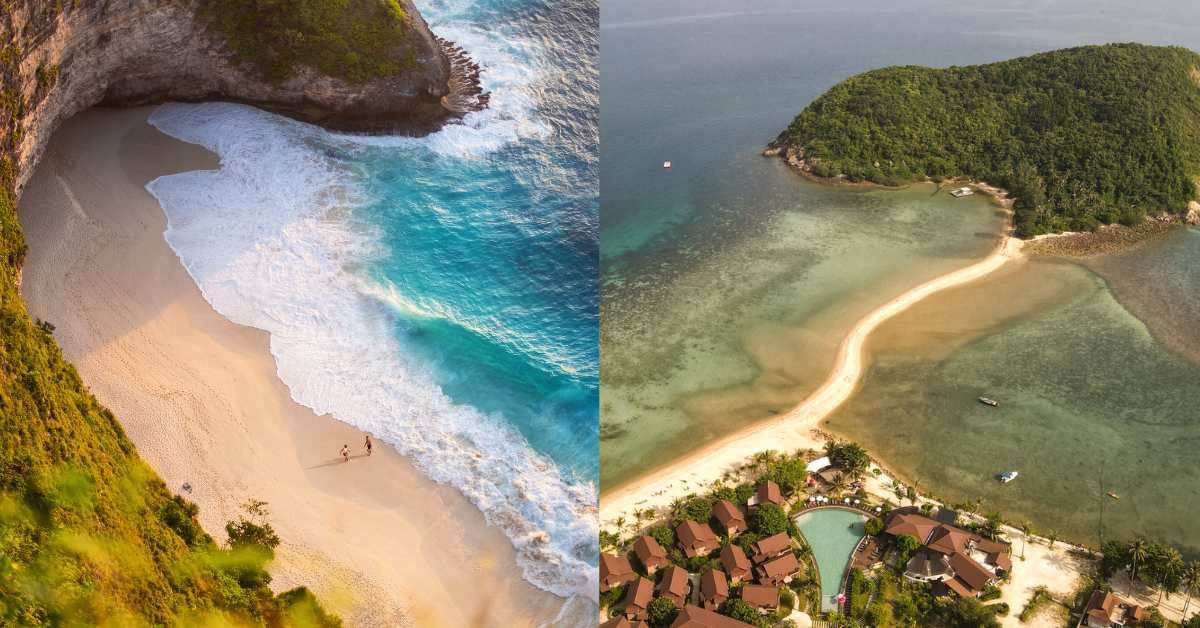
Both islands are beautiful, but in very different ways. Koh Phangan has that classic, postcard-perfect tropical look — thick jungle hills dropping down to white sand beaches, clear turquoise water, and blazing sunsets. It is gorgeous, but visually, it stays within a consistent theme throughout the island.
Bali's scenery is far more varied. You can go from volcanic mountain lakes in the highlands to terraced rice fields in Ubud, to black sand beaches in the north, to sheer limestone sea cliffs in Uluwatu — all within a single island. The visual variety keeps the experience fresh regardless of how long you stay. For a complete guide to what is worth seeing, check out 25 tourist attractions in Bali before you plan your route.
This category is genuinely close. Both islands have excellent beaches, but they serve different purposes. Bali's coastline is diverse — you get powerful surf breaks in Canggu and Uluwatu, calm family-friendly water in Nusa Dua, dramatic cliff-backed coves in Bingin, and quieter black sand beaches in the north and east. Every beach has a distinct personality, and there is something for everyone.
Koh Phangan excels in natural, unspoiled beauty and calm, swimmable water. Places like Bottle Beach and Haad Yuan feel genuinely untouched. The Gulf of Thailand's gentle currents make the water easy to swim in for all ages, which is a real plus for families or those who are not confident in the ocean. If pure, postcard-perfect swimming beaches are your top priority, Koh Phangan delivers. If you want variety and character, Bali takes it.
Bali's hotel scene is exceptional across all price points. Budget travelers can find clean, comfortable guesthouses with pools for under $20 a night. Mid-range stays often include private pools, daily breakfast, and genuinely warm service — at prices far below what you would pay for comparable quality in Europe or Australia. Luxury resorts in Uluwatu, Nusa Dua, and Ubud compete with the best properties in Asia.
Koh Phangan has a smaller, more limited accommodation scene. You will find beachfront bungalows, basic beach huts, and a handful of nicer properties — but the quality and variety drop off quickly outside of main tourist areas. During Full Moon Party weekends, prices spike sharply and availability disappears fast if you have not booked well in advance. Bali simply offers more choice at every level.
Bali is world-renowned for its villa scene. Renting a private villa with a pool, jungle views, and daily housekeeping is not only possible here — it is surprisingly affordable, especially for groups. Villas are available in every region of the island, ranging from intimate two-bedroom hideaways in Ubud to sprawling oceanfront estates in Seminyak.
Koh Phangan does have some beautiful villa options, particularly in the quieter northern areas of the island. But the range is significantly more limited, and the quality varies more unpredictably. If a private villa experience is central to your trip, Bali is the far stronger choice — both for options and for value.
Bali's dining scene is one of the best in Southeast Asia and gives the island a major advantage in this category. Local warungs serve generous, delicious plates of nasi campur, mie goreng, and satay for under two dollars. At the other end of the spectrum, internationally acclaimed restaurants in Ubud and Seminyak compete with some of the finest dining rooms in the region. In between, you will find creative cafés, beachside fish grills, wood-fired pizzerias, and every global cuisine you can think of.
Koh Phangan's food scene is solid but narrower. Fresh Thai food — pad thai, green curry, whole grilled fish — is genuinely good and cheap throughout the island. But the international dining scene outside of main tourist areas is inconsistent in quality, and the lack of culinary variety becomes noticeable after a few days. For dedicated food lovers, Bali wins this category comfortably.
Bali is one of the world's great surfing destinations, and its water sports offering reflects that. Uluwatu, Canggu, and Padang Padang all offer waves that suit different skill levels, from beginner-friendly beach breaks to serious reef swells. Beyond surfing, the island offers parasailing, jet skiing, wakeboarding, and white-water rafting on inland rivers.
Koh Phangan's water sports are calmer and more limited — kayaking and paddleboarding are the main offerings. Surfing is not a feature of Koh Phangan's beach culture at all. The island's Gulf of Thailand location means the water is gentle, which is great for swimming but less exciting for those seeking water-based thrills. For active water sports enthusiasts, Bali is the clear destination.
Both islands offer good diving, but with different strengths. Koh Phangan's proximity to Koh Tao — one of Thailand's most popular dive training hubs — makes it easy to earn an open-water certification at very competitive prices. Water visibility around Koh Phangan is generally excellent, and the sites are well-suited to beginners.
Bali offers more diverse and world-class dive experiences. Manta ray encounters at Nusa Penida, vibrant coral gardens in Amed, the famous Liberty shipwreck in Tulamben, and pristine reefs at Menjangan Island give advanced divers a truly exciting range of options. Snorkelling off Nusa Penida and Nusa Lembongan is also outstanding. For the sheer variety and wow factor of underwater experiences, Bali edges ahead.
Bali's interior is a destination within a destination. The highlands around Ubud are packed with terraced rice fields, ancient temples, jungle waterfalls, artisan villages, traditional cooking classes, and cycling routes through the countryside. Mount Batur offers one of the most rewarding sunrise treks in Southeast Asia. The inland experience here is rich enough to fill an entire trip on its own.
Koh Phangan has a handful of jungle waterfalls and hiking trails worth exploring — but inland options are thin. The island is small, and a day of exploring will cover most of what the interior has to offer. For a destination where the adventure keeps going once you leave the beach, Bali is in a different league entirely. Renting a scooter is the best way to reach Bali's inland gems on your own schedule — book yours with Cinchy and explore at your own pace. For ideas on where to go, start with the best things to do in Canggu as your base.
Both destinations are broadly safe for travelers, but different risks apply. In Bali, the most common concerns are traffic accidents, scooter incidents, and occasional petty theft in busy tourist areas. Violent crime against tourists is rare. Infrastructure and emergency services are reasonably well developed, particularly in major tourist zones.
Koh Phangan carries its own set of risks. The Full Moon Party environment brings late-night hazards — scams, lost belongings, dangerous ocean swimming, and opportunistic theft are all more common during this event. Road conditions are rougher than Bali throughout the island, and accidents happen frequently. Healthcare facilities on the island are limited. Overall, Bali offers a safer, more predictable environment — especially for first-time visitors to the region. If you are riding a scooter in Bali, always read our expert scooter rental guide before you hit the road.
Koh Phangan's nightlife revolves around one event: the Full Moon Party. Once a month, Haad Rin Beach becomes a massive open-air celebration with fire shows, neon body paint, loud music across multiple stages, and thousands of people dancing barefoot until sunrise. It is a bucket-list experience for many travelers, and it genuinely earns its legendary status. Outside of this monthly event, the nightlife settles into a quieter rhythm — reggae bars, beachside bonfires, jungle raves, and small gatherings that suit a mostly backpacker crowd.
Bali's nightlife is in a different category altogether. Beach clubs in Seminyak host sunset parties every evening. Canggu's bar scene runs late into the night. Uluwatu offers live music against cliff-edge ocean views. Kuta still has its reputation for high-energy clubs. The variety means you can choose your nightlife experience — whether you want a sophisticated cocktail at a rooftop bar or a full-on dance floor at 2am. Bali delivers both.
Bali supports an unusually wide range of lifestyles. You can wake up early for surf, spend the morning at a yoga class, work from a café, explore a temple in the afternoon, and have a long dinner with friends at sunset — all in one day. The island strikes a balance between activity and relaxation that is hard to replicate elsewhere. It suits both high-energy travelers and those looking to decompress, often within the same week.
Koh Phangan leans heavily toward the barefoot, slow-living end of the spectrum. It is wonderful for switching off, spending entire days on the beach, joining a meditation retreat, or simply doing nothing for a while. That pace is exactly what many visitors are looking for. But it has limits — the infrastructure is not built to support a more varied or active lifestyle over longer periods.
Bali's culture is one of its most compelling and distinctive features. Balinese Hinduism is alive in daily life here in a way that is impossible to ignore. Every morning, small flower offerings called canang sari appear on doorsteps, shop entrances, and street corners. Temple ceremonies happen regularly throughout the calendar, often spilling out into the streets in processions of color and sound. Traditional Kecak and Legong dances are performed nightly. Ancient temples like Tanah Lot, Uluwatu, and Tirta Empul are not museums — they are active places of worship that welcome respectful visitors. Read about more cultural highlights through our Bali travel guides.
Koh Phangan has Thai cultural elements visible in its smaller villages and Buddhist shrines, but tourism — especially beach and party tourism — dominates the island's identity. Cultural immersion of the depth that Bali offers simply is not a feature of Koh Phangan. For travelers who want to genuinely connect with a local culture, Bali stands apart.
Bali's food scene rewards travelers at every price point. At the low end, a full meal at a local warung — nasi goreng, satay, tempeh, and fresh fruit — costs under two dollars and tastes genuinely excellent. At the high end, restaurant groups with internationally trained chefs have set up some of the finest dining rooms in Southeast Asia here. In between, the café and restaurant scene in Canggu, Seminyak, and Ubud is creative, diverse, and reliably good. Vegetarian, vegan, and gluten-free options are plentiful throughout the island.
Koh Phangan's Thai food is tasty and authentic — pad thai, massaman curry, and grilled fish are all worth eating. But the island's food scene is thinner than the mainland and does not reach the heights of Thailand's great food cities. Western food exists throughout the tourist strip but varies widely in quality. For food as a core part of the travel experience, Bali is significantly ahead.
Bali is one of Southeast Asia's top shopping destinations. Seminyak's boutique strip carries designer resort wear, artisan jewelry, and high-quality homeware. Ubud's traditional markets overflow with handmade batik, carved wood, silver jewelry, and intricate crafts. Kuta has surf brands and beach gear. Independent designers and ateliers are scattered across every major area of the island. The Balinese aesthetic — earthy, textured, and deeply artistic — makes shopping here feel genuinely worthwhile.
Koh Phangan's retail scene is functional at best. Small markets sell clothing, basic souvenirs, and accessories, but there is no meaningful shopping culture on the island. Travelers who want to shop properly usually need to take a ferry to Koh Samui, which adds time and cost. Shopping is simply not a feature of Koh Phangan's appeal.
Bali is an excellent family destination. Calm beaches in Nusa Dua are safe for young children. Ubud offers family-friendly rice terrace walks, cooking classes, and visits to the Sacred Monkey Forest. There are waterparks, animal sanctuaries, and cultural shows that engage kids of all ages. International restaurants, quality accommodation, and reliable healthcare make logistics manageable for families with children.
Koh Phangan's calm, gentle beaches are actually ideal for toddlers and young children who love playing in the water. However, the island's limited healthcare facilities, rougher roads, and strong party culture make it a more complicated choice for families. The Full Moon Party draws an uninhibited crowd each month, which is not the atmosphere most families are looking for. For a comfortable, well-rounded family trip, Bali is the stronger and more practical choice.
Bali has been a top honeymoon destination for decades, and it earns that status every time. Private villas with plunge pools surrounded by jungle, candlelit cliffside dinners in Uluwatu, couples' spa treatments using traditional Balinese techniques, sunrise hikes to volcanic peaks — the island was practically built for romance. Hotels and resorts here understand honeymoon couples and consistently go the extra mile to create memorable moments.
Koh Phangan can be romantic in a simpler, more rustic way. Quiet northern beaches, hammocks at sunset, and intimate dinners on the sand have a real charm. But the overall vibe skews more toward backpacker adventure than polished romance. For couples who want a genuinely luxurious, unforgettable honeymoon experience, Bali is the obvious choice.
Bali is saturated with romantic moments. Watching the sun set behind Tanah Lot temple as the waves crash below. Sharing a rijsttafel dinner at a jungle restaurant in Ubud. Walking hand-in-hand through terraced rice fields in the early morning light. Taking a Balinese cooking class together before eating what you made. Every part of Bali can be made romantic with relatively little effort, which is why it remains one of the world's most popular destinations for couples.
Koh Phangan's romantic credentials are real but simpler — quiet beach coves, starlit dinners, and the intimacy of being on a small island together. For couples who prefer barefoot simplicity over curated luxury, Koh Phangan has its own appeal. But for the full romantic package — beauty, luxury, culture, and atmosphere — Bali wins consistently.
Aesthetics are deeply embedded in Bali's identity. The island is extraordinarily photogenic — whether it is the geometric layers of a rice terrace, the moss-covered gates of an ancient temple, an infinity pool disappearing into the ocean at sunset, or the intricate carvings on a roadside shrine. Bali looks stunning at every turn, and much of that visual richness comes from a living culture that takes artistry seriously.
Koh Phangan has raw, natural beauty. The combination of jungle hills, white sand, and crystal-clear water is genuinely stunning, and it photographs beautifully in an unfiltered, organic way. But where Bali's aesthetics are layered and ever-changing, Koh Phangan's visual appeal is more consistent and less varied. Both are beautiful — Bali just offers more to look at.
On first glance, Koh Phangan appears to be the cheaper destination. Budget accommodation and street food can be very affordable. But prices have risen steadily over recent years, and Full Moon Party weekends push accommodation costs to levels that rival or exceed Bali's mid-range options. Transport within the island is also more expensive than it should be for its size, and most Western food and imported goods cost more than you might expect.
Bali's cost range is enormous, which works in everyone's favor. You can sleep in a clean, well-located guesthouse for $15 a night or rent a luxury villa for $200. You can eat a full, delicious local meal for $2 or sit down to a fine dining experience for $50. That flexibility means you can tailor your daily spend precisely to match your budget — whether you are traveling on a shoestring or splurging on a special trip.
Value for money on Bali is outstanding by any global standard. The quality of accommodation, food, and experiences relative to what you pay is consistently impressive. A mid-range stay in Bali often includes a private pool, daily breakfast, and genuinely attentive service — the kind of offering that would cost three to four times more in Europe, Australia, or North America.
Koh Phangan offers decent value outside of peak party weekends, but the narrower range of options means less flexibility and less overall quality for the same money. Bali's depth of choice across every spending level makes it the stronger value destination for the vast majority of travelers.
Bali wins this category without question. It is one of Southeast Asia's most rewarding shopping destinations, with a well-developed retail culture that spans everything from luxury boutiques to artisan craft markets. The Balinese aesthetic — rich in texture, color, and traditional craft — gives every purchase a sense of meaning and authenticity that generic souvenir shops cannot replicate.
Koh Phangan's retail offering is minimal. Small street markets carry basic souvenirs, cheap beachwear, and tourist trinkets. For serious shopping, visitors need to leave the island entirely. If shopping is an important part of your travel experience, Bali is your destination.
Bali has been a world-renowned digital nomad hub for over a decade, and it continues to deliver everything remote workers need. Fast, reliable fiber internet is widely available across the island. Canggu alone has dozens of well-designed coworking spaces and cafés purpose-built for productive work. The global nomad community here is enormous, which makes networking and finding community genuinely easy.
Koh Phangan has a small and growing nomad scene, particularly in the Srithanu yoga village area. But internet speeds are inconsistent, power outages are common, and the professional community is a fraction of Bali's size. For anyone who needs reliable connectivity and wants to build professional relationships while working remotely, Bali is the far stronger choice. When you are based in Bali, renting a scooter is the most efficient way to move between coworking spaces, meetings, and beach breaks — book your scooter with Cinchy for flexible daily and weekly rates. Learn more about riding in Bali with our guide to renting an automatic scooter.
Long-term expats overwhelmingly gravitate toward Bali. The island supports a large and well-established international community with quality international schools, private hospitals, functioning legal and banking systems, and a wide range of housing options. Whether you are building a business, raising a family, or simply looking for a beautiful place to live and work, Bali provides the infrastructure to make it work sustainably.
Koh Phangan attracts seasonal residents and short-term expats who want a quiet, wellness-focused island lifestyle. But limited healthcare, unreliable utilities, and a relatively underdeveloped support ecosystem make it a difficult choice for full-time living — particularly for those with families or complex professional needs. Bali is clearly the stronger expat destination for long-term stays.
Entering Bali is straightforward for most Western travelers. Citizens of selected countries — including Australia, the United States, the United Kingdom, and most of Europe — can enter Indonesia visa-free for 30 days. Other nationalities can obtain a Visa on Arrival at the airport for approximately USD 35, which is extendable to 60 days. For longer stays, the B211A visa allows up to 180 days in the country and is commonly used by digital nomads and long-stay tourists.
Thailand is equally accessible. Most Western passport holders receive a 30-day visa exemption on arrival, with clear and well-documented pathways for longer-stay options through Thai immigration. Both countries have relatively simple entry processes for tourists, though it is always advisable to check the most up-to-date requirements before you travel as rules can change without much notice.
When you weigh up the full picture — accommodation quality, food variety, activities, scenery, infrastructure, and overall experience — Bali consistently delivers better value than Koh Phangan across almost every category. Koh Phangan is a great short escape, and if you are already in southern Thailand it is absolutely worth including. But for a standalone trip where you want your money to go as far as possible while experiencing as much as possible, Bali wins clearly.
Both islands are tropical, so your packing list will overlap significantly. Here is what you should bring for either destination:
If you are planning to ride a scooter in Bali — which is one of the best ways to explore — you will also need an International Driving Permit (obtained before you leave home) and a reliable helmet. Read the full step-by-step scooter hire guide for beginners to know exactly what to expect before you get on the road.
Bali's tourism infrastructure is one of the most developed in Southeast Asia. Booking tours, day trips, and activities here is easy — whether you do it through reputable online platforms before you arrive, or directly through your hotel or a local operator once you are on the island. The range of options is enormous. Sunrise volcano hikes, temple tours, cooking classes, waterfall treks, surfing lessons, rice terrace cycling routes, and snorkeling day trips are all widely available and well-organized.
For maximum flexibility, renting a scooter is the smartest move. It lets you set your own schedule, reach spots that tour buses skip entirely, and change your plans on the fly. Book your scooter with Cinchy — free delivery to your accommodation, full insurance, and 24/7 support are all included. For tips on finding the best rental deal on the island, read our complete guide to scooter rental in Bali.
Koh Phangan's tour scene is much simpler. Waterfall hikes, snorkeling day trips to nearby islands, yoga retreats, and Full Moon Party packages cover most of what is on offer. Booking is done through your accommodation or local operators, and the process is casual and straightforward. There is simply less to organize because there is less to do — which is fine for a short stay, but limiting for longer trips.
For day-by-day planning ideas across Bali, our Bali itinerary guide covers multiple trip lengths and travel styles, from quick four-day breaks to extended two-week explorations.
Ready to start planning? Explore Bali your way at cinchy.life →
Both islands belong on any Southeast Asia travel list. The question is not which one is worth visiting — they both are. The question is which one is right for your trip.
Koh Phangan is an excellent choice for a short, focused island escape. Its calm beaches are beautiful and swimmable, the Full Moon Party is a genuinely once-in-a-lifetime experience, and its wellness and yoga culture offers something that most beach destinations do not. If you are passing through southern Thailand and want to add a few days of island life to your trip, Koh Phangan absolutely delivers.
But across every major category — beach variety, food, culture, activities, accommodation quality, nightlife, value for money, digital nomad infrastructure, shopping, and family friendliness — Bali is the stronger destination. It is bigger, better connected, more visually diverse, culturally richer, and more reliably rewarding for travelers of every type. Whether you are visiting for a week, staying for a month, or considering a longer-term base in Southeast Asia, Bali gives you more to work with at every step.
For first-time visitors to the region, honeymooners, families, digital nomads, and anyone who wants a single destination that can do it all — Bali is the answer.
Thailand is an entire country with dozens of distinct destinations, so a direct comparison with Bali is not entirely fair. But if you compare Bali to individual Thai islands — like Koh Phangan or Koh Samui — Bali tends to offer more variety, more cultural depth, and a broader range of experiences within a single destination. Thailand's islands are beautiful and absolutely worth visiting, but Bali feels more complete and more capable of filling a full trip on its own. For most first-time visitors to the region, Bali is the stronger standalone destination.
For most travelers, Bali is the stronger choice. It offers more activities, a richer food scene, better nightlife, more accommodation options, stronger infrastructure, and deeper cultural experiences. Koh Phangan is a wonderful short escape — especially if you want calm beaches or the Full Moon Party experience — but Bali consistently delivers more across the board. The only scenario where Koh Phangan clearly wins is if you are specifically there for the Full Moon Party or a dedicated wellness retreat focused on yoga and meditation.
Bali covers approximately 5,800 square kilometers. Koh Phangan covers around 140 square kilometers, making Bali over 40 times larger. Bali has multiple distinct regions, each with its own character and offering, and can comfortably fill two to three weeks of exploration. Koh Phangan can be fully explored in a day or two, which makes it ideal for a short break rather than an extended stay.
Yes, it genuinely is — particularly if you are already in southern Thailand. The beaches are beautiful, the Full Moon Party is a unique event that many travelers put on their bucket list, and the island's wellness and yoga culture is a real draw for those seeking a slower pace. A stay of three to five days is usually the sweet spot. By that point, you will have seen the main highlights without running out of new things to discover. Expect a relaxed, low-key experience outside of party weekends.
Absolutely. Bali has one of the most diverse food scenes in Southeast Asia, and Western cuisine is extremely well represented. In areas like Canggu, Seminyak, and Ubud, you will find smoothie bowls, avocado toast, quality burgers, wood-fired pizza, fresh pasta, sushi, and virtually every other international cuisine — often prepared to a very high standard. Many cafés and restaurants blend Western and local Balinese flavors in creative ways that make for genuinely memorable meals. Vegetarian, vegan, and gluten-free options are also plentiful throughout the island.
For Bali, citizens of selected countries receive a 30-day visa exemption at no cost. Most other nationalities can obtain a Visa on Arrival at Ngurah Rai International Airport for approximately USD 35, which is extendable to 60 days. For longer stays, the B211A visa allows up to 180 days in Indonesia. For Thailand, most Western passport holders receive a 30-day visa exemption on arrival, with clear extension and longer-stay options available through Thai immigration. Always verify the current requirements for your specific nationality before traveling, as visa rules can change.
Planning a trip to Bali? Start exploring at cinchy.life and book your scooter for the most flexible way to experience the island — free delivery, full insurance, and 24/7 support included.
 travel tips
 hidden gems
 scooter guides
 riding tips
 bali guides
 cultural insight