1


Stay in Touch
Get the latest updates, special offers, and exclusive Cinchy perks straight to your inbox.


Jl. Plawa No.50, Seminyak, Kec. Kuta, Kabupaten Badung, Bali 80361

CALL US 24/7
(+62-851-7424-6249)
Copied!

We’ll be Back
at
8:30 AM-9 PM WITA




Payment Partners


© 2026 CINCHY. ALL RIGHTS RESERVED.
Cinchy Blog / Are Heavier Motorcycles More Stable for Riding Around Bali?
Published: 11 Oct 2026

By Syahrial Maulana Sudarto
Travel Enthusiast
Quick Answer
“Are heavier motorcycles more stable?”
If your scooter's fuel tank indicator is not working, the problem may come from the fuel level sensor, float, wiring, ground connection, fuse, or instrument cluster. Check whether the gauge is stuck on empty, stuck on full, fluctuating, or completely unresponsive, as each symptom can point to a different cause.
Free Cancellation
24/7 Support
Insurance
Start Date - End Date
Start Time
End Time
Duration
0 Day(s)
Key Takeaways:
Motorcycle weight affects how a vehicle responds to external forces and changes in direction.
A heavier motorcycle has greater inertia, meaning it generally requires more force to change its motion.
Under certain conditions, this can make it feel more planted while traveling at a steady speed.
However, inertia is only one part of motorcycle stability. A heavier motorcycle is not automatically easier to control, more resistant to every road disturbance, or safer in every riding situation.
At cruising speeds, a heavier motorcycle may feel less affected by small disturbances because its greater mass resists changes in motion.
Depending on its design, suspension, tires, and aerodynamics, it may provide a reassuring riding experience on relatively smooth roads.
This can be particularly noticeable on longer rides, where consistent handling and a comfortable riding position help reduce fatigue.
Nevertheless, stability also depends on factors such as wheelbase, steering geometry, tire grip, and how the motorcycle distributes its weight.
A well-designed lightweight scooter can also provide predictable handling and sufficient stability for everyday riding.
A motorcycle's mass does not determine how well its tires grip the road or how effectively its suspension responds to uneven surfaces.
If you're still uncertain about your next steps, don't worry, as we're here to address all your queries and concerns.
They can feel more planted because greater mass increases inertia. However, stability also depends on chassis geometry, tires, suspension, aerodynamics, and road conditions. Greater weight alone does not guarantee better stability.
Not always. Mass affects how a motorcycle responds to external forces, but its shape, exposed surface area, and aerodynamic design also influence crosswind sensitivity. Ride cautiously and stop if the wind makes maintaining control difficult.
Lighter scooters are generally easier to maneuver at low speeds, park, and reposition. However, overall handling also depends on seat height, center of gravity, steering geometry, and the rider's experience.
Weight affects kinetic energy, but stopping distance also depends on speed, tire grip, braking performance, road conditions, and rider input. Maintain a safe following distance and adjust your speed to the conditions.
It depends on the rider's experience, strength, balance, and comfort with the scooter. Beginners should prioritize a vehicle they can confidently control in traffic, during stops, and when parking rather than choosing one based on weight alone.
Yes. Cinchy lets you select your intended rental dates and check availability through its website. Booking ahead is especially useful during peak travel periods, although availability can change until your reservation is confirmed.
For example, a heavy motorcycle with worn tires or poorly maintained suspension may handle less predictably than a lighter scooter in good condition. Similarly, an unsuitable load or incorrect tire pressure can affect handling regardless of the vehicle's weight.
The key distinction is that weight influences stability, but the motorcycle's overall design and condition determine how that weight translates into real-world handling.
Choosing between a heavier motorcycle and a lightweight scooter involves balancing stability, maneuverability, and physical control. Neither option is universally better because each has different advantages depending on the riding conditions.
A lightweight scooter is generally easier to maneuver at low speeds because it requires less physical effort to support, push, or reposition.
This advantage becomes especially useful when navigating tight turns, making U-turns, parking in small spaces, or moving through stop-and-go traffic.
A heavier motorcycle can still handle these situations comfortably with the right experience and technique. However, if it begins leaning too far while moving slowly, its greater mass can make it harder to recover.
Seat height and center of gravity also matter. A motorcycle with a relatively low center of gravity may feel manageable even when its overall weight is substantial.
Heavier motorcycles can feel more settled at cruising speeds, but this depends on their chassis design, wheelbase, suspension, tires, and aerodynamics.
A lightweight scooter can also remain stable when properly maintained and ridden within its intended operating conditions.
Rather than choosing a vehicle based on weight alone, consider whether it feels predictable during normal acceleration, gentle turns, and changes in road conditions.
Always follow the vehicle manufacturer's recommendations and applicable speed limits.
A heavier motorcycle carries more kinetic energy at the same speed than a lighter vehicle. This makes effective braking, appropriate following distances, and anticipation of traffic changes particularly important.
However, stopping distance does not depend on mass alone. Tire grip, braking systems, road surfaces, speed, and rider input also play important roles.
Parking and pushing a heavy motorcycle can require additional physical effort, particularly on slopes or uneven surfaces. For travelers unfamiliar with larger motorcycles, these practical considerations may be just as important as stability while moving.
Several mechanical and environmental factors influence how stable a motorcycle feels. Understanding them helps explain why two motorcycles with different weights can behave very differently.
The center of gravity describes how a motorcycle's mass is distributed. Its position influences balance and how the vehicle responds when leaning or changing direction.
A lower center of gravity can make a motorcycle feel easier to manage while stationary or moving slowly. However, the effect depends on the vehicle's overall design and geometry.
Passengers and luggage also change weight distribution. Carrying additional loads can affect handling, so follow the manufacturer's load limits and adjust tire pressure or suspension settings as recommended.
Tires are the motorcycle's primary contact with the road. Their condition, tread, and correct inflation pressure help determine grip and predictable handling.
Suspension helps the wheels respond to bumps and changes in road surfaces. Poorly maintained suspension can reduce control, while an appropriate setup helps the motorcycle remain composed.
Wheelbase and steering geometry also influence steering response and stability. These characteristics vary between scooter models and cannot be judged by weight alone.
A motorcycle's shape affects how it responds to wind. Larger fairings, windshields, and broad side profiles can expose more surface area to crosswinds.
Although greater mass can influence how much a motorcycle responds to an external force, a heavier motorcycle is not immune to sudden gusts or turbulent air from large vehicles.
When riding in strong winds, maintain a controlled speed, allow sufficient space, and avoid abrupt steering inputs. If conditions make it difficult to maintain control, stop somewhere safe and wait for conditions to improve.
A rider's ability to maintain balance, anticipate hazards, and make smooth steering and braking inputs is essential to safe handling.
A heavier motorcycle may suit an experienced rider who is comfortable managing its size and weight. Meanwhile, a lighter scooter may offer a more manageable introduction for someone unfamiliar with riding in Bali.
Before setting off, check the tires, brakes, lights, mirrors, and general mechanical condition. Proper maintenance cannot eliminate every risk, but it helps the vehicle respond as expected.
If you’re beginner to ride a motorcycles and want to ride a motorcycle in Bali, please read these out:
Not necessarily. Bali offers a mixture of busy urban streets, narrow access roads, winding routes, uneven surfaces, and longer stretches connecting different destinations. The most suitable scooter depends on where you plan to ride and how comfortable you are controlling it.
In busy areas such as Seminyak and Canggu, traffic can involve frequent stops, tight turns, and limited parking space.
A lighter scooter can make these situations easier to manage because it generally requires less effort for low-speed maneuvering.
This can be particularly useful for visitors who are still becoming familiar with local traffic patterns.
A heavier scooter may offer a more substantial feel, but that advantage should be weighed against your ability to balance and reposition the vehicle comfortably.
Rain can make road surfaces slippery, while loose sand, gravel, potholes, and uneven pavement can affect traction and handling.
A heavier motorcycle does not automatically provide better grip on these surfaces. Tire condition, suspension, speed, and smooth rider inputs remain important.
Reduce speed when approaching unfamiliar or slippery sections, avoid sudden braking or steering, and stay on suitable public roads. If a road becomes unsafe for your experience or vehicle, consider another route.
For longer journeys, comfort becomes an important consideration. Seat design, riding posture, suspension, available storage, and the scooter's suitability for the route can influence how tiring a trip feels.
A larger scooter may offer a more spacious riding position or other comfort advantages, depending on its model. However, it is worth considering whether you can comfortably handle its weight during stops, parking, and tight turns.
Choose a scooter that you can control confidently throughout the entire journey, not just one that feels stable on straight roads.
Before choosing a scooter, evaluate your riding experience, physical comfort, and planned itinerary.
Consider these practical factors:
If you are not accustomed to heavier motorcycles, do not assume that extra weight will automatically make your ride safer. Start with a vehicle you can control comfortably and avoid riding beyond your experience level.
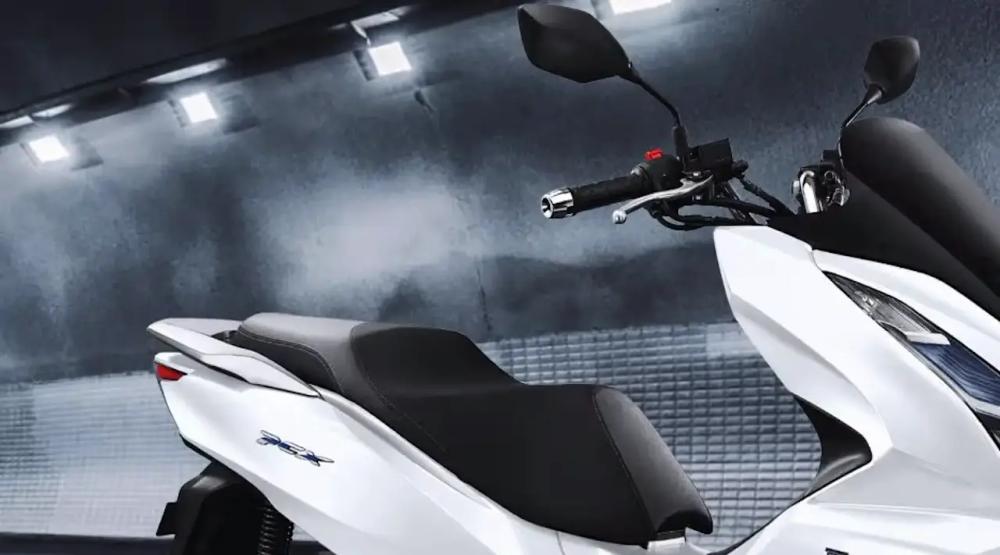
If you prefer a larger scooter for exploring Bali, Cinchy offers a Comfort category featuring the Yamaha NMAX and Honda PCX.
These models may appeal to riders looking for a different riding position or a more substantial scooter, depending on their individual preferences.
Cinchy allows you to check scooter availability directly on its website, making it easier to see which options are available for your travel dates before booking.
Other conveniences include:
 travel tips
 hidden gems
 scooter guides
 riding tips
 bali guides
 cultural insight