
1


Stay in Touch
Get the latest updates, special offers, and exclusive Cinchy perks straight to your inbox.


Jl. Plawa No.50, Seminyak, Kec. Kuta, Kabupaten Badung, Bali 80361

CALL US 24/7
(+62-851-7424-6249)
Copied!

We’re Here
Everyday
8:30 AM-9 PM WITA




Payment Partners


© 2026 CINCHY. ALL RIGHTS RESERVED.
Cinchy Blog / Bali vs Vietnam: Should You Visit Bali or Vietnam in 2026?
Published: 12 May 2026

By Ulfah Alifah
Travel Enthusiast
Free Cancellation
24/7 Support
Insurance
Start Date - End Date
Start Time
End Time
Duration
0 Day(s)
Southeast Asia is home to two of the world's most talked-about travel destinations. Bali, Indonesia's legendary Island of the Gods, and Vietnam, a long, diverse country that stretches from misty mountains in the north to tropical islands in the south. Both draw millions of visitors every year. Both offer world-class food, stunning scenery, and rich culture. But they are very different experiences, and choosing between them matters.
This guide breaks everything down — from beaches and budget to nightlife, safety, and visas — so you can make a confident decision for your 2026 trip.
Bali is a small island in the Indonesian archipelago, covering around 5,780 square kilometers. But don't let the size fool you. It packs more into its terrain than almost any other destination in Southeast Asia.
The island is home to Hindu temple culture that is completely unique in a predominantly Muslim country. You wake up to the smell of incense and flower offerings called canang sari on the streets. You can surf world-class waves in the morning, trek through rice terrace jungles in the afternoon, and watch fire dancers perform against a cliff-edge sunset at night.
Bali is split into zones that suit every type of traveler. Seminyak and Canggu are the social hubs — cafes, beach clubs, and boutiques everywhere you turn. Ubud is the spiritual and creative center, surrounded by rice fields and temples. Uluwatu is a surfer's paradise on dramatic limestone cliffs. Nusa Dua and Sanur are calm, family-friendly coastal areas with clear water and five-star resorts.
In 2026, Bali welcomed a record 6.9 million international visitors in 2025 and is targeting 6.625 million for 2026 as it shifts marketing focus toward Asia-Pacific markets. It remains one of the most visited tropical islands on the planet — and it has been working hard to stay that way.
The island has also become a long-term home for expats, digital nomads, and retirees who never quite left after their first trip. There is something about Bali's pace, its beauty, and its energy that keeps drawing people back.
If you're planning to explore Bali freely, a scooter is the single smartest move you can make. Check out Cinchy's scooter booking page for flexible daily, weekly, and monthly plans delivered right to your door, including to Ngurah Rai Airport.
Vietnam is a long, narrow country running along the eastern edge of mainland Southeast Asia. It stretches over 1,650 kilometers from Hanoi in the north to Ho Chi Minh City (Saigon) in the south — and every part of it feels different.
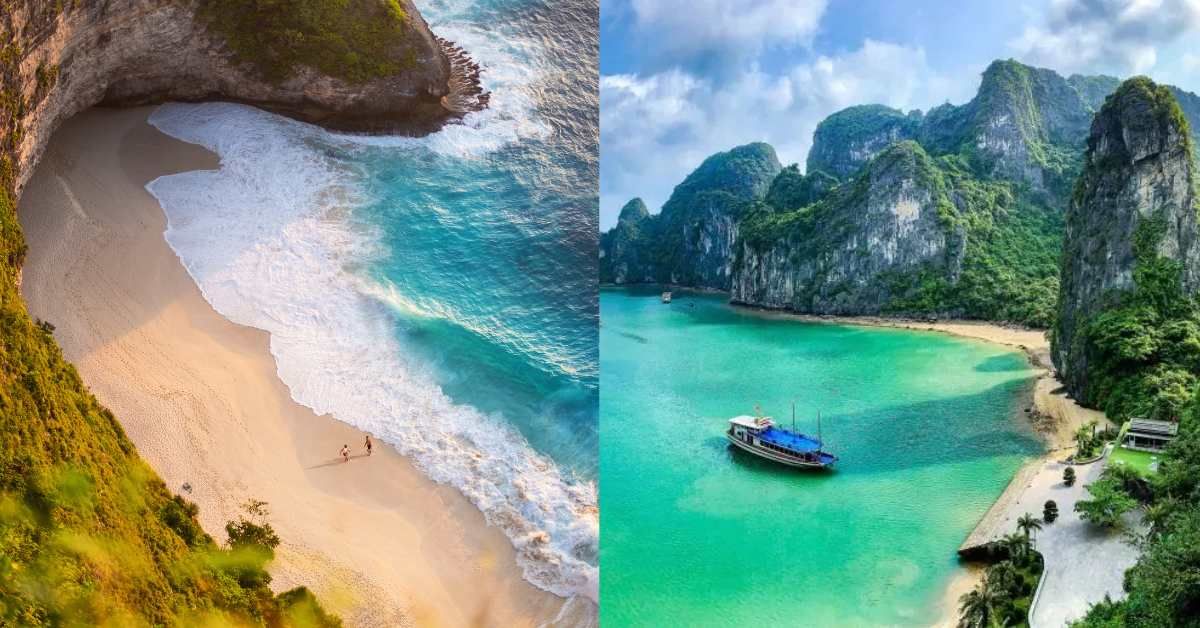
In the north, you have Hanoi's ancient streets, Ha Long Bay's limestone karst islands rising from emerald water, and the highland terraces of Sapa blanketed in morning fog. In central Vietnam, you find Hoi An's glowing lantern-lined old town, Da Nang's long sandy beaches, and Hue's imperial citadel. In the south, Ho Chi Minh City pulses with modern energy, markets, and riverside restaurants. And further south still, Phu Quoc offers island life that rivals any tropical getaway in the region.
Vietnam recorded 21.2 million international arrivals in 2025 — a 20.4% jump year over year — and continued to grow strongly into early 2026. It is clearly on a rise, and travelers from Australia, Europe, and Asia are all taking notice.
The food alone is worth the trip. Street food culture is embedded into daily Vietnamese life in a way that is hard to find elsewhere. The country's diverse landscapes, rich history, and significantly lower cost of travel compared to Bali are making Vietnam a go-to for budget-conscious, experience-hungry travelers in 2026.
For travelers already planning a Vietnam-Bali comparison, our Bali vs Da Nang guide offers a detailed breakdown of how Bali stacks up against Vietnam's fastest-rising coastal city.
Here is how both destinations compare across every category that matters.
Bali covers 5,780 square kilometers and is home to around 4.36 million people. It is compact enough to drive across in a few hours — which is part of what makes it such an easy destination to explore. You can reach most of its major highlights in a single week.
Vietnam, by contrast, is enormous. The country covers over 331,000 square kilometers and has a population of around 98 million people. Traveling from Hanoi in the north to Ho Chi Minh City in the south is a serious journey — it requires flying, taking the famous Reunification Express train, or breaking the trip into multi-day stops.
Winner: Vietnam for sheer scale and geographic diversity. Bali wins for ease and compactness.
For Bali, the best time to visit is during the dry season — April through October. April and May are especially good: the skies are clear, crowds are thinner than the peak July-August rush, and prices are still reasonable. If you are planning a trip around this window, our guide to visiting Bali in May walks you through exactly what to expect.
For Vietnam, the best time depends on which region you visit. The north (Hanoi, Ha Long Bay, Sapa) is best from October to April. Central Vietnam (Da Nang, Hoi An) is ideal from March to August. The south (Ho Chi Minh City, Phu Quoc) is great from November to April. This regional complexity means you need to plan your Vietnam itinerary more carefully than a straightforward Bali trip.
Winner: Bali for simplicity. Vietnam for flexibility if you plan the right region.
Bali sits close to the equator, so temperatures hover between 27–31°C (80–88°F) all year round. The dry season brings sunshine and low humidity. The wet season from November to March brings short, sharp afternoon showers that usually clear within the hour.
Vietnam's climate varies dramatically by region. The north can drop to 10–15°C in winter. Central Vietnam gets intense rain from October to December. The south is warm and tropical most of the year. In summer, the central coast can hit 37°C with high humidity.
Winner: Bali for predictability and year-round warmth. Vietnam for variety.
Bali is one of the top outdoor adventure islands in Southeast Asia. You can hike Mount Batur for a sunrise above the clouds, white-water raft down the Ayung River in Ubud, go mountain biking through rice terraces, or trek through jungle trails to hidden waterfalls.
Vietnam's outdoor scene is equally impressive, just more spread out. Ha Long Bay kayaking is world-class. Sapa trekking through ethnic minority villages is deeply rewarding. Motorbike tours along the Hai Van Pass — winding coastal cliffs above the sea — are among the most spectacular rides in all of Asia. Rock climbing in Ninh Binh and Phong Nha cave exploration complete a varied outdoor menu.
Winner: Draw. Bali wins for concentration. Vietnam wins for variety across different regions.
Bali's scenery is genuinely world-class. Emerald rice terraces cascade down hillsides in Ubud. Volcanic peaks rise above the clouds in the north. Ancient stone temples sit on sea cliffs at sunset. The island looks like a landscape photographer's dream — almost every road reveals something beautiful.
Vietnam's landscape variety is remarkable. Ha Long Bay's 1,600+ limestone islands rising from mist-covered water is one of the most photographed places on Earth. Sapa's terraced rice fields are breathtaking in harvest season. The Mekong Delta offers a completely different world of river markets and floating villages. Phong Nha is home to Son Doong, the world's largest cave.
Winner: Tie. Bali is more consistently gorgeous in a smaller space. Vietnam wins for sheer landscape range.
Bali's beaches are remarkably diverse. Uluwatu and Padang Padang offer dramatic cliffs and world-class surf. Nusa Dua and Sanur have calm, clear water perfect for swimming and snorkeling. Seminyak has long stretches of grey volcanic sand with beach clubs and sunset bars. The offshore islands of Nusa Penida and Nusa Lembongan add even more options within a short boat ride.
Vietnam's standout beach destinations include Phu Quoc in the south — a tropical island with white sand and crystal-clear water — and Da Nang's My Khe Beach, a long, clean stretch that earned a mention from Forbes as one of the world's most beautiful beaches. Mui Ne offers sand dunes and kite surfing. Con Dao is remote and pristine.
Winner: Bali for variety and uniqueness. Vietnam for value and Phu Quoc's tropical beauty.
Bali's hotel market spans every price point. Budget guesthouses in Kuta start at a few dollars a night. Mid-range boutique hotels in Seminyak or Canggu offer tropical design and private pools. Luxury five-star resorts in Nusa Dua and Jimbaran deliver world-class service with beachfront views. The island's hotel infrastructure is among the most developed in Southeast Asia.
Vietnam's hotel scene is strong and improving fast in 2026. Hanoi's Old Quarter is packed with charming boutique hotels. Da Nang's beachfront resorts offer excellent quality at consistently lower prices than Bali. Hoi An's ancient town hotels blend history with boutique comfort. Phu Quoc now hosts international luxury brands like JW Marriott, InterContinental, and Fusion.
Winner: Bali for variety and established quality. Vietnam for value per night.
Private villa rentals are one of Bali's most iconic travel experiences. In Seminyak, Canggu, and Ubud, you can rent a private pool villa for $80–$500+ per night. These typically include tropical gardens, outdoor showers, rice field or ocean views, and a personal staff. Few destinations anywhere in the world offer this kind of luxury at these prices.
Vietnam does offer some private villa options, especially in Hoi An and on Phu Quoc, but the culture of villa rentals is far less developed. You can find serviced residences and boutique stays with private pools, but they lack Bali's distinct tropical character and the depth of choices available.
Winner: Bali, and it is not close. Villa life in Bali is a defining travel experience.
Bali's dining is extraordinary for its range. Classic Balinese dishes — babi guling (suckling pig), nasi campur (mixed rice), satay lilit (minced fish satay), and lawar — sit alongside world-class international restaurants. Canggu alone hosts everything from wood-fired Neapolitan pizza to Japanese omakase, organic vegan cafes to Aussie-style brunch spots. You can eat spectacularly for $2 at a local warung or splurge $150 at a cliffside tasting menu.
Vietnam's dining scene is proudly, deeply local — and all the better for it. Street food is the national obsession. Each region has its own iconic dishes: Hanoi's bun cha and pho, Hoi An's white rose dumplings and cao lau, Hue's bun bo hue, Saigon's banh mi and com tam. The seafood at a beach-side Da Nang grill is fresh, affordable, and spectacular.
Winner: Bali for international variety. Vietnam for authentic, unforgettable local food.
Bali is a water sports playground. Nusa Dua and Tanjung Benoa offer jet skiing, parasailing, flyboarding, wakeboarding, and banana boating. Surfing is the island's heartbeat — beginner waves in Kuta, intermediate breaks in Seminyak, expert barrels in Uluwatu. White-water rafting runs on the Ayung River. Kitesurfing is popular at Sanur beach.
Vietnam's water sports are solid but less developed. My Khe Beach in Da Nang offers jet skiing, parasailing, and paddleboarding. Ha Long Bay is great for kayaking and stand-up paddleboarding. Mui Ne is Vietnam's kitesurfing capital, drawing enthusiasts from across Asia. The surf season in central Vietnam runs September to March.
Winner: Bali. Better infrastructure, more variety, and year-round options.
Bali is one of Southeast Asia's top dive destinations. The USAT Liberty shipwreck in Tulamben is legendary — you can swim alongside schools of fish in shallow, accessible water right off the beach. Nusa Penida offers drift diving with manta rays and the rare Mola Mola ocean sunfish. Amed and Menjangan Island add crystal-clear coral reef diving to the mix. Dive schools are everywhere on the island.
Vietnam's diving is concentrated around Phu Quoc and the Cham Islands (Cu Lao Cham). Both offer decent coral and tropical fish in clear water. Con Dao is an emerging dive destination with exceptional marine biodiversity. The visibility and coral health, however, generally fall short of Bali's top dive sites.
Winner: Bali, convincingly. It is one of the world's great underwater destinations.
Bali's interior is extraordinary. Tegallalang rice terraces in Ubud are iconic. Waterfalls like Sekumpul, Gitgit, and Tegenungan are easily reachable by scooter. Mount Batur and Mount Agung offer unforgettable sunrise hikes. Sacred monkey forests, traditional crafts villages, and ancient water temples fill every corner of the island's interior. To explore it all independently, rent a scooter through Cinchy and go at your own pace.
Vietnam's inland adventures are just as compelling, spread across a much larger canvas. Ha Long Bay is the obvious showstopper. Sapa's trekking trails through terraced valleys and ethnic minority villages are deeply rewarding. The Phong Nha-Ke Bang National Park contains some of the world's most spectacular cave systems. Dalat's highland lake and flower gardens offer a totally different Vietnam.
Winner: Tie. Bali wins for concentration. Vietnam wins for variety and sheer scale of inland adventure.
Both Bali and Vietnam are considered safe destinations for tourists. Violent crime against foreign visitors is rare in both places.
In Bali, the main concerns are petty theft in crowded tourist areas and road safety when riding scooters. Traffic can be chaotic in south Bali, particularly around Kuta and Canggu. Before you ride, read our guide to driving in Bali with an international license to make sure you're fully covered legally.
In Vietnam, tourist-focused scams — particularly in busy areas like Hanoi's Old Quarter — are more common than in Bali. Motorbike bag snatching has been reported in Ho Chi Minh City. That said, serious crime is uncommon, and most travelers — including solo female travelers — feel safe throughout the country.
Winner: Tie. Both are safe. Standard precautions apply in each.
Bali is one of Asia's great nightlife destinations. Seminyak's beach clubs — Ku De Ta, Potato Head, La Plancha — fill with thousands of people every evening for golden-hour cocktails and DJ sets. Canggu's rooftop bars and late-night venues buzz well into the early hours. Kuta's club strips remain popular with younger travelers. Special events and beach parties are legendary.
Vietnam's nightlife is more varied but less intense. Hanoi's Bia Hoi Corner — where you drink ice-cold local beer on tiny plastic stools on the pavement — is a uniquely Vietnamese experience. Saigon's Bui Vien Street is a loud, lively backpacker party strip. Da Nang and Hoi An are much quieter in the evenings, better suited to beach bars and wine with a view than all-night dancing.
Winner: Bali. No destination in Southeast Asia does sunset beach club culture like Bali does.
Bali's lifestyle is an irresistible blend of tropical ease, wellness culture, and creative energy. Morning surf sessions, smoothie bowls at an oceanview café, coworking in the afternoon, and sunset yoga before dinner — this rhythm is real and genuinely accessible in Canggu, Seminyak, and Ubud. The island attracts people who want to live well, even on a budget.
Vietnam offers a cleaner, more local lifestyle. Cities like Da Nang and Hanoi are modern and easy to navigate. The food culture is deep, the cost of living is low, and the pace is quieter than Bali's buzzing expat hubs. Some long-term travelers find Bali's increasingly commercialized atmosphere less appealing and prefer Vietnam's more authentic daily life.
Winner: Bali for lifestyle variety and community. Vietnam for authenticity and lower cost of living.
Bali's Hindu culture is one of the world's great living traditions. Daily offerings fill the streets. Temple ceremonies happen year-round. Kecak fire dances, Barong performances, and festivals like Galungan and Nyepi create a cultural calendar that immerses visitors without any extra effort. Culture in Bali is not in a museum — it surrounds you.
Vietnam's culture spans over 4,000 years of history. The country carries Chinese and French colonial influences, Buddhist and Confucian traditions, and the memory of its 20th-century wars. Hanoi's Old Quarter, Hoi An's UNESCO-listed ancient town, and the imperial citadel of Hue all represent different chapters of one of Southeast Asia's richest histories.
Winner: Tie. Bali wins for immediacy and daily cultural immersion. Vietnam wins for historical depth and variety.
Bali's food is excellent and endlessly varied. Traditional Balinese dishes — babi guling, nasi campur, lawar, satay lilit — are delicious and inexpensive at local warungs. The international dining scene in Canggu and Seminyak is world-class, with every cuisine imaginable available within a short scooter ride.
Vietnam's food is on another level when it comes to authenticity and local pride. Pho, bun cha, banh mi, cao lau, banh xeo, and fresh spring rolls are not tourist adaptations — they are everyday meals eaten by millions of Vietnamese every single morning. Vietnam's food culture has produced some of Southeast Asia's most internationally respected dishes.
Winner: Vietnam for pure local food culture and authenticity. Bali for international variety.
Bali is one of Southeast Asia's best shopping destinations. Seminyak's boutiques sell handmade jewellery, designer resort wear, and artisan leather goods. Ubud's market overflows with textiles, wood carvings, silver jewellery, and batik fabric. Canggu's surf shops and lifestyle stores attract younger, trend-conscious buyers. You can easily spend a full day shopping in any of these areas and still not cover everything.
Vietnam's shopping is strong in specific categories. Custom tailoring in Hoi An is legendary — you can have clothes made from scratch in 24 hours for a fraction of Western prices. Hanoi's Old Quarter is great for silk, lacquerware, and handcrafted goods. Ho Chi Minh City's Ben Thanh Market covers all the souvenir basics. But Vietnam's shopping is less luxurious and more functional compared to Bali.
Winner: Bali for variety, design quality, and unique finds.
Bali is an excellent destination for families. Nusa Dua has calm beaches, shallow water, and world-class family resorts with kids' clubs. Waterbom Bali is one of Asia's highest-rated water parks. The Bali Safari and Marine Park and the Bali Bird Park are reliable crowd-pleasers for children of any age. Family-style villas with private pools are easy to book and surprisingly affordable.
Vietnam works well for families too, especially if you choose your destinations carefully. Da Nang's My Khe Beach is clean, safe for swimming, and well-organized. The Ba Na Hills theme park near Da Nang is a genuine highlight for kids. Phu Quoc's beaches are calm and family-friendly. The country's food scene is also varied enough to keep picky young eaters happy.
Winner: Bali for purpose-built family infrastructure. Vietnam for budget-conscious families open to adventure.
Bali has been one of Asia's most popular honeymoon destinations for decades, and it continues to earn that reputation in 2026. Private pool villas in Seminyak or Ubud, couples' spa treatments, candlelit cliff dinners at Jimbaran, and the raw natural beauty of the island create a romantic setting that is almost purpose-built for new couples. Luxury options are available at every price point, making it accessible to a wide range of honeymooners.
Vietnam offers a fresh and compelling alternative. Ha Long Bay cruises are among the most romantic experiences in Asia. Hoi An's lantern-lit streets at dusk are genuinely magical. Phu Quoc combines tropical island privacy with beachfront luxury. A Vietnam honeymoon typically costs 25–35% less than a comparable Bali trip.
Winner: Bali for established honeymoon luxury. Vietnam for value and fresh experiences.
Bali's romance is spectacular. Cliffside cocktails at Uluwatu at sunset. Couples' massages at riverside spas in Ubud. Private villa candlelit dinners. The soft orange glow of temple lanterns at dusk. The island has been producing romantic moments for decades, and that expertise shows in every restaurant menu, every resort room, and every spa package.
Vietnam's romantic highlights are quieter but deeply felt. A sunrise cruise on Ha Long Bay surrounded by limestone islands. Walking hand in hand through Hoi An's glowing ancient town at night. Watching the sun melt into the South China Sea from Phu Quoc's Long Beach. These are moments that stay with you.
Winner: Bali for grand romantic gestures and curated couple experiences. Vietnam for quiet, intimate romance.
Bali is one of the most photogenic places on earth. Temple carvings draped in moss, infinity pools overhanging jungle valleys, traditional Balinese gates framed by rice fields, and a sky that turns gold and pink at dusk every single evening. The island's visual identity is powerful and instantly recognizable.
Vietnam's aesthetics are more varied. Ha Long Bay is genuinely jaw-dropping. Sapa's terraced mountains in harvest season are extraordinary. Hoi An's lantern-reflected river at night is deeply beautiful. Ho Chi Minh City's rooftop bars offer a dazzling urban skyline. Vietnam does not have one single visual identity — it has many.
Winner: Bali for a consistently gorgeous, iconic aesthetic. Vietnam for diverse visual experiences.
Budget travelers can survive in Bali on $30–$50 per day, staying in guesthouses and eating at warungs. Mid-range travelers spending $80–$150 per day can enjoy boutique hotels, nice restaurants, and day tours. At the luxury end, private villas, fine dining, and spa treatments can push costs well above $300 per day.
Vietnam is meaningfully cheaper. Street food meals cost $1–$3. Mid-range hotel rooms run $30–$70 per night. A comfortable daily budget for two runs $60–$100. Even Vietnam's luxury resorts typically cost 30–40% less than comparable Bali properties. Monthly rent for a beach apartment in Da Nang runs around $550, compared to $1,400+ for a similar setup in Canggu.
Winner: Vietnam on price, across every category.
Value is where travel style splits the decision. If you measure value by price per meal, per night, or per activity, Vietnam wins clearly. You simply get more for less.
But if you measure value by the density of experiences per trip — the number of beaches, the range of culture, the quality of nightlife, the depth of diving, the variety of outdoor adventure — Bali's higher prices start to look justified. A 7-day Bali itinerary can pack in a surfing lesson, a volcano trek, a temple tour, a beach club sunset, a cooking class, and a snorkeling day trip without feeling rushed.
Winner: Vietnam for budget travelers. Bali for experience-seekers who want more per day, not just more per dollar.
For dedicated shoppers, Bali wins. The combination of Seminyak's fashion boutiques, Ubud's artisan market, and Canggu's surf lifestyle stores creates one of Southeast Asia's best retail experiences. The goods are unique, handmade, and often of excellent quality. Bali's designers have built a genuine fashion export industry — resort wear from Bali ends up in upscale boutiques worldwide.
Vietnam's best shopping is found in Hoi An, where custom tailoring, leather shoes, silk items, and lanterns are the highlights of a genuinely charming market town. Hanoi's Old Quarter also offers strong craft goods and local fashion. For souvenir shopping and custom clothing, Vietnam holds its own — but it cannot match Bali's retail breadth.
Winner: Bali overall. Vietnam wins specifically for custom tailoring in Hoi An.
Bali — and Canggu specifically — is one of the world's most established digital nomad hubs. Fast fiber internet, coworking spaces at every corner (Dojo, Outpost, Tribal Bali), nomad networking events, and Indonesia's Digital Nomad Visa valid for up to 12 months make it almost purpose-built for remote workers. The community is massive, active, and welcoming. Monthly living costs for a comfortable nomad setup in Bali run $1,000–$1,800.
Vietnam is an increasingly popular alternative. Da Nang and Ho Chi Minh City both have modern coworking spaces, affordable beach apartments, fast internet, and a growing international community. Monthly costs for a comfortable nomad lifestyle in Vietnam run $700–$1,200.
Winner: Bali for community and infrastructure. Vietnam for cost and growing appeal.
Bali attracts expats who value lifestyle above everything else. International schools, wellness infrastructure, a thriving arts scene, and a well-established expat community in Canggu, Seminyak, Ubud, and Sanur make it one of Asia's top relocation destinations. But Bali's rising rents and increasing traffic are pushing some long-term residents to rethink.
Vietnam is growing fast as an expat base, particularly for English teachers, retirees, and entrepreneurs. Da Nang is compact, clean, and increasingly popular among those seeking affordable beachside living. Ho Chi Minh City offers big-city career opportunities alongside lower costs than Bangkok or Singapore.
Winner: Bali for lifestyle. Vietnam for affordability and emerging opportunities.
Bali — as part of Indonesia — offers visa-on-arrival or a 30-day e-visa for most nationalities. Indonesia also offers a Social/Cultural Visa extendable to 60 days, and a dedicated Digital Nomad Visa valid up to 12 months. Since September 2025, travelers must also complete the All Indonesia Arrival Card digital form before landing — check our All Indonesia Arrival Card guide for a step-by-step walkthrough.
Vietnam has simplified its visa process significantly. Most passport holders can now obtain a 90-day e-visa online before traveling. Some nationalities enjoy visa-free access for 15–45 days depending on their passport. The process is straightforward and fully digital.
Winner: Vietnam for visa length and simplicity. Bali for the Digital Nomad Visa option.
If you are counting purely in dollars spent per day, Vietnam is the stronger value destination. Cheaper food, cheaper accommodation, cheaper transport, and cheaper activities add up to a meaningfully lower trip cost than Bali across all budget levels.
But if you count the total weight of experiences you carry home — the variety of beaches, the depth of culture, the quality of nightlife, the range of outdoor adventure — Bali makes a compelling case. The island packs more distinct, memorable experiences into a smaller geographic area than anywhere else in Southeast Asia.
The short answer: Vietnam is the better value destination. Bali is the better overall experience.
Packing for both destinations follows similar tropical logic, but there are a few important differences worth noting.
For both Bali and Vietnam, pack:
Bali-specific items:
Vietnam-specific items:
For everything you need to know about riding safely in Bali, check our guide to driving in Bali for foreigners before you land.
Booking tours in both destinations is easy once you know the best approach.
In Bali, you can book day tours directly through your hotel, through local operators in Kuta, Canggu, or Ubud, or online. For independent exploration — which gives you the most freedom and often the best experiences — renting a scooter is the single best decision you can make. It lets you go anywhere, anytime, without depending on expensive drivers or fixed tour schedules.
Book your Bali scooter with Cinchy — delivery is free across the island, including directly to Ngurah Rai Airport, and 24/7 support is always available. If you're new to scooter rentals, our common mistakes tourists make when renting scooters in Bali guide will save you a lot of headaches.
In Vietnam, most tours — including Ha Long Bay cruises, Hoi An lantern tours, and Hai Van Pass motorbike rides — can be booked through hotels, guesthouses, or local operators. Grab (Southeast Asia's ride-hailing app) makes getting around Da Nang, Hanoi, and Ho Chi Minh City easy and affordable. For longer routes, Vietnam's sleeper trains and budget domestic flights are excellent value.
Both destinations are world-class. But they offer very different kinds of trips, and the right choice depends entirely on what you want.
Choose Bali if:
Choose Vietnam if:
The bottom line: Bali wins for concentrated, all-round experience. Vietnam wins for value, food, and geographic variety. If you only have one week, go to Bali. If you have two to three weeks and a tight budget, Vietnam is an extraordinary destination.
Ready to explore Bali on your own terms? Start planning your trip with Cinchy here — and book your scooter rental before you fly.
For most Western and Australian travelers, Bali is cheaper and easier to fly to. Direct flights from Sydney, Melbourne, Brisbane, and Perth to Bali (Ngurah Rai Airport) run 5–7 hours, and tickets are often competitively priced. Vietnam requires connections from most Western cities, adding both cost and travel time. Flying into Hanoi or Ho Chi Minh City from Singapore or Bangkok is quick and cheap if you are already in Asia.
Yes, Hanoi is significantly cheaper than Bali for day-to-day spending. A street food meal in Hanoi costs $1–$2. A comfortable mid-range hotel room runs $30–$60 per night. Daily budgets for solo travelers in Hanoi can be as low as $25–$40, compared to $50–$90 in Bali's popular tourist areas. The overall cost of living gap between Hanoi and Bali's Canggu or Seminyak areas is substantial.
Both are kid-friendly, but Bali has more purpose-built family attractions. Waterbom Bali, the Bali Safari and Marine Park, the Bali Bird Park, and Nusa Dua's calm beach resorts create a complete family holiday package that is hard to beat in Southeast Asia. Vietnam is excellent for older children and teenagers who enjoy cultural immersion, cave exploration, and food adventures — but it may be less suited to very young kids due to the longer distances between attractions.
Absolutely. Despite occasional headlines about overtourism, Bali welcomed nearly 6.9 million international visitors in 2025 and continues to be rated one of the world's top travel destinations. The key is choosing the right area and the right time. April, May, and September offer the best balance of great weather and manageable crowds. Ubud, Amed, Sidemen, and the north coast offer Bali at its most authentic and least crowded. The island is evolving, not declining — and for travelers who explore beyond the south coast tourist strips, Bali remains one of the most extraordinary places on earth.
Explore Bali your way — discover Cinchy's full travel platform and book your scooter for the most flexible, independent way to see the Island of the Gods.
 travel tips
 hidden gems
 scooter guides
 riding tips
 bali guides
 cultural insight