1


Stay in Touch
Get the latest updates, special offers, and exclusive Cinchy perks straight to your inbox.


Jl. Plawa No.50, Seminyak, Kec. Kuta, Kabupaten Badung, Bali 80361

CALL US 24/7
(+62-851-7424-6249)
Copied!

We’re Here
Everyday
8:30 AM-9 PM WITA




Payment Partners


© 2026 CINCHY. ALL RIGHTS RESERVED.
Cinchy Blog / Aquaplaning in Motorcycle [Bali Riding Guide]
Published: 05 Sep 2026

By Syahrial Maulana Sudarto
Travel Enthusiast
Quick Answer
“What should I be aware about aquaplaning when riding a motorcycle in Bali?”
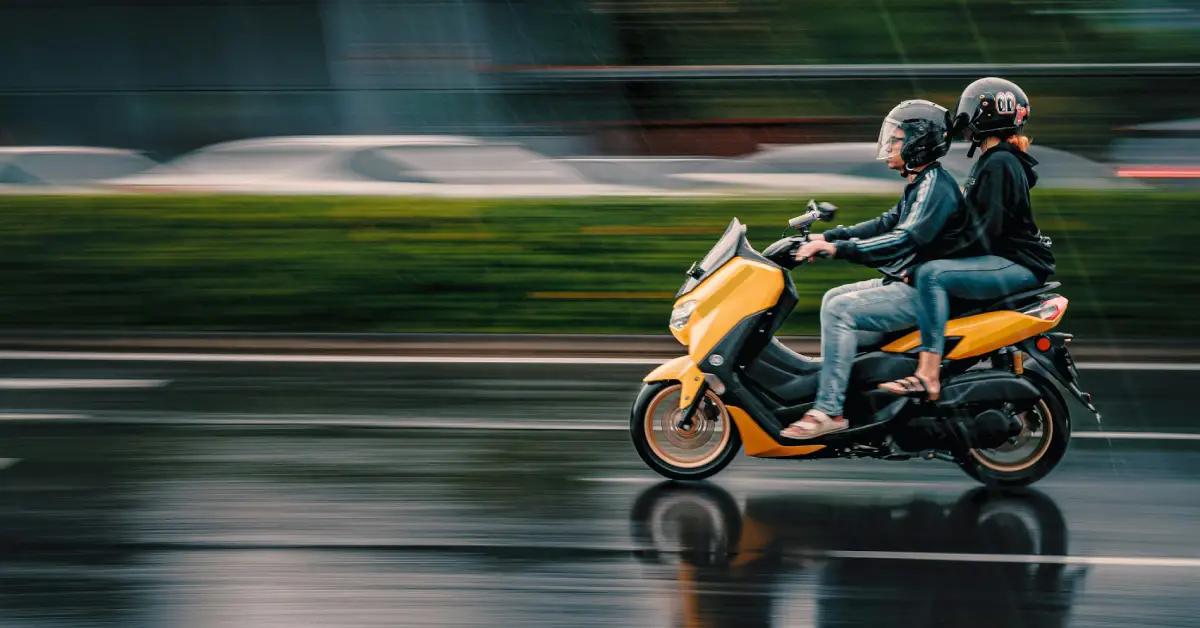
Motorcycle aquaplaning happens when a layer of water separates the tyres from the road, reducing traction and control. It is more likely when riding quickly through standing water, especially with worn or incorrectly inflated tyres. In Bali, the safest approach is to slow down early, avoid sudden inputs, and stop when heavy rain makes riding unsafe.
Free Cancellation
24/7 Support
Insurance
Start Date - End Date
Start Time
End Time
Duration
0 Day(s)
Key Takeaways:
Aquaplaning, also called hydroplaning, occurs when a motorcycle tyre encounters enough water that it can no longer maintain normal contact with the road surface.
Normally, the tyre tread helps push water away from the contact patch as the tyre rolls over the road. When there is too much water or the tyre is travelling too quickly for the water to be effectively displaced, a layer of water can build between the tyre and road.
The result is reduced grip, steering control, and braking performance.
For motorcycle riders, this can be particularly dangerous because only two tyres are maintaining your balance and traction.
Yes, motorcycles can aquaplane.
However, motorcycle aquaplaning is not exactly the same as car aquaplaning. Motorcycle tyres have a different shape and contact patch, while the rider also has to manage balance, steering input, braking, and lean angle.
More importantly, not every motorcycle slide on a wet road is technically aquaplaning.
A scooter can lose traction because of wet paint, oil, gravel, mud, leaves, or metal surfaces even when there is no complete separation between the tyre and road.
That distinction matters because the correct response to wet-road hazards is not simply to focus on standing water. Riders need to manage overall wet-road traction.
If you're still uncertain about your next steps, don't worry, as we're here to address all your queries and concerns.
Yes. Motorcycles can aquaplane when enough water interferes with normal tyre-road contact. The risk depends on factors such as speed, water depth, tyre condition, pressure, tread, and load.
Common contributing factors include excessive speed for the conditions, standing water, worn tyres, unsuitable tyre pressure, and road conditions that prevent effective water evacuation.
There is no universal speed at which every motorcycle will aquaplane. Water depth, tyre characteristics, pressure, load, and road conditions all affect the risk.
Stay calm, ease off the throttle gradually, avoid sudden steering or braking, keep the scooter stable, and allow the tyres to regain traction before making stronger braking or steering inputs.
Worn tyres generally provide less tread capability for dealing with water and can have reduced wet-weather performance. Check tread condition regularly and replace tyres when necessary.
It can become unsafe when rain significantly reduces visibility, creates standing water, or causes flooding. If conditions become difficult to assess or control, find a safe place to stop and wait for the weather to improve.
Think of the process like this:
Standing water → tyre enters water → tread attempts to evacuate water → water pressure builds → tyre-road contact decreases → traction is reduced.
The risk can increase when several factors occur together.
There is no single speed at which every motorcycle will aquaplane. The actual risk depends on factors such as water depth, tyre condition, tyre pressure, tread design, load, and road surface.
For that reason, do not treat a specific speed as a guaranteed “safe aquaplaning limit.” Slow down before reaching standing water instead.
Puddles and areas of poor drainage can create a much greater aquaplaning risk than an evenly wet road.
If you cannot see how deep a puddle is, it is safer to avoid it where possible. Water can also hide potholes, debris, or damaged sections of road.
Check our articles about riding a motorcycle in a puddle area here:
Tyre tread helps channel water away from the contact patch. As tyres become excessively worn, their ability to deal with water can be reduced.
Before a long scooter trip, check for low tread, uneven wear, cracks, punctures, or other visible damage.
Tyre pressure affects how a tyre behaves and maintains contact with the road.
Always follow the scooter manufacturer's recommended cold tyre pressure rather than using a generic pressure number found online.
A heavily loaded scooter changes how the tyres interact with the road. Luggage, a passenger, and other additional weight can affect handling and braking.
Stay within your scooter's recommended load limits, particularly when travelling longer distances around Bali.
The main danger is a sudden reduction in traction.
If the tyres lose sufficient contact with the road, the scooter may feel unstable and become harder to steer or slow down.
A loss of grip during cornering can be especially serious because the rider is already relying on tyre traction to maintain the scooter's line.
Wet weather also increases other road hazards.
Make sure to increase the normal three-second following distance to six seconds in wet or poor conditions.
It also advises riders to slow down, reduce lean on curves, and use progressive braking on difficult surfaces.
So, the safest approach is not simply “watch out for aquaplaning.” It is to give yourself more time, space, and traction throughout the ride.
Aquaplaning can feel different depending on which tyre loses traction and how severe the water contact is.
You may notice:
Do not assume that every unusual sensation means full aquaplaning. Wet surfaces can cause several forms of traction loss.
If something feels wrong, avoid making an abrupt correction.
These terms are related but not identical.
Aquaplaning happens when water interferes significantly with tyre-road contact.
Wet-road skidding or traction loss can happen for many other reasons, including wet paint, oil, gravel, sand, mud, leaves, or slippery metal surfaces.
This is particularly relevant when riding around Bali, where you may encounter different road surfaces and conditions during the same journey.
For example, a road may be wet without containing enough standing water to cause aquaplaning. Yet painted lane markings or a wet metal cover can still provide less grip than normal.
If your scooter suddenly feels as though it has lost traction in standing water, your priority should be to keep your inputs smooth.
Do not panic or make a sudden steering correction. Abrupt movements can make a traction problem worse.
Reduce acceleration smoothly rather than suddenly twisting the throttle.
The goal is to allow the scooter to regain traction without creating another abrupt change in load.
Avoid aggressive steering movements while crossing the water.
If possible, keep the scooter relatively upright and maintain a smooth direction of travel.
Do not grab the brakes suddenly while your tyres are dealing with standing water.
Sudden braking can destabilize the scooter when available traction is already limited.
Once the tyres move beyond the water and regain normal road contact, continue riding smoothly.
Only then should you progressively slow down or stop if necessary.
Prevention starts before you ride.
Look at tread condition, tyre pressure, visible damage, and uneven wear.
If the tyres look excessively worn or damaged, have them inspected or replaced before a long journey.
If your tires flatten, you can find a gas station near you and fill the air. Check our info here: Your Guide on How to Put Air in Tires at a Gas Station in Bali.
Do not wait until your front tyre is already entering a puddle to reduce speed.
Look ahead and slow down while you still have normal traction.
Wet roads are not the time for aggressive cornering.
Also make sure to reduce lean on curves when road surfaces are difficult and using progressive braking.
Leave more room between your scooter and the vehicle ahead.
This gives you more time to react to sudden puddles, braking traffic, poor visibility, and road debris.
Smooth throttle, steering, and braking inputs are especially important when the road is wet.
Standing water is only one of several hazards.
Watch carefully for:
It can be.
Road surfaces can become particularly challenging when rain first begins after a dry period because contaminants that have accumulated on the surface can mix with water.
So if the first drops of rain begin while you are riding in Bali, do not assume the road will immediately have normal wet-weather grip.
Reduce your speed and give yourself additional space.
Bali can experience periods of heavy rainfall, and riding conditions can change quickly during a downpour.
Heavy rain can reduce visibility, create standing water, and make it harder to identify potholes, road debris, and other hazards ahead.
When exploring Bali by scooter:
If heavy rain turns the road into a situation where you cannot confidently see hazards ahead, stopping is safer than trying to maintain your itinerary.
A simple rule is:
If you cannot clearly see and safely control the road ahead, stop.
Consider finding a safe place to wait when:
Bali's weather can change quickly, so building extra time into your itinerary is better than rushing through dangerous conditions.
If you are renting a scooter in Bali, take a few minutes before departure to check the basics.
Choosing a well-maintained scooter is particularly important when exploring Bali because you may encounter changing road and weather conditions throughout your trip.
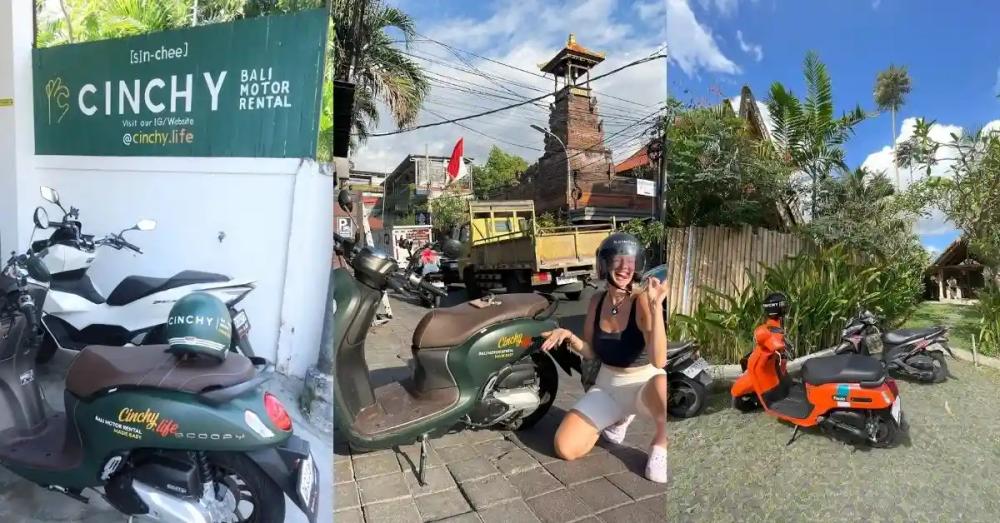
A reliable scooter can make getting around Bali much easier, particularly when you want the freedom to explore different areas at your own pace.
Cinchy focuses on keeping its scooter rental process straightforward, with regularly maintained scooters and rental options designed for different travel needs.
You can choose between the Compact and Comfort categories depending on your preferred scooter and budget.
The rental process is also designed to be convenient, while 24/7 customer support is available if you need assistance during your rental.
Cinchy offers two main scooter categories.
The Compact category includes:
Rates start from IDR 95K/day, with weekly rates starting from IDR 80K/day and monthly rates from IDR 50K/day.
These scooters are a practical option for everyday riding around Bali, particularly if you prefer a compact and easy-to-handle scooter.
For riders who prefer a larger scooter, the Comfort category includes:
Rates start from IDR 155K/day, with weekly rates starting from IDR 125K/day and monthly rates from IDR 80K/day.
The Comfort category can be a good choice if you want additional comfort during longer rides around Bali.
You do not necessarily have to visit a rental shop to get your scooter.
Free delivery and pickup at the airport can be particularly convenient if you want to start exploring Bali shortly after landing.
Cinchy offers several coverage options so you can choose the level of protection that fits your trip.
Keep in mind that insurance does not cover damage caused by negligence or careless use. This can include tyre damage, a completely discharged battery caused by leaving the scooter in standby mode, or damage from using the scooter on unsuitable surfaces such as off-road or non-public roads.
If a scooter is lost because of the renter's negligence or carelessness, the renter may be responsible for the full replacement cost.
Personal injury and third-party liability are also not covered by this damage protection, so riders remain responsible for their own safety and applicable third-party claims.
Rain should not automatically stop your Bali adventure, but changing weather means you need to adapt your riding style and choose your scooter carefully.
With regularly maintained scooters, flexible rental durations, multiple scooter categories, and delivery and pickup options across Bali, Cinchy makes it easier to arrange your scooter before or after you arrive.
 travel tips
 hidden gems
 scooter guides
 riding tips
 bali guides
 cultural insight